YouTube Shorts ads can work for a gym, but only if you treat them as the top of a local funnel and not as a view-count contest. Shorts ads are vertical, full-screen videos that appear between organic Shorts, and viewers can swipe past them instantly. So the job is simple to say and hard to do: show a local problem or offer in the first second, point people to a low-friction next step, and answer every lead within minutes.
This guide covers which Google Ads campaign to pick, how to shoot and cut the video, how to target a service area instead of the whole country, what to expect on cost, and how to measure booked intros instead of views.
TL;DR
- Shorts ads run inside several Google Ads campaign types. Pick the one that matches your goal: awareness, views, or leads and conversions.
- Film one vertical 9:16 master, then cut several hooks, offers and calls to action from it. Aim for 10 to 30 seconds for action-focused ads.
- Target a realistic radius around your gym, plus remarketing to people who already watched or visited. Judge those two groups by different metrics.
- Measure qualified leads, booked intros, show-ups and new members. Views and clicks alone will mislead you.
- The ad is only half the system. A focused landing page and fast text or email follow-up decide whether the lead becomes a member.
Table of Contents
- What a Shorts ad actually is
- Pick the right campaign type first
- Build the creative: one master, many cuts
- Targeting a service area, not the country
- What it costs, and how to read the numbers
- Send the click somewhere that converts
- Measure what pays the rent
- Our perspective: Shorts is a hook, not a funnel
- Want us to run it for you?
- A four-week test plan
- FAQ
- Sources
What a Shorts ad actually is
Shorts is YouTube's mobile-first, vertical, swipe-through feed. Google describes Shorts ads as full-screen placements that sit between organic videos and can be skipped with a swipe. That one detail shapes everything about the creative. A pre-roll viewer might give you five seconds before a skip button appears. A Shorts viewer can leave the moment your opening frame looks like an ad.
For a gym owner this means three things:
- The first frame has to show something real. Your floor, a coach mid-coaching, a member finishing a hard workout. Not a logo animation.
- The first spoken or written line has to name the local problem or offer. "Tired of workouts that go nowhere? Try a free intro class in [your town]."
- Captions are not optional. Shorts is mostly a sound-on environment, but captions keep the message clear for anyone watching quietly, and they reinforce your offer visually.
The platform is also big. Google reported 1.5 billion monthly active users and more than 30 billion daily views for Shorts in September 2022, and later cited more than 50 billion daily views in January 2023. Those are historical, global figures. They tell you the audience is there. They do not tell you what a leads campaign will cost in your zip code.
Pick the right campaign type first
This is where most gym owners go wrong. Shorts is a placement, not a campaign. According to Google's documentation, Shorts ads are supported across several campaign types, and each one optimizes toward a different outcome:
| Your goal | Campaign type | What it optimizes for |
|---|---|---|
| Local awareness | Video Reach, Efficient reach goal | Unique people reached, charged when a user views the video |
| Cheap views and consideration | Video view | Views of your video |
| Engagement and action | Demand Gen | Actions across YouTube and other Google surfaces |
| Conversions across Google channels | Performance Max | Conversions you define |
Two details matter for a small gym.
First, Shorts under Video Reach is available only with the Efficient reach goal. You can use Reach Planner to forecast reach and cost per impression for your budget and targeting before you spend a dollar. That is a good fit if you just opened, are launching a new program, or want your neighborhood to recognize your name. It is not a booked-consultation campaign, and it should not be judged like one.
Second, do not assume every control behaves the same in every campaign type. Google notes that contextual targeting options and exclusions vary by campaign type. Check the settings in the campaign you actually build.
If your goal is membership growth, start with a conversion-oriented campaign (Demand Gen or a conversion-focused setup) and treat awareness as a separate, smaller test. Mixing the two in one budget and one report is how owners conclude that "YouTube doesn't work."
Build the creative: one master, many cuts
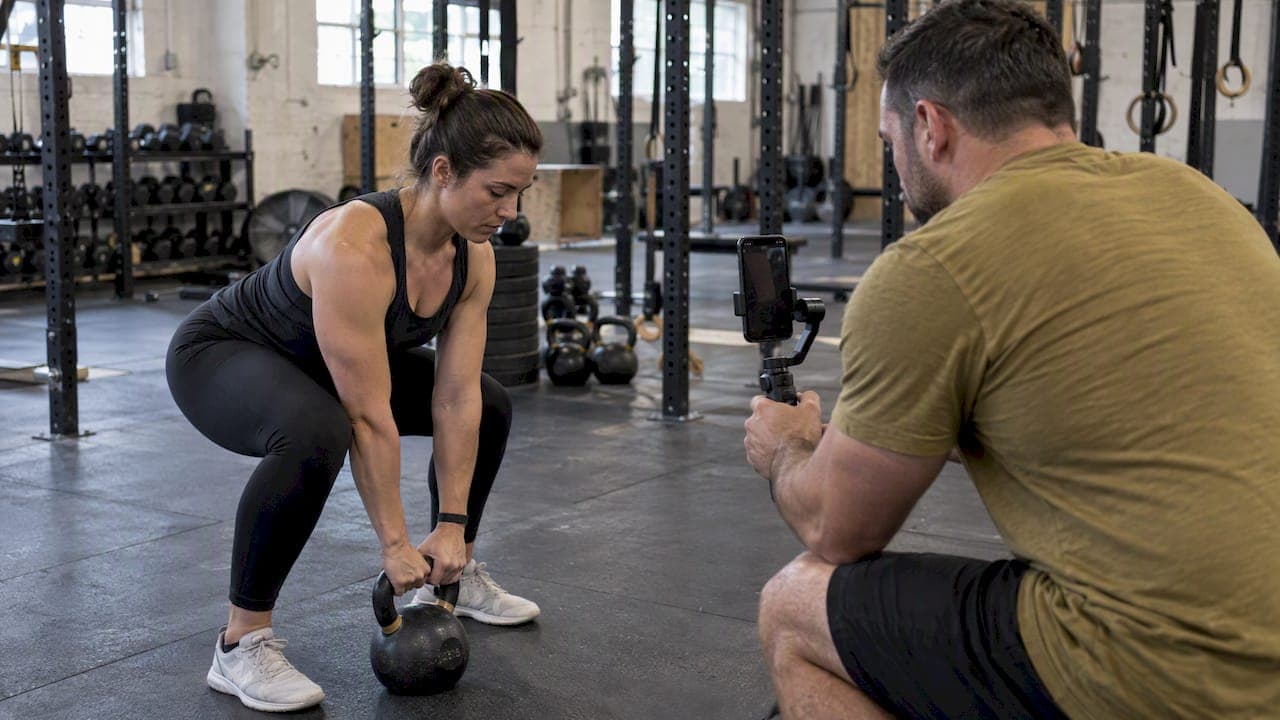
You do not need a production crew. You need a clear plan and a phone with a decent stabilizer. Google's asset guidance asks for a 9:16 vertical video uploaded to YouTube, which can be public or unlisted. Keep the gym name, location, offer and call to action readable inside the central safe area, so interface buttons and captions do not cover them.
Length
Google recommends 10 to 30 seconds for action-oriented campaigns. Video Reach can use assets from 6 to 60 seconds, and several other campaign types support 10 to 60 seconds. For a local intro offer, 15 to 25 seconds is a sensible target.
A simple structure that fits a CrossFit or boutique gym
- 0 to 2 seconds, the hook. A visual that says "this is a real gym near you." A barbell drop, a coach counting reps, a group high-five.
- 2 to 10 seconds, the proof. A member story, a coach introducing themselves by name, a before-and-after of ability (first pull-up, first muscle-up) rather than body shape.
- 10 to 20 seconds, the offer. Say it plainly: free intro session, 3-class trial, or a goal-setting consult. Name your town or neighborhood.
- Last 3 seconds, the action. One call to action. Not three.
Cut one shoot into many ads
Film 30 to 40 minutes of footage in one session: a class warm-up, a coach talking to camera, a member interview, wide shots of the floor. Then edit:
- three different openers (coach, member, facility),
- two offers (free intro vs. trial week),
- two calls to action (book a call vs. pick a class time).
That gives you a dozen variations from a single afternoon, and it lets you learn which hook stops the swipe. Change one variable at a time, or you will not know what worked.
Use vertical and horizontal together
The Les Mills case study from Google is worth reading for one transferable lesson. The brand combined repurposed vertical social content with horizontal video-action assets and reported a 52% increase in click-through rate, a 10% decrease in cost per acquisition and a 16% decrease in cost per impression. That was an app-signup campaign for an international brand, not a local gym, so do not expect the same numbers. The lesson is to supply vertical assets for Shorts and horizontal ones for other YouTube surfaces instead of forcing one crop everywhere. Google's earlier testing also found that adding a vertical asset to Video action campaigns delivered 10% to 20% more conversions per dollar on Shorts than landscape assets alone. Again, it is a reason to test vertical, not a promise.
Targeting a service area, not the country
A gym's real customers live within a short drive. Your targeting should say so.
Google's documentation lists the targeting methods for video campaigns: demographics, interests, placements, data segments, topics and keywords, including specific YouTube channels and videos. For a local gym, a workable structure looks like this:
Cold audience (discovery). Location set to your actual service area, for example a 5 to 10 mile radius or a list of zip codes. Layer fitness interests and content contexts, then let the creative do the filtering. Judge this group on cost per qualified lead and booked intro, not on conversion rate alone, because many of these people have never heard of you.
Warm audience (remarketing). People who watched your videos, visited your website or engaged with your channel, plus a customer list where policy allows. This group should convert at a higher rate and is the right place for a direct offer. Do not hold it to the same KPI or bid strategy as the cold group.
The mistake to avoid is a broad national audience with a small budget. You will pay to reach people who cannot drive to your door.
If you already run search ads, our guide to Google Ads keyword buckets for gyms shows how to capture people who are actively searching, while Shorts builds the demand that makes them search for you by name.

What it costs, and how to read the numbers
Published benchmarks for Shorts vary widely by source, industry and year. One 2026 roundup puts typical Shorts CPM around $4, lower than standard in-stream formats. Treat that as a rough orientation, not a forecast. Your cost depends on your radius, your audience size, your offer and the competition in your market. A small radius can push costs up because the pool is limited.
A better way to think about budget is to work backward from member economics:
- Decide what a new member is worth to you over their first year.
- Decide what you can afford to pay per new member.
- Estimate your funnel rates: lead to booked intro, booked intro to show-up, show-up to joined.
- Divide to find the cost per lead you can tolerate.
Example with made-up round numbers, for illustration only: if you can afford $200 per new member, and 1 in 3 booked intros joins, you can afford about $67 per show-up. If half of leads book and 70% of those show, you can afford roughly $23 per lead. If your Shorts campaign cannot get near that, change the offer, the creative or the follow-up before you raise the budget.
The Reach Planner inside Google Ads can forecast impressions and cost per impression for your targeting. Use it before you commit a monthly budget, and start with a test you can afford to lose.
Send the click somewhere that converts
A great Shorts ad that lands on a homepage with six menu items wastes the click. Google's setup guide ends with the same instruction: attach a conversion-focused landing page or lead path. For a gym, that means:
- one offer, matching the video exactly (same words, same name, same image),
- a short form: name, mobile number, email, preferred time,
- a booking calendar if you can offer one,
- proof: reviews, coach bios, photos of your actual space,
- fast load on a phone, because that is where Shorts viewers are.
We cover the details in The Role of Landing Pages in Gym Marketing. If you are deciding between a page and an in-platform form, read Landing Page vs Lead Form for Gyms, and for form-based offers see Lead Form Ads for Gyms. The short version: speed of response often matters more than the format.
Follow-up is where the money is
A lead who filled out a form at 9 p.m. after a Shorts ad is comparing you with the gym down the street in their head right now. Text them within minutes, confirm a time, and send a reminder the day before. Fitness-specific lead tracking and automated follow-up in a gym management platform can help keep every inquiry from slipping, and the article behind that link walks through turning inquiries into visits and memberships.
Measure what pays the rent
A Shorts campaign can show thousands of views and still deliver nothing. Google's own campaign taxonomy makes clear that awareness and conversion objectives optimize differently, so your reporting has to match the objective. For a membership campaign, track in this order:
- Qualified leads (a real person in your area who answered)
- Booked intros
- Show-ups
- New members and the revenue they bring
The first two usually live in Google Ads and your website. Show-ups and joins live in your gym software or spreadsheet, so you need to feed them back. Our posts on why gyms should track conversions and importing three offline conversions into Google Ads explain how to close that loop, so the algorithm learns from people who actually walked in rather than from anyone who tapped a button.
Also review results by placement. Google's guide recommends monitoring reporting by placement and outcome, which tells you whether Shorts is carrying its weight or just spending budget.
Our perspective: Shorts is a hook, not a funnel
We work only with gyms and fitness brands, and the pattern we see is consistent: owners try one ad format, judge it by the wrong number, and quit. Shorts is a good example. It is excellent at making a local audience recognize your coaches and your space. It is poor at closing a skeptical buyer on its own.
So we build it as part of a connected system. Shorts creates discovery. Search ads catch people who go looking for a gym. A focused page handles the offer. Text and email follow-up books the visit. Longer videos, like a coach FAQ or a class walkthrough, reassure the people who need more before they commit. Google's own guidance points the same direction, noting that viewers move between short and long video, so the short clip is the hook and the longer one does the convincing.
If you have a small budget, we would start with one offer, one radius, three creative hooks and a tight follow-up routine, run for a few weeks, and decide with data. If you want a cheaper way to test short-form video first, our $5-a-day TikTok test for gyms uses the same creative approach. For the bigger picture, see our step-by-step gym marketing plan for 2026 and the broader YouTube ads playbook for gyms.
— Collin
Want us to run it for you?
If you would rather spend your time coaching than managing campaigns, our paid advertising service for gyms covers Google and Meta campaigns, creative and follow-up under one accountable team. Our published monthly plans are Get Found at $1,500, Fill the Floor at $2,500 and Growth Engine at $4,500, plus a Custom Growth option. You can also book a free strategy session and we will look at your market, your offer and your current numbers.
A four-week test plan
Week 1: set up. Define one offer (free intro or trial). Build the landing page and a text-and-email follow-up sequence. Install conversion tracking. Film your master footage.
Week 2: launch. Start a conversion-oriented campaign in your service area with three hooks. Keep the budget modest and the radius tight. Check that every lead gets a text within minutes.
Week 3: read and prune. Look at cost per qualified lead and booked intro by creative. Pause the weakest hook. Do not touch the offer yet.
Week 4: add warm audiences. Start remarketing to video viewers and site visitors with a more direct offer, and compare cost per booked intro for cold and warm groups separately.
At the end, decide on show-ups and new members, not clicks. If those are thin but leads are healthy, fix follow-up and the intro experience first.

FAQ
Do YouTube Shorts ads work for a local gym?
They can, especially for building local recognition and retargeting people who already know you. Results depend on your offer, your radius and your follow-up. Google's published case studies are mostly from large brands, so test with a small budget before you scale.
How long should a gym Shorts ad be?
For action-focused campaigns Google recommends 10 to 30 seconds. Some campaign types accept 6 to 60 seconds. For a local intro offer, 15 to 25 seconds with a clear hook in the first two seconds is a good starting point.
Can I run Shorts-only ads?
Not necessarily. Google says Shorts placements are supported within several campaign types, and the campaign objective determines the optimization and the controls you get. Choose the campaign by your goal, then check which Shorts options it offers.
Do I need to post the video on YouTube first?
Yes. Videos used in these ads must be uploaded to YouTube, and they can be public or unlisted. Unlisted works well if you do not want test cuts appearing on your channel.
Sources
- YouTube Shorts ads: Asset specs and best practices, Google Ads Help
- Campaign types that support YouTube Shorts ads, Google Ads Help
- Your guide to YouTube Shorts ads, Google Ads Help
- How to buy YouTube Shorts ads with Video reach campaigns, Google Ads Help
- About targeting for Video campaigns, Google Ads Help
- YouTube video format case study, Think with Google
- Short and long-form video content, Think with Google
- YouTube Ads Benchmarks (2026), Store Growers