Yes, TikTok ads work for gym member acquisition, but only when creative testing comes before spend scaling. The fastest path is a $5/day diagnostic test with three creative variants pushing to a trial-booking funnel, not a wide-open awareness campaign. Track cost per lead and booked trials weekly. If cost per lead stays reasonable and trials convert within 30 to 60 days, you've found a channel worth building around.
TL;DR:
- Testing three to five creative variants with a $5 daily budget over 7 to 14 days helps identify the most cost-effective ad before scaling or increasing spend.
- In-Feed Ads, Spark Ads on high-performing organic content, and Lead Gen forms are the most effective TikTok formats for gym campaigns, each serving specific stages of the funnel.
- Creative frameworks like first-timer POV, behavioral transformation stories, day-in-life, and coach tips consistently outperform generic promos for gym marketing on TikTok.
- Starting with a small geo radius and layering interest and behavior targeting improves local ad efficiency, with TikTok's search ads toggle capturing high-intent prospects.
- Using a low-cost, paid trial offer instead of free trials attracts more serious prospects, and a simple, mobile-optimized landing page with a clear booking CTA increases conversions.
Table of Contents
- Why TikTok Ads for Gyms Actually Work
- Which TikTok Ad Formats Work Best for Gyms?
- How Should Gyms Target Local Audiences on TikTok?
- What Offer and Landing Page Convert TikTok Clicks Into Members?
- How Do You Test TikTok Ad Budgets Without Wasting Money?
- What Metrics Actually Matter for TikTok Gym Ads?
- What Ad Policy Rules Should Gyms Know Before Launching?
- How Do You Launch a TikTok Gym Ad Campaign Step by Step?
- How We Run TikTok Campaigns for Gyms at Enoch Marketing
- Enoch Marketing: A Done-For-You Option for Gyms That Don't Have Time for This
- Sources
Why TikTok Ads for Gyms Actually Work
TikTok's algorithm doesn't wait for someone to search "gyms near me." It surfaces fitness content to people scrolling for entertainment who happen to fit a behavioral profile, then lets engagement decide who sees more of it. That's a fundamentally different mechanism than Google Ads, where you're capturing existing intent, or Meta, where interest targeting still leans heavily on stated preferences and follows.
The platform has also started behaving less like pure entertainment and more like a discovery engine people use to research decisions, including local services. Sprout Social's guide to TikTok advertising points to this shift as the reason brands should treat TikTok content and search terms with the same care they'd give a Google campaign.
For gyms, this creates a specific opening. TikTok reaches people who aren't actively hunting for a gym yet but are consuming workout content, fitness humor, or transformation stories. That's a colder audience than a Google searcher, but a warmer one than a random Meta scroll.
A few practical implications follow from this:
- Organic-first testing tells you which hooks and formats already resonate before you spend a dollar on ads.
- Posting 3 to 5 times a week and batch filming keeps a content pipeline alive without burning out your staff, a workflow Resa WOD's guide for gyms recommends specifically for owner-operators.
- Paid amplification through Spark Ads works best on content that's already proven itself organically, not on new content without prior organic traction.
- Search behavior on TikTok is growing, so campaigns tied to intent phrases can catch people closer to a buying decision.
Prioritize organic testing when your budget is thin. Shift to paid amplification once you know which video actually stops the scroll.
Which TikTok Ad Formats Work Best for Gyms?
Not every TikTok Ads Manager format deserves equal budget. Three formats do almost all the heavy lifting for gym campaigns, and each has a distinct job.
- In-Feed Ads for testing new creative concepts cold, since they let you run controlled experiments against a fresh audience without any organic history attached.
- Spark Ads for amplifying content that already performed well organically, borrowing the post's existing likes, comments, and shares to boost credibility.
- Lead Gen (Instant Forms) for capturing trial-interested users without forcing them off the app, which matters because every extra tap between the ad and the form loses people.
Shopify's TikTok ads guide is blunt about the mechanics: creative needs a short hook, native framing, and a testing mindset, with short videos around half a minute being optimal for engagement. Anything that looks like a polished commercial gets scrolled past in under two seconds.
Four creative frameworks consistently outperform generic promo videos for gyms:
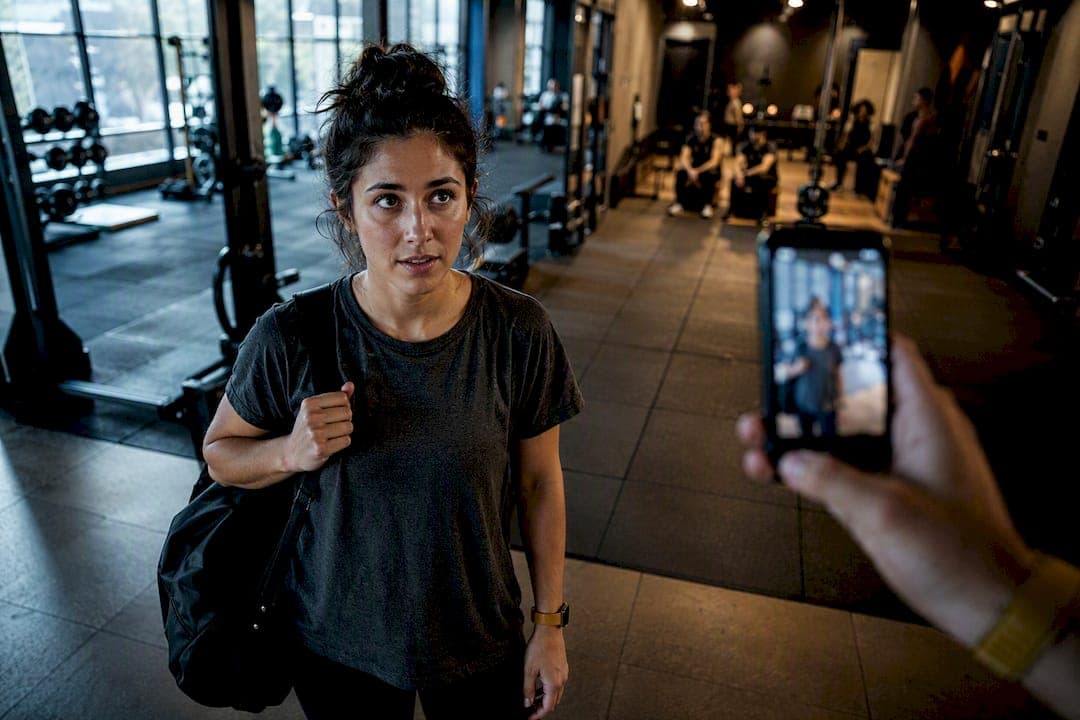
First-timer POV. Shot handheld, showing what a nervous newcomer actually experiences walking into your gym for the first time. This format works because it answers the unspoken question every prospect has: will I feel stupid there?
Behavioral transformation over physical transformation. Content showing someone building a habit, showing up three times a week, or finally sleeping better tends to convert better than a pure before-and-after body shot. It lowers the anxiety barrier that stops people from booking in the first place.
Day-in-life. A coach or member walking through a normal Tuesday class, warts and all, builds trust faster than a highlight reel.
30-second coach tips. Quick, useful advice from an actual trainer establishes authority and gets saved or shared, extending reach beyond the initial audience.
Pro Tip: Film your first-timer POV video with a real new member's first class, not an actor. The awkward pauses and genuine nervousness are what make it convert, and TikTok's algorithm tends to reward the unpolished feel anyway.
Your technical checklist before publishing any ad: hook within the first 3 seconds, vertical 9:16 framing, burned-in captions since most people watch muted, a clear single CTA, and a runtime between 15 and 30 seconds unless the story genuinely needs more room.
How Should Gyms Target Local Audiences on TikTok?
Geography is the first filter, not an afterthought layered on at the end. A 5 to 10-mile radius around your location is the standard starting point for most gyms, tightened to 3 to 5 miles in dense urban markets where a 10 mile radius would include three other gyms' natural service areas.
Location targeting on TikTok is coarser than what Meta's local ads offer, according to Zatrovo's fitness studio marketing analysis. That means you can't rely on radius targeting alone to keep spend efficient; your creative and offer have to do extra work to self-select the right viewers.
Layer interest and behavior targeting on top of geography, but don't let it override location. Someone who fits your ideal member's interests perfectly but lives forty minutes away isn't a lead, they're a wasted impression. Once you have converted members, build a lookalike audience from your customer list and let it run alongside, not instead of, your geo-targeted campaigns.
A few targeting moves worth testing in sequence:
- Start with a tight geo radius and broad interest targeting, then narrow interests once you see which creative pulls the right crowd.
- Layer a lookalike audience from existing paying members after you've got at least a few hundred conversions to build from.
- Use TikTok's behavior signals (fitness app usage, engagement with workout content) as a secondary filter, never the primary one.
- Activate the Search Ads Toggle once your campaign has enough data to know which keywords prospects are typing, since Sprout Social notes this feature lets your in-feed ads also appear in TikTok's search results for those exact terms.
That last move matters more than most gyms realize. Someone searching "CrossFit near me" or "beginner gym classes" inside TikTok is closer to booking than someone just scrolling, and the Search Ads Toggle is the only way to catch them there without building a separate search campaign.
What Offer and Landing Page Convert TikTok Clicks Into Members?
Free trials sound generous, but they tend to attract window shoppers who never had real intent to join. A modestly priced intro pass for a limited trial period at a small fee is more likely to attract serious prospects. People who pull out a card commit more mentally than people who tap "claim free trial" and forget about it by dinner.
This single change, shifting from free to low-barrier paid, is one of the more underused levers in gym marketing. It costs you a small amount of potential volume and gains you a much higher share of leads who actually show up.
Your landing page needs to do one job only: get the click to book a specific time slot. Every additional link, extra form field, or unrelated offer on that page is a leak in your funnel. The essentials:
- A single, obvious call to action above the fold, ideally a calendar booking widget rather than a "contact us" form.
- Social proof specific to people who came from TikTok, since a testimonial that mirrors the ad's tone builds continuity instead of feeling like a bait-and-switch.
- Mobile-first design, since virtually every TikTok click lands on a phone screen.
- Messaging that echoes the ad's hook, so the click doesn't feel like it landed somewhere unrelated.
A dedicated resource on designing landing pages for gym offers walks through the booking-flow details that matter most for local fitness offers.
Choose between TikTok's native Instant Forms and an external landing page based on what you're optimizing for. Instant Forms reduce friction because the user never leaves the app, and Agrowth notes they're particularly effective for lowering cost per lead on service businesses. An external page costs you some conversion friction but gives you cleaner attribution data and a chance to build retargeting pixels for later campaigns. Run both in parallel during your first test cycle and let the cost-per-booked-trial numbers settle the argument.
How Do You Test TikTok Ad Budgets Without Wasting Money?
Start every gym campaign with a diagnostic phase, not a scaling phase. The goal in week one isn't member growth, it's answering a narrower question: which creative actually earns attention and clicks.
- Set the objective to conversions or lead generation, not brand awareness, even during the test phase. You want data that predicts bookings, not just views.
- Run three to five creative variants simultaneously against the same audience and offer, changing only the hook and opening 3 seconds between versions.
- Give the test 7 to 14 days minimum before judging results. TikTok's delivery algorithm needs time to exit the learning phase, and killing a variant on day 2 usually kills a winner along with the losers.
- Configure a $5/day test per creative variant as your floor budget. At that spend level, three variants running for ten days costs $150 total, cheap enough that most gyms can absorb the risk without touching their marketing budget's core.
- Watch for a clear signal before scaling: a variant that's pulling a noticeably lower cost per lead than the others after the full test window, not after two days of noisy early data.
Once you've identified a winner, scale it in controlled increments rather than jumping straight to ten times the budget. If the winning organic-style ad keeps performing, convert it to a Spark Ad to borrow its social proof and extend its reach past the original test audience. TikAdSuite's guide to building winning ads outlines similar scaling sequences and budget thresholds by format, worth a look once you're past the diagnostic stage.
What Metrics Actually Matter for TikTok Gym Ads?
Vanity metrics like views and likes tell you almost nothing about whether a campaign is filling your gym. The numbers that matter connect directly to revenue.
- Cost per lead (CPL): what you're paying for each form fill or inquiry, the first checkpoint in your funnel.
- Cost per booked trial: a tighter number than CPL, since not every lead books a time slot.
- Trial-to-paid conversion rate: the percentage of trial participants who become paying members, which tells you if your in-gym experience matches what your ads promised.
- Customer acquisition cost (CAC): your total cost per new paying member, blending ad spend with any offer discount you extended.
On the creative side, watch the 3-second view rate and hook rate as early warning signs. A weak hook rate means people are scrolling past before your message even registers, regardless of how good the offer is later in the video. AGrowth.io's fitness ad benchmarks cite CPM, CPC, CTR, and CPL ranges that give a useful reference point for judging whether your numbers are competitive.
Set your reporting window to 3 to 6 weeks before drawing conclusions about membership impact. Zatrovo's research on fitness studio marketing found a typical lag of 3 to 6 weeks between someone's first TikTok touchpoint and an actual paid membership, so judging a campaign after seven days will make a working strategy look like a failure.
What Ad Policy Rules Should Gyms Know Before Launching?
TikTok enforces body-image and health-claim policies more strictly than most gym owners expect. Ads that promise a specific transformation ("lose 20 pounds in 30 days") or use before-and-after imagery in a way that implies guaranteed results risk rejection or account flags.
A few compliance habits keep your account in good standing:
- Avoid absolute transformation claims; frame content around habits and experience instead of guaranteed outcomes.
- Get written consent from any member featured in testimonial or UGC content, and keep a simple record of that permission.
- Steer clear of imagery that TikTok's body-image policy could interpret as promoting an unhealthy standard, even unintentionally.
- Check TikTok's official ad policy pages before launching any campaign built around health claims, since these rules shift periodically.
- Bring in someone with paid-media experience if a rejected ad doesn't make sense to you, rather than guessing at fixes and burning review cycles.
How Do You Launch a TikTok Gym Ad Campaign Step by Step?
A campaign that goes from concept to booked trials in 30 days follows a specific sequence, and skipping steps to move faster almost always costs more time later fixing tracking gaps.
- Set up TikTok Ads Manager and install the pixel on your landing page or booking system before anything else, naming conversion events clearly (e.g., "trial_booked," "form_submitted") so reporting stays readable months from now.
- Establish a naming convention for campaigns and creative variants (date, offer, hook type) so you can find and compare tests without digging through a messy dashboard.
- Film 3 to 5 creative variants using the frameworks covered earlier, batching production into a single session to save time. Onemor's fitness content filming guide has practical setup tips for gyms shooting with a phone and no formal studio.
- Collect UGC permission from any member appearing on camera before the video goes live, not after.
- Launch the $5/day diagnostic test across your creative variants for 7 to 14 days.
- Review cost per lead and cost per booked trial weekly, resisting the urge to judge results before day 7.
- Scale the winning creative in 20% to 30% increments and convert it to a Spark Ad once organic engagement confirms it resonates.
- Track trial-to-paid conversion over the following 3 to 6 weeks to confirm the funnel is producing real members, not just cheap leads.
Pro Tip: Build your booking flow before you build a single ad. A perfect creative pointing to a clunky, multi-step booking process wastes every dollar you spend getting someone to click.
How We Run TikTok Campaigns for Gyms at Enoch Marketing
Enochmarketing's process for gym clients starts with an audit of existing content and funnel gaps, not a jump straight into ad spend. From there, creative gets proofed against the frameworks that actually move gym leads, then tested at small scale before anything gets a real budget behind it.
We prioritize trial-to-paid conversion over raw lead volume, because a cheap lead that never shows up for a trial isn't worth chasing. That means attribution windows get set realistically, tracking gets built before launch, and scaling only happens once a creative has proven itself in a controlled test.
If your current TikTok efforts feel scattered or your funnel has never been properly diagnosed, a short audit is usually the fastest way to find out what's actually broken.
— Collin
Enoch Marketing: A Done-For-You Option for Gyms That Don't Have Time for This
Enochmarketing is the alternative to figuring all of this out solo. Testing creative variants, building booking funnels, and managing ad accounts on top of running classes and coaching members is a lot to ask of any gym owner, and most don't have eight extra hours a week to spend inside TikTok Ads Manager.
We build the full engine: paid media across TikTok and Meta, funnel creation, creative production, tracking setup, and reporting that ties spend back to actual trial-to-paid conversion rather than surface-level clicks. Gyms working with an agency typically move faster through the testing phase simply because someone is watching the numbers regularly.
If you want a clear picture of what a done-for-you TikTok engine would look like for your gym, the services overview breaks down what's included, and the pricing page lays out packages. Book a free strategy session to get a straight answer on whether TikTok ads make sense for your specific market and budget.
Sources
For platform mechanics and format guidance, Sprout Social's TikTok advertising guide and Shopify's TikTok ads breakdown cover the fundamentals in more depth. AGrowth.io's fitness-specific playbook offers benchmark ranges worth bookmarking. For funnel and conversion tactics once traffic starts landing, see conversion rate optimization for gyms and the paid ads strategy tutorial for local gym growth.