
A gym landing page is a standalone web page built to convert a single type of visitor into a lead or trial booking. Unlike a homepage, it has one job: turn a motivated ad click into a name, email, and phone number. The role of landing pages in gym marketing is to close the gap between ad spend and actual memberships. Most gym owners hemorrhage money on Google Ads and Meta campaigns while sending traffic to a homepage that confuses visitors and kills conversions. This guide breaks down exactly how landing pages work, what makes them perform, and how to build a system that fills your gym with qualified leads.
How landing pages drive gym conversions
The first question every visitor asks when they land on your page is: "Is this gym for me?" You have roughly 30 seconds to answer it. Most gym owners confuse poor conversions with a traffic problem, when the real issue is that their page fails to answer that question fast enough.

The concept behind this is called message match. It means your landing page headline must mirror your ad copy word for word. Matching ad copy exactly in landing page headlines boosts conversion rates by 20–30%. When someone clicks an ad that says "Try CrossFit Free for 30 Days," your headline must say the same thing. Any disconnect and the visitor bounces.
Beyond the headline, three elements determine whether a visitor converts:
- Value proposition: State clearly what your gym offers, who it is for, and what makes it different. "Strength training for busy professionals in Austin" beats "Join our gym today."
- Social proof: Real member testimonials, star ratings, and before/after results build trust fast. Stock photos of models do the opposite.
- A single, clear CTA: One booking button outperforms multiple CTAs or generic contact forms every time. Give visitors one decision to make.
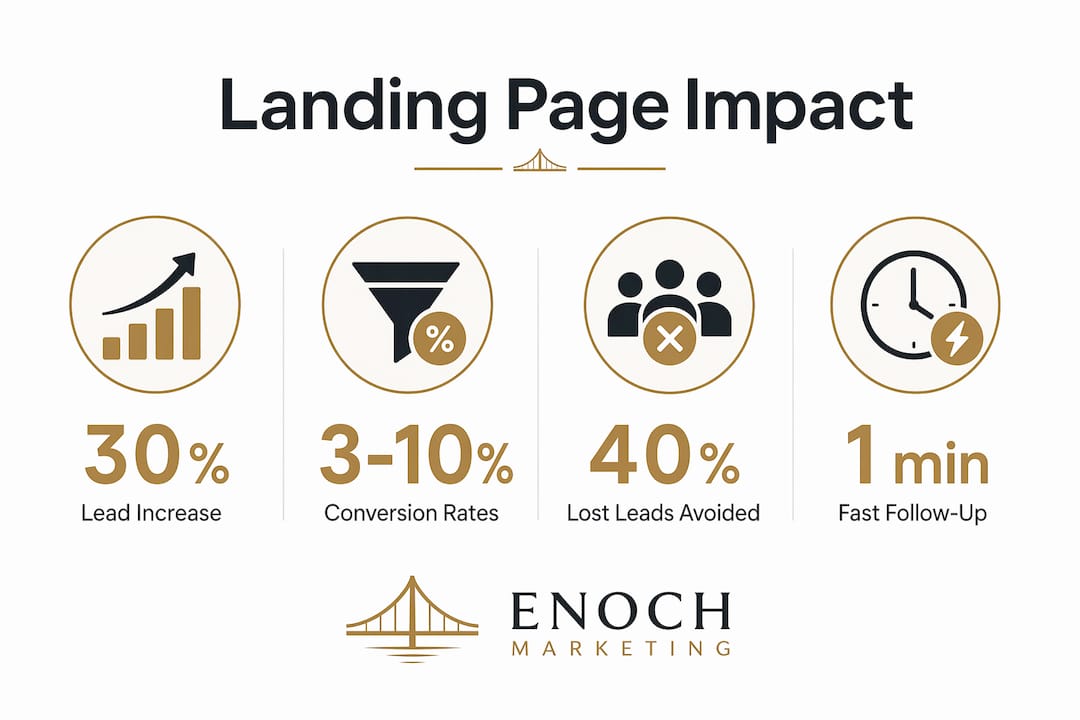
Pricing transparency is also non-negotiable. Hiding pricing costs 30–40% of qualified leads. Visitors who see pricing and stay are self-selecting. They are already sold on the price point before they fill out your form, which means higher quality leads and fewer wasted sales calls.
Pro Tip: Place your offer, headline, and CTA above the fold so visitors never have to scroll to take action. If they have to hunt for the button, most won't.
What are the technical best practices for gym landing pages?
Technical performance is not optional. Over 60% of fitness searches happen on mobile devices. A page that loads slowly or displays poorly on a phone loses leads before they read a single word.
Here is the technical checklist every gym landing page needs to pass:
- Score above 80 on Google PageSpeed Insights. Run your page through PageSpeed Insights and fix the issues it flags. Compress images, eliminate render-blocking scripts, and use a fast hosting provider. A one-second delay in load time can cut conversions significantly.
- Design mobile-first, not mobile-adapted. Build the page for a 375px screen width first, then scale up for desktop. Buttons must be thumb-sized. Text must be readable without zooming. Forms must be easy to fill with one hand.
- Limit your form to three fields maximum. Every additional form field drops conversion rates by 10–15%. For a free trial offer, ask for name, phone number, and email. Nothing else. You can collect more information after the lead is in your CRM.
- Add a click-to-call button. Mobile visitors who are ready to act want to call immediately. A click-to-call button removes every barrier between intent and contact. Place it at the top of the page and repeat it in the footer.
Pro Tip: Test your landing page on a real Android and iPhone before launching any paid campaign. Emulators miss real-world rendering issues that cost you leads.
Pairing strong technical performance with a solid paid ads strategy creates a funnel where every dollar you spend on traffic has a real chance of converting.
Homepage vs. dedicated landing page: which converts better?
The answer is not close. Service-specific landing pages convert at rates between 3% and 10%, while generic gym homepages typically sit at the low end of that range or below it. The reason is focus. A homepage serves every visitor: current members, prospective members, people looking for class schedules, and people checking your address. A landing page serves one visitor with one goal.
Here is what that looks like in practice. A CrossFit gym running ads for a "No-Sweat Intro" session should send traffic to a page that talks only about that session. The headline, the testimonials, the CTA, and the imagery all point to one outcome: booking the intro. A yoga studio running ads for a beginner series should do the same. The page should speak directly to someone who has never done yoga and is nervous about starting.
| Landing Page Type | Primary Offer | Conversion Strength |
|---|---|---|
| CrossFit Intro Session | Free No-Sweat Intro booking | High: specific intent match |
| Personal Training | Free consultation or assessment | High: premium buyer intent |
| Group Fitness Class | Free first class pass | Medium: broad audience |
| Gym Membership | Limited-time rate or trial | Medium: price-sensitive visitors |
| Specialty Program | Nutrition, weightlifting, yoga | High: niche intent match |
Building separate pages for each service is one of the most overlooked tactics in effective gym marketing strategies. Most gym owners build one page and run all their ads to it. The gyms that dominate their local markets build a library of targeted pages, each matched to a specific ad campaign and audience segment.
Does CRM integration make landing pages more effective?
A landing page that captures a lead but takes 24 hours to follow up is a wasted asset. Speed-to-lead is the operational principle that separates gyms that convert leads into members from gyms that watch prospects go cold. Gyms with automated follow-up send the first three touchpoints within one hour of a form submission, which keeps conversion momentum alive.
Here is what that automated sequence looks like when it works:
- Minute 1: Automated text message confirms the lead's inquiry and sets expectations. "Hey [Name], we got your request for a free intro. Here's how to book your spot: [link]."
- Minute 5: Automated email delivers more detail about the offer, includes a testimonial, and repeats the booking link.
- Hour 1: A staff member calls the lead personally. By this point, the prospect has already received two touchpoints and is warm.
- Day 2 and Day 4: Follow-up texts or emails go out if the lead has not booked yet.
Automated CRMs integrated with landing pages that handle scheduling, communication, and reporting create a system, not just a page. Tools like PushPress, Zen Planner, and Mindbody all offer CRM features that connect directly to landing page form submissions. The goal is zero manual steps between a form fill and the first touchpoint.
For gyms exploring how automation applies beyond traditional fitness settings, the same speed-to-lead principles covered in prospect follow-up automation for martial arts studios apply directly to CrossFit and group fitness models. The mechanics are identical. Avoiding lead generation mistakes in your follow-up sequence is just as important as the landing page itself.
Key takeaways
Landing pages are the single highest-leverage conversion tool in gym marketing, and their performance depends on message match, mobile speed, form simplicity, and automated follow-up working together.
| Point | Details |
|---|---|
| Message match drives conversions | Mirror your ad headline exactly on the landing page to reduce bounce and lift conversions by 20–30%. |
| Mobile speed is non-negotiable | Score above 80 on Google PageSpeed Insights; over 60% of fitness searches happen on mobile. |
| Fewer form fields mean more leads | Cap forms at three fields; each extra field cuts conversion rates by 10–15%. |
| Dedicated pages beat homepages | Service-specific landing pages convert at up to 10% versus the low single digits for generic homepages. |
| Automation closes the loop | Send the first three follow-up touchpoints within one hour of a form submission to maximize lead conversion. |
The mistake that costs gym owners the most
I have reviewed hundreds of gym marketing funnels, and the pattern is always the same. The gym owner runs solid ads, gets decent click-through rates, and then wonders why the phone isn't ringing. Nine times out of ten, the landing page is the problem. Not the ads.
The most common mistake is overcomplication. I see pages with three different CTAs, a navigation menu, a video, a pricing table, a blog link, and a pop-up. Every element you add is a decision you are forcing the visitor to make. Every extra decision reduces the chance they make the one you actually want.
The second mistake is using stock photos. Real member photos and real testimonials convert at a measurably higher rate than polished stock imagery. Visitors are not buying a gym. They are buying a community and a result. Show them real people getting real results in your actual facility.
The third mistake is treating the landing page as the finish line. It is the starting line. The page captures the lead. Your follow-up system, your sales conversation, and your onboarding experience convert that lead into a paying member. Gyms that invest in the full funnel, from ad creative to CRM automation, consistently outperform gyms that obsess only over the page design.
Test one variable at a time. Change the headline, then measure. Change the CTA button color, then measure. Change the offer from a free week to a free session, then measure. The gyms winning in competitive markets are the ones running continuous tests, not the ones who built a page once and left it alone.
— Collin
Ready to turn your landing pages into a lead machine?
If your gym is running paid ads but not seeing consistent lead flow, the page your traffic lands on is likely the bottleneck. Enochmarketing builds and optimizes landing pages specifically for CrossFit gyms and fitness brands across the United States, combining proven design principles with full CRM and automation integration.
From ad creative to form submission to automated follow-up, Enochmarketing handles the entire conversion funnel. Every page is built to match your specific offer, your audience, and your local market. If you are ready to stop guessing and start converting, explore gym marketing services built exclusively for fitness businesses like yours.
FAQ
What is the role of landing pages in gym marketing?
Landing pages convert paid ad traffic into qualified leads by delivering a focused, single-offer experience that matches the visitor's intent. They outperform homepages because they eliminate distractions and guide visitors toward one action.
Why should gym owners use dedicated landing pages instead of homepages?
Service-specific landing pages convert at rates between 3% and 10%, while homepages serve too many audiences at once to convert paid traffic effectively. A dedicated page for a free CrossFit intro or personal training consultation targets one visitor with one goal.
How many fields should a gym lead capture form have?
Three fields is the maximum for trial or intro offers: name, phone number, and email. Each additional field drops conversion rates by 10–15%, so keep the form as short as possible.
How fast should a gym follow up with a new landing page lead?
The first touchpoint should go out within one minute of form submission via automated text, followed by an email within five minutes and a personal call within the first hour. Gyms that follow this sequence convert significantly more leads than those relying on manual follow-up.
What makes a gym landing page headline effective?
An effective headline mirrors the exact language from the ad that drove the click. This message match eliminates visitor confusion, reduces bounce, and signals immediately that the visitor is in the right place.