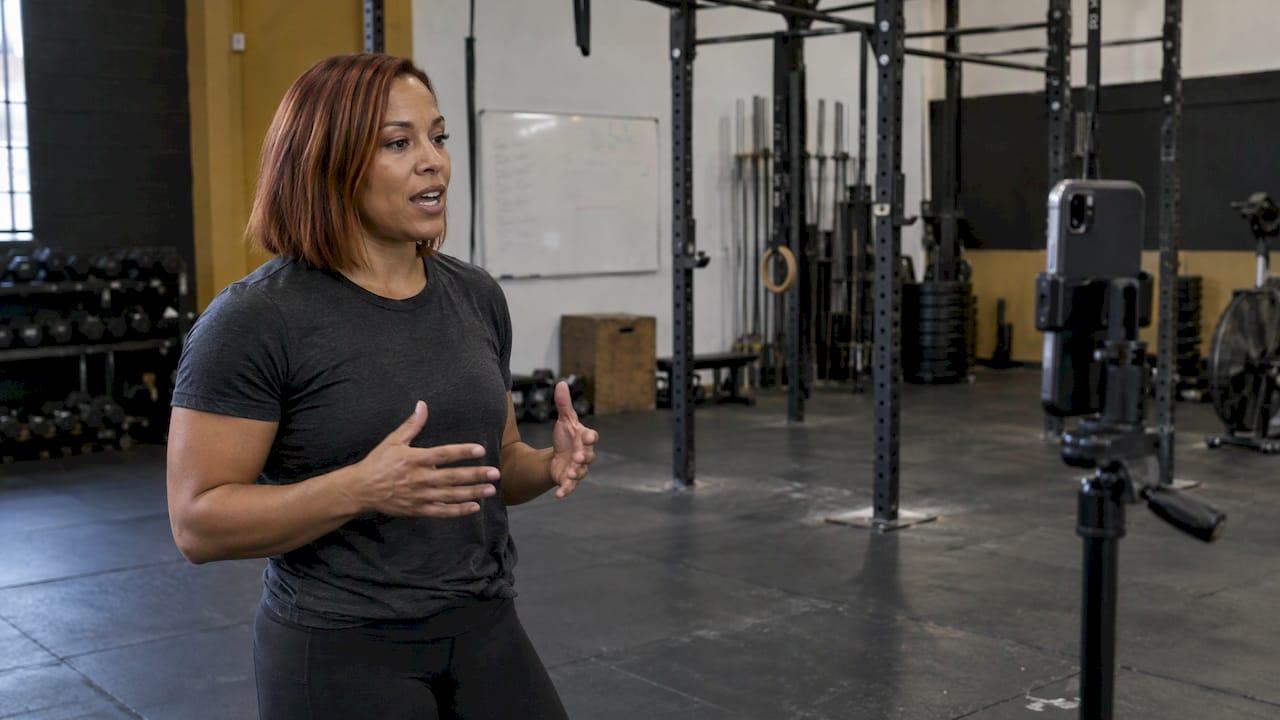
A Reels ad works for a gym when it shows one real class moment, makes one local offer, and sends the viewer to a page or form that books the visit. Everything else, the targeting, the music and the budget, matters less than those three things. Below is the full routine: how to build the campaign in Meta Ads Manager, what to put in the video second by second, how to reach people near your box, and how to tell whether the ad produced members or just views.
TL;DR
- Run Reels ads on the Leads or Sales objective with a specific trial offer, not on views or engagement. Meta's own list of objectives includes Leads, Engagement, Traffic, Awareness and Sales, and the objective you pick decides who Meta shows the ad to.
- Shoot fullscreen vertical video, put the hook in the first three seconds, and keep critical text clear of the top and bottom of the screen where the app's buttons sit.
- Target a tight radius around the gym, then judge the ad on cost per booked trial and trial-to-member rate, not clicks.
- Change one variable at a time when testing, and give every version the same daily budget.
- A Reel only pays off if the follow-up is fast: the ad starts the conversation, the booking page and a quick reply finish it.
Table of Contents
- Why Reels suit a gym's local ad budget
- How to set up a Reels ad in Meta Ads Manager
- Current creative specs for gym Reels ads
- What goes in the video: a 30-second structure
- Targeting nearby prospects and choosing a budget
- Testing Reels creative without wasting money
- Measuring whether Reels bring members
- Common mistakes with gym Reels ads
- Our perspective
- Get the Reels, the page and the follow-up working together
- FAQ
- Sources
Why Reels suit a gym's local ad budget
A gym sells movement, energy and community. All three show better in motion than in a still photo, which is why short vertical video is the natural format. Reels also run inside Instagram's full-screen feed, so a good class clip gets the viewer's whole screen for a few seconds.
For a local gym that has two practical consequences. First, you can reach people by location, so your budget is spent on those within a short drive. Second, the creative can be made on a phone at your own gym: your coaches, your members, your whiteboard. Polished production is not the bar. Specific, local and real is.
If you are choosing between channels, our guide to Instagram ads for gyms covers the wider Instagram picture, and the same video thinking carries over to YouTube Shorts ads and TikTok ads for gyms.
How to set up a Reels ad in Meta Ads Manager
Meta's Instagram Help Center describes the path for creating a Reels ad in Ads Manager: create a campaign, choose an objective that matches your goal, set budget, schedule and audience, pick Reels under placements (or use Advantage+ placements), add your identity, destination and creative, then publish. Here is what each step means for a gym owner.
Step 1: Pick the objective
Choose the objective that matches the action you want. For a gym, that is almost always a lead (a form fill or a trial booking). Views and engagement feel good in the dashboard but do not pay a coach. If your trial booking happens on your own website, make sure the page is built to book; a landing page that loads slowly or asks for too much kills the best Reel. Our gym website design and gym lead generation work is built around that handoff.
Step 2: Set budget, schedule and audience
Start with a daily budget you can sustain for several weeks, so the ad has time to settle before you judge it. Constantly editing a new campaign resets its learning, so resist the urge to tweak in the first days.
For audience, think in terms of travel time. Most members come from a short drive of the gym, so draw the location around your neighborhood, add the surrounding ZIP codes or a radius, and keep interests broad. A dense city box has a smaller catchment than a suburban or small-town gym. Pinning the neighborhoods your members actually live in beats guessing a radius.

Step 3: Choose placements
You have two options: let Advantage+ placements spread the ad across Instagram and Facebook surfaces, or select Reels manually. If you only built a vertical video, Reels is where it belongs. A Reels-only placement is also a clean way to learn how your vertical creative performs by itself. Either way, check the preview on every placement before publishing, because text that looks fine in Reels can sit under a button in Stories.
Step 4: Add identity, destination and creative
Select your gym's Instagram account as the identity, so the ad looks like it comes from you and people can tap through to your profile. The destination is the trial-booking page or an instant form. Write the primary text in one or two short lines; the video does the selling.
Step 5: Publish and review
Ads are reviewed before they run. Meta's U.S. Advertising Standards say ads are checked against those standards, advertisers must comply with applicable laws, and Meta may reject, approve or remove ads. The same page says the policies can change without notice, so skim it before a big launch, especially if your ad makes any health or body claims.
Current creative specs for gym Reels ads
Meta's help page for Reels ads says the video should be fullscreen vertical, can run up to 15 minutes, and works best with sound. It also says not to use licensed music, face or camera effects, GIFs or product tags in Reels ads. That licensed-music point matters for gyms, because a trending track that works in an organic Reel can get an ad rejected. Use original or royalty-cleared audio, or let the coach's voice and the sound of the room carry it.
Length limits are generous. In practice, aim well under a minute. A short ad is easier to hold attention for, and a gym offer is simple enough to state in under 30 seconds.
Practical formatting habits that cost nothing:
- Shoot vertical from the start. Cropping a landscape clip into a vertical frame cuts off faces and the barbell.
- Add captions. Plenty of people scroll with the sound off, and the offer has to read without audio.
- Keep key text away from the edges. The caption, the profile name and the call-to-action button sit over the bottom of the screen, so the offer line belongs in the middle.
- Preview in Ads Manager on the actual placement before you publish. Specs and safe-zone guidance change, so Meta's own help page is the thing to check, not a screenshot from last year.
What goes in the video: a 30-second structure
A workable gym Reel follows a simple order. Here is a script structure you can film in an afternoon.
| Seconds | Beat | Gym example |
|---|---|---|
| 0–3 | Hook | A coach rack-pulling a barbell with text: "New to CrossFit? Your first week, explained." |
| 3–8 | Problem | "Walked into a gym and felt lost?" over a shot of a crowded commercial floor |
| 8–16 | Benefit | Small group, coach cues every rep, scaled movements for every level |
| 16–22 | Proof | A real member says one sentence about their first month; a quick class montage |
| 22–27 | Offer | "Free intro class, Saturday 9 a.m., 8 spots" |
| 27–30 | Call to action | "Tap Book Now. Parking is out back." |
That structure is a starting point, not a rule. What holds across the formats that work is the order of priorities.
The hook decides everything
If the first three seconds fail, the rest of the video is never seen. That means the fix for a Reel nobody finishes is almost always the opening, not the targeting. Open on movement: a clean snatch, a partner workout starting, a coach turning to the camera. Do not open on a logo, a wave or a title card.
Hook ideas that suit a local gym:
- A coach saying, to camera, who the class is for ("If you have never touched a barbell, this class is for you").
- A split screen of a first-day member and the same member months later, with their permission.
- A myth-buster: "You do not need to be fit to start CrossFit."
- A 10-second tour from the parking lot to the whiteboard, so a nervous beginner knows what walking in looks like.
Make the offer specific and local
"Join today" is not an offer. "Free intro class, Saturday at 9 a.m., eight spots" is. Name the neighborhood or the street, name the class, name the time. Specific offers reduce the effort a viewer has to spend to say yes, and naming a limited number of spots gives a real reason to book now, as long as the limit is true.
The page the ad points to has to repeat the same offer, with the same words, the price and terms of the intro, and a booking form that works on a phone. A mismatch between ad and landing page is one of the commonest reasons a good Reel produces few leads.
Show people, not equipment
Prospects choose a gym for the people. Show your coaches and members, a coach introducing themselves, a group finishing a workout together. A "meet the coach" Reel works because the viewer's real worry is whether they will fit in. Get written permission from anyone who appears prominently in a paid ad.

One idea per ad
A Reel that teaches a movement, announces a challenge and pitches the membership will do none of them well. Make separate ads for separate jobs: one for beginners, one for the intro offer, one for a coach introduction. That also gives you clean tests later.
Targeting nearby prospects and choosing a budget
Local reach is where gym Reels ads earn their keep. Set location first, then refine.
- Draw a tight radius around the gym. Take the area people will realistically drive to, then check it against where your current members live. A city gym covers fewer miles than a suburban one.
- Keep interests few and broad. Piling on interests narrows an audience that is already small. Let the creative filter the audience: a beginner-focused Reel attracts beginners.
- Set a budget you can hold for weeks. A small daily spend run for a month teaches you more than a big spend run for three days. For paid ad pricing and how we structure it, see our gym paid advertising page.
- Do not change much early. New campaigns need time before the numbers mean anything.
If your market is small, Reels can also run alongside a neighborhood-based channel. Our guide to Nextdoor ads for gyms covers that option.
Testing Reels creative without wasting money
Because the video is the biggest lever you control, test it deliberately. The rules are plain:
- Write the hypothesis first. For example: "A coach-to-camera hook will produce cheaper trial bookings than a member-montage hook."
- Change one thing at a time. Hook, offer or audience, never several at once, or you will not know what moved the result.
- Give each version the same daily budget and let them run at the same time.
- Use Meta's built-in A/B testing tool rather than switching ads on and off by hand, which makes the audiences overlap.
- Judge on the cost of an enquiry or booking, not on clicks or likes.
A fuller walkthrough, with a week-by-week plan, is in our creative testing plan for gyms.
Measuring whether Reels bring members
Views tell you whether the hook worked. They do not tell you whether the ad filled a class. Track a short chain:
| Metric | What it answers |
|---|---|
| Hook rate (viewers who stay past the first few seconds) | Is the opening working? |
| Cost per lead | What does one inquiry cost? |
| Cost per booked trial | What does a real visit cost? |
| Show rate | How many booked trials actually come? |
| Trial-to-member rate | How many visitors join? |
| Cost per new member | Does the ad pay for itself? |
Cost per new member is total ad spend divided by the members the campaign brought in. Compare it with what a member is worth over their stay, and you know whether to scale. To tie bookings back to the ad, use tagged links (UTMs) or Meta's conversion tracking, and keep the booking page the same across tests so the data stays comparable. If you want a broader view of how to read marketing returns, this piece on measuring marketing ROI walks through the logic, and our own lists of must-track gym marketing metrics and why tracking fitness ad performance matters cover the gym-specific side.
The follow-up is part of the ad
A lead that waits a day for a reply is usually a lost lead. Decide before launch who answers new inquiries, how fast, and what the first message says. Automated text and email confirmations help, but a person who can answer "Is this class okay for a beginner with a bad shoulder?" closes more trials.
Common mistakes with gym Reels ads
- Optimizing for views. Cheap views from people across the county do not fill a class.
- Using a trending licensed song. Meta's help page says to avoid licensed music in Reels ads.
- No offer. A beautiful workout clip with no next step is content, not an ad.
- A slow or confusing booking page. Most viewers are on a phone and give a page seconds.
- Editing the campaign daily. Let it run, then change one thing.
- Never refreshing the creative. Local audiences are small, so the same clip gets seen again and again. Rotate new hooks and new coaches regularly.
Our perspective
Most gym owners we talk to do not have a Reels problem. They have a handoff problem. The video gets attention, then the landing page is slow, the form is long, and nobody replies until the next morning.
That is why we treat the ad, the page, the follow-up and the reporting as one system. A strong Reel with a weak booking path leaks leads, and a strong booking path with weak creative never gets the traffic. When one accountable partner owns all of it, you can see where the leak is and fix it.
Our focus is gyms and fitness businesses only, so the coach-to-camera hook, the intro class offer and the neighborhood radius are not experiments for us. They are the normal starting kit. Our approach starts with an audit of what you have, then a custom strategy, launch and scaling.
Collin
Get the Reels, the page and the follow-up working together
Enoch Marketing is a digital marketing agency built only for CrossFit gyms and fitness brands in the United States. Our paid advertising covers Meta and Google, and we also build the landing pages, the lead follow-up and booking, and the reporting that show which ads bring members. Packages are fixed-price monthly retainers with no lock-in contracts: Get Found at $1,500 per month, Fill the Floor at $2,500 per month and Growth Engine at $4,500 per month, with Custom Growth for bigger needs. You can see them on our pricing page or read about the full range of services.
If you want a second pair of eyes on your current ads or your next launch, book a free strategy session through enochmarketing.com. For a bigger-picture plan, our step-by-step gym marketing plan shows where Reels fit.
FAQ
Do Reels ads work for a small local gym?
Yes, because you can limit them to the neighborhoods your members come from, so a small budget reaches the right people. Pair a local offer, such as a free intro class, with a booking page that matches it, and judge the result on cost per booked trial.
How long should a gym Reels ad be?
Meta allows Reels ad video up to 15 minutes, but a gym offer does not need that. Keep it short enough to hold attention, with the hook in the first three seconds and the offer and call to action at the end.
Can I use trending music in my ad?
Meta's Reels ad guidance says not to use licensed music. Use original or royalty-cleared audio, or rely on the coach's voice and the sound of the class, and add captions so it works on mute.
Should I use Advantage+ placements or Reels only?
Advantage+ lets Meta spread the ad across placements, while Reels-only keeps delivery to the vertical feed your video was made for. If your creative is vertical, check the preview on each placement either way, and compare results by cost per booked trial.
What should I measure first?
Start with cost per lead and cost per booked trial, then add show rate and trial-to-member rate. Views and likes show interest, but only bookings and new members show the ad paid for itself.
Sources
- Create Instagram Reels ads in Meta Ads Manager (Instagram Help Center)
- Introduction to the Advertising Standards (Meta Transparency Center)
- Measuring marketing ROI