
Tracking fitness ad performance is the process of measuring how advertising campaigns produce actual paying gym members, not just clicks or form fills. Gym owners who skip this step spend money on leads that never show up. The difference between a profitable campaign and a money pit is almost always found in the data. This guide covers the frameworks, metrics, and practical steps fitness marketers need to turn ad spend into measurable member growth.
Why track fitness ad performance at all?
Ad performance tracking is defined as connecting every dollar of ad spend to a real business outcome, such as a trial attended, a membership sold, or a member retained past 90 days. Without that connection, gym owners make budget decisions based on vanity metrics like clicks and impressions. Those numbers feel good but tell you nothing about revenue.
The stakes are real. Meta CPMs increased 89% between 2020 and 2025. That means the same ad budget buys far less reach than it did five years ago. Every misallocated dollar now costs more than it used to.

Enochmarketing works exclusively with CrossFit gyms and fitness brands, and the pattern is consistent: gyms that track performance at the conversion level grow faster than those that track only clicks. The importance of fitness ad tracking is not a best practice. It is the foundation of any campaign worth running.
How tracking improves lead quality and cuts acquisition costs
The most direct benefit of ad performance analysis is a lower cost per paying member. Tracking deeper conversion events, such as trials attended and 90-day active members, gives ad platforms the signal they need to find better prospects.
Offline conversion imports that teach ad platforms to prefer leads who convert to paying members typically improve lead quality by 25–40% over a 90-day period. That is not a marginal gain. A gym spending $3,000 per month on ads can effectively get the output of $4,200 in spend without increasing the budget.
The mechanism works like this:
- Connect your CRM to Google Ads or Meta Ads Manager using offline conversion imports.
- Upload data on which leads actually attended a trial, signed a membership, or stayed active past 30 days.
- The platform's algorithm uses that data to find more people who match those high-value patterns.
- Over 60–90 days, the cost per qualified lead drops as the algorithm self-corrects.
One CrossFit box applied this approach by tracking deeper conversion events such as trials attended and 90-day active members. The result was a 35% reduction in cost per attending trial within six weeks. That kind of result does not happen by watching click-through rates.
Pro Tip: When you set up offline conversion imports, exclude leads who called but never booked. Feeding low-quality signals into the algorithm teaches it to find more of the wrong people.
What metrics framework should you use to diagnose campaigns?
Reading ad metrics without a framework leads to false fixes. A gym owner sees a high cost per click and pauses a campaign that was actually producing members at a profitable rate. That is a misdiagnosis, and it costs money.
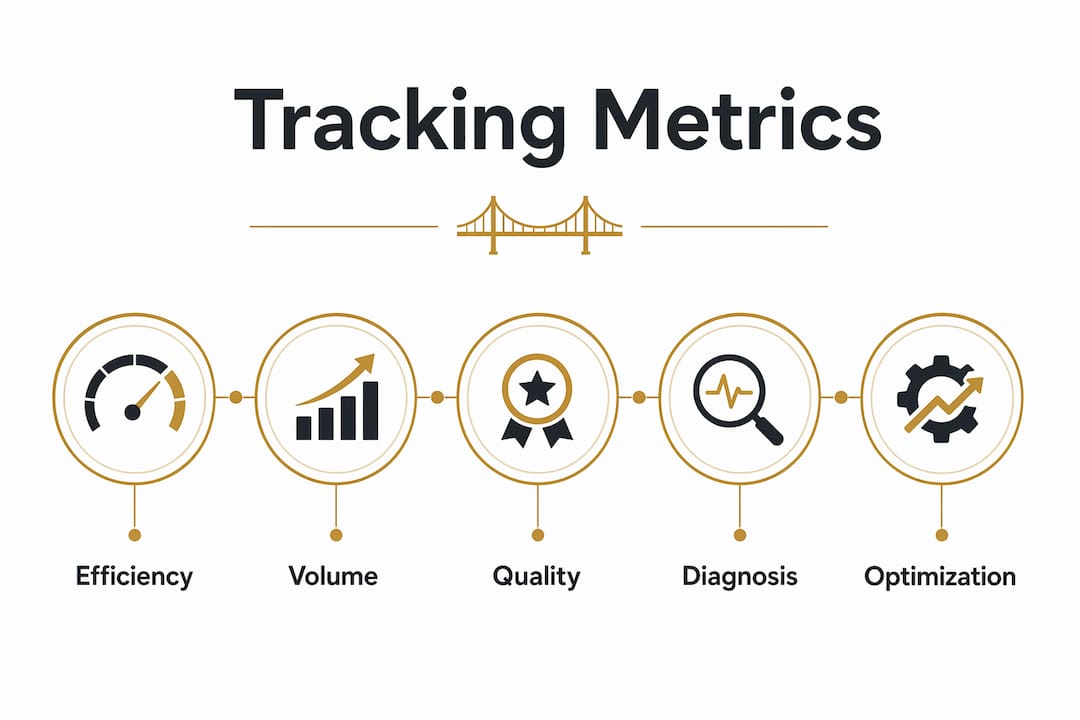
The correct approach uses a tiered hierarchy. Meta ads performance analytics organizes metrics into three tiers: efficiency first, then volume, then quality.
Tier 1: Efficiency metrics
Start with ROAS (return on ad spend) and CPA (cost per acquisition). These are your primary indicators. If ROAS is below your target, something is broken. The other tiers tell you where.
Tier 2: Volume metrics
Impressions and reach explain delivery health. If your CPA is high but reach is low, the algorithm is not spending your budget efficiently. This usually points to an audience that is too narrow or a bid strategy that is too conservative.
Tier 3: Quality metrics
CTR (click-through rate) and engagement rate reveal whether your creative resonates. A low CTR with healthy reach means people are seeing the ad but not responding. That is a creative problem, not a targeting problem.
The compound signal approach works like this:
- Check efficiency metrics first. Is ROAS or CPA outside your target range?
- If yes, check volume metrics. Is the campaign spending its budget and reaching enough people?
- If volume is healthy, check quality metrics. Is the creative generating clicks and engagement?
- Form a hypothesis based on what the compound signal tells you before making any change.
Analyzing ad performance as a diagnostic discipline, rather than reacting to single metrics, reduces false-positive campaign pauses. Gym owners who react to daily noise make premature changes that reset the algorithm's learning phase and waste budget.
Pro Tip: Review performance on a weekly cadence, not daily. Daily data is too noisy for reliable decisions. A structured weekly review using compound metric signals accelerates decision accuracy without triggering unnecessary changes.
What happens when you optimize on incomplete data?
The most expensive mistake in fitness advertising is making creative or budget decisions before the data matures. This is especially common in fitness app marketing but applies equally to gym campaigns running lead generation ads.
Creative that wins by install volume often loses when evaluated by subscription revenue. A creative with a lower cost per install may attract people who never convert to paying members. Extending your evaluation window from 48 hours to 7–14 days with revenue attribution gives you the true subscriber acquisition cost.
The CPI trap is real. Gyms that optimize for the lowest cost per lead often end up with a pipeline full of people who want a free trial and nothing else. The metric looked good. The business result did not.
| Optimization signal | What it measures | What it misses |
|---|---|---|
| Cost per click | Ad engagement efficiency | Lead quality and intent |
| Cost per lead | Form fill volume | Whether leads attend or convert |
| Cost per trial attended | Show-up rate | Long-term member retention |
| Cost per paying member | True acquisition cost | Nothing. This is the right metric. |
Without integrated attribution across ad platforms, CRM, and billing data, teams systematically scale the wrong creatives and kill the right ones. Over time, that error doubles subscriber acquisition costs.
Pro Tip: Before pausing any ad creative, check whether it has generated at least one full week of post-click data. Creatives killed at 48 hours often had the best long-term conversion rates.
How to set up fitness ad tracking that actually works
Effective tracking is not a one-time setup. It is a system with recurring inputs, feedback loops, and a review cadence. These are the practical steps that produce results.
-
Track phone calls with a duration threshold. 40–50% of gym conversions happen by phone. Calls under 30 seconds are almost never qualified leads. Set your call conversion threshold at 45–60 seconds to exclude existing members and wrong numbers from your conversion counts.
-
Import offline CRM data to your ad platforms. Connect your gym management software or CRM to Google Ads and Meta Ads Manager. Upload conversion events weekly: trials booked, trials attended, memberships signed. This closes the feedback loop and teaches the algorithm what a real member looks like.
-
Define a hypothesis before changing anything. Gym owners who treat ad analysis as mere reporting make reactive changes that hurt performance. Before pausing an ad set or changing a budget, write down what you believe is wrong and why. That discipline prevents costly errors.
-
Use multi-touch attribution. Last-click attribution gives all credit to the final touchpoint before conversion. A prospect who saw three Facebook ads, clicked a Google search ad, and then called the gym looks like a Google conversion in last-click models. Connecting ad spend with revenue via CRM and billing data gives you accurate ROI across every channel.
-
Maintain a weekly review cadence. Daily metric checks create anxiety and bad decisions. A structured weekly review, using the compound signal framework described above, gives you enough data to act on without overreacting to noise.
-
Use benchmark data to contextualize performance. A $45 cost per lead might look alarming in isolation. In a competitive urban fitness market, it might be well below average. Benchmark data from fitness-specific campaigns gives you the context to judge whether a number is a problem or a win. Enochmarketing publishes fitness ad tracking guidance specifically for gym owners navigating these decisions.
For gym owners building their first real tracking system, a paid ads strategy that integrates tracking from day one is far more efficient than retrofitting measurement onto an existing campaign.
Pro Tip: Use fitness tracking best practices from adjacent industries to pressure-test your own setup. Fitness tracking methods used by personal trainers to monitor client progress share the same logic as ad tracking: consistent measurement, defined thresholds, and regular review cycles.
Key Takeaways
Tracking fitness ad performance at the conversion level, not the click level, is the single most effective way to reduce acquisition costs and grow paying memberships.
| Point | Details |
|---|---|
| Track paying members, not just leads | Optimize for trials attended and memberships signed, not form fills or clicks. |
| Use offline conversion imports | Upload CRM data to ad platforms weekly to improve lead quality by 25–40% over 90 days. |
| Apply the three-tier metrics framework | Check efficiency, then volume, then quality metrics before diagnosing any campaign issue. |
| Extend creative testing windows | Evaluate creatives over 7–14 days with revenue data, not 48-hour install or click counts. |
| Review weekly, not daily | A structured weekly cadence reduces noise-driven decisions and protects algorithm learning phases. |
The tracking discipline most gym owners skip
Most gym owners I work with come in tracking clicks and leads. They know their cost per lead. They have no idea what their cost per paying member is. That gap is where most ad budgets disappear.
The shift that changes everything is treating ad analysis as a diagnostic process, not a reporting task. Reporting tells you what happened. Diagnosis tells you why and what to do next. Those are completely different activities, and only one of them grows a gym.
The other mistake I see constantly is siloed data. The ad platform lives in one tab. The CRM lives in another. The billing system is somewhere else entirely. Nobody connects them. So the gym owner sees a $30 cost per lead and thinks the campaign is working. Meanwhile, the CRM shows that 80% of those leads never responded to a follow-up. The real cost per member is $150, and nobody knows it.
Patience matters more than most gym owners expect. The algorithm needs 60–90 days of quality conversion data before it starts finding the right people consistently. Gyms that pull the plug at week three because the cost per lead looks high are resetting that learning cycle every time. The compounding benefit of disciplined tracking only shows up if you let it run.
The gyms that grow fastest are not the ones with the biggest budgets. They are the ones that know exactly what each dollar produces and adjust based on that knowledge. That is the real value of converting leads into paying members through a tracked, structured system.
— Collin
How Enochmarketing helps gyms track and grow
Fitness ad tracking only produces results when the setup is right from the start. Enochmarketing builds paid media campaigns for CrossFit gyms and fitness brands that include full conversion tracking, CRM integration, and offline data feedback loops from day one.

Every campaign Enochmarketing runs connects ad spend to real member acquisition data. That means gym owners see their actual cost per paying member, not just their cost per click. The agency's gym marketing services cover Meta Ads, Google Ads, lead funnel creation, and attribution setup tailored specifically for fitness businesses. For gym owners ready to see what a fully tracked campaign looks like, Enochmarketing's pricing is available without a sales call.
FAQ
Why does tracking fitness ad performance matter more now?
Meta CPMs rose 89% between 2020 and 2025, meaning every wasted dollar costs more than it used to. Tracking performance at the conversion level is the only way to protect your budget as ad costs rise.
What is the most important fitness ad metric to track?
Cost per paying member is the most important metric. It connects ad spend directly to revenue and exposes whether your leads are actually converting, which click-based metrics cannot show.
How long should I run a fitness ad before evaluating it?
Evaluate creatives over a 7–14 day window using revenue or membership data, not 48-hour click or install counts. Early data is too noisy to make reliable decisions and can lead to pausing high-value campaigns prematurely.
How do phone calls fit into fitness ad tracking?
40–50% of gym conversions happen by phone. Set a minimum call duration of 45–60 seconds to count a call as a qualified conversion and exclude non-prospective interactions from your data.
What does offline conversion import do for a gym's ad campaigns?
Offline conversion imports upload CRM data, such as trials attended and memberships signed, directly into ad platforms. This teaches the algorithm to find people who match your best members, improving lead quality by 25–40% over 90 days.