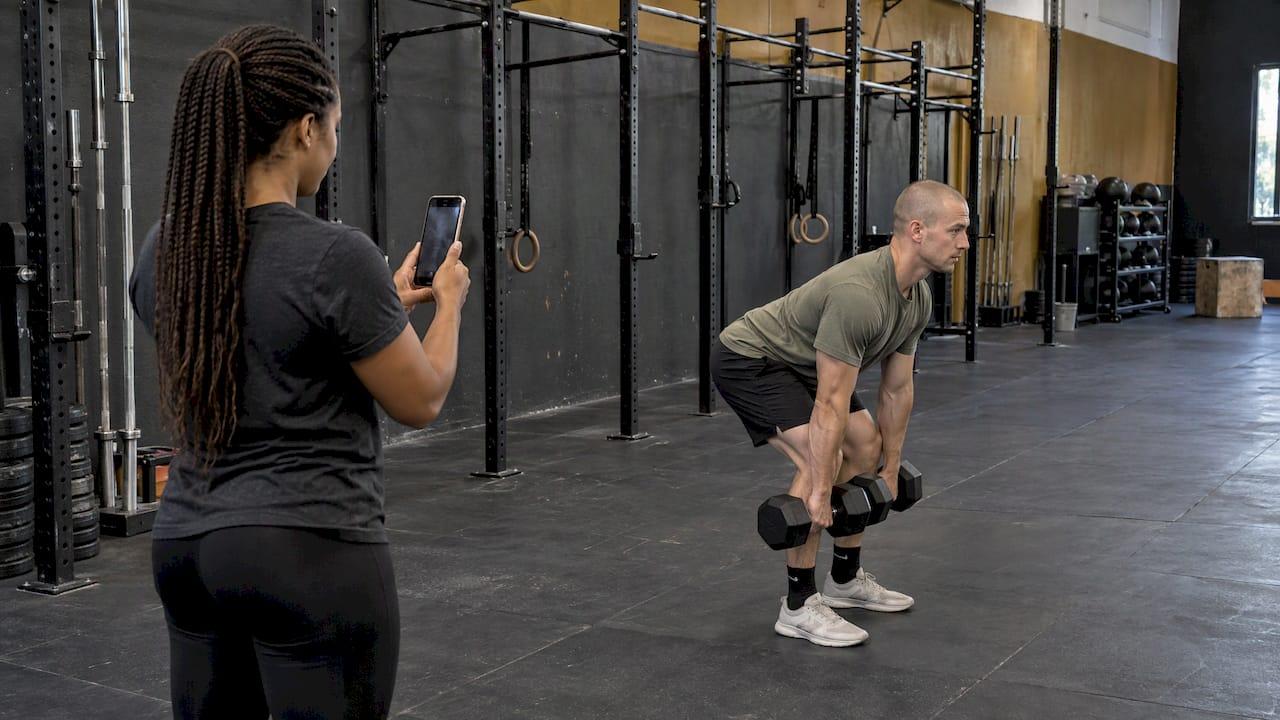
Instagram ads work for a gym when they do one job: get people who live near you to book a first visit. That means a single goal per campaign, a tight radius around your front door, a low-friction intro offer, short vertical video, and a follow-up routine that answers new leads fast. You build and run all of it in Meta Ads Manager. This guide walks through each piece in the order you would set it up.
TL;DR
- Pick one goal per campaign, tied to a booked visit or a signed membership, not to likes or reach.
- Target a radius around your gym (a few miles in a city, wider in suburbs), then test interests and lookalikes after you have data.
- Use 9:16 vertical video for Reels and Stories, keep it short, and show a real class instead of a stock-looking promo.
- Start with a modest daily budget, let it run at least a week, and judge it by cost per trial or booked visit.
- Ads only pay off if someone responds to new leads quickly. Fix follow-up before you raise spend.
Table of Contents
- Start with a goal you can trace to a booked visit
- Choose an intro offer people can say yes to
- Set up your first campaign in Meta Ads Manager
- Target the people who can realistically walk through your door
- Creative that fits Instagram: Reels, Stories and Feed
- Budget and timeline for a first test
- Metrics that tell you whether it is working
- Follow up fast, or the ad budget is wasted
- Get help running it
- FAQ
- Sources
Start with a goal you can trace to a booked visit
"Get more members" is too vague to steer an ad account. Break it into outcomes you can count: qualified inquiries, booked intro visits, new joins from the campaign, and later, retention. One gym industry guide puts the rule plainly: if you can't trace an ad goal back to a booked visit or signed agreement, it is a vanity metric.
Gym software maker GymMaster suggests SMART goals (specific, measurable, achievable, relevant, time-bound) before you touch Ads Manager. A usable version looks like this: "Book 25 intro visits from people within five miles in the next 30 days."
Keep one primary objective per campaign. If a single ad pushes memberships, personal training, class packs and merchandise at once, none of the offers lands. If you want to sell several things, run several campaigns.
Which Meta objective fits a gym
Meta's Ads Manager offers six objectives: Awareness, Traffic, Engagement, Leads, App Promotion and Sales. For most gyms the choice is simple:
- Leads when you want names, phone numbers and emails collected for your intro offer.
- Traffic when you want people to land on a page of your own, such as a landing page with a booking calendar.
- Awareness or Engagement only when you are deliberately building familiarity in a new area, and you accept that these are harder to tie to revenue.
Choose an intro offer people can say yes to
Cold prospects don't know you. The offer has to lower the risk of walking in, and it has to be specific. Common formats for gyms and CrossFit boxes:
| Offer | Best for | Why it works |
|---|---|---|
| Free intro class or on-ramp session | CrossFit boxes, group studios | Lets a beginner try the coaching and community with no commitment |
| Low-cost trial week | Studios with multiple class types | Gives time to form a habit before a decision |
| Challenge (6 weeks, for example) | Gyms that can run a cohort | Creates a clear start date and a group to belong to |
| Free consult plus goal plan | Personal training and small-group gyms | Speaks to people who want guidance, not just access |
Whatever you choose, name it in the first line of the ad, say what happens on the first visit, and say where you are. A person scrolling Instagram decides in seconds whether an ad is for them. "Free intro class at [Neighborhood] CrossFit, Saturday mornings" beats "Transform your life."
Two more habits help:
- Match offer to audience temperature. Cold audiences get the lowest-friction offer. People who already watched your videos or visited your site can get a more direct invitation to book.
- Keep a standing offer for at least a few weeks so you can compare creative against the same promise, rather than changing everything at once.
Set up your first campaign in Meta Ads Manager
Meta's own help center describes the flow: go to Ads Manager, click Create, pick an objective that supports Instagram, then edit your budget, schedule, audience and placements. Your Instagram professional account or a connected Facebook Page supplies the identity the ads run under. Here is how that plays out for a gym.
- Connect your accounts. Link your Instagram professional account to your Facebook Page and Ads Manager so ads show under your gym's name.
- Choose the objective. Leads for an instant form, Traffic for a landing page.
- Set the audience. Use a location around your gym (details below), an age range that matches your members, and leave interests light at first.
- Pick placements. Instagram Reels, Stories and Feed. Start with automatic placements only if you have vertical creative ready for all of them.
- Set budget and schedule. Use a daily budget and no end date, so you can pause on your own terms.
- Build the ad. Add your video or image, primary text, headline and a clear button such as Sign Up or Learn More.
- Build the form or landing page. Ask for name, phone and email, and nothing more. Every extra field costs you leads.
- Publish and check delivery. Confirm the ad is approved and the form sends leads somewhere your team sees them instantly.
Before you publish, test the lead path yourself. Submit the form from a phone and make sure the notification, the automated text and the calendar link all work.
Target the people who can realistically walk through your door
Members rarely travel far. One company playbook says a 3 to 8 km radius, roughly 2 to 5 miles, suits fitness and wellness studios because members typically live within about 20 minutes. In Ads Manager you can drop a pin on your gym and set a radius around it, which GymMaster also recommends as a way to reach people within a set distance.
A practical starting point:
- Dense urban area: a small radius of a few miles around the gym.
- Suburban or spread-out area: widen the radius, since people drive further for a gym they like.
- Location type: people who live in the area, not people just passing through.
- Age: begin with the range your current members fall in rather than a guess. If you are unsure, look at your member list.
If you want a deeper walkthrough of radius choices, our guide to geo targeting for gyms covers radius, ads and local search together.
Interests and lookalikes
Interests like CrossFit, yoga, weightlifting or marathon training can sharpen cold audiences, but you don't need to stack many of them. Broad targeting inside a tight radius often does well, because the radius is already doing most of the filtering.
Once you have a pool of real leads or members, build a lookalike audience from that list so Meta can find similar people nearby. Exclude current members and people who have already booked so you don't pay to advertise to them. We explain the setup in lookalike audiences for gyms, and a second walkthrough on building and testing them covers how to compare results.
Creative that fits Instagram: Reels, Stories and Feed
Each placement has a job. A local-business playbook pairs Reels (15 to 90 second vertical videos) with awareness, Stories (full-screen vertical, under 10 seconds) with converting people who have shown interest, and feed images or carousels with nurturing. You don't need to run all three on day one. Start with one strong vertical video and adapt it.

Format basics from Meta's own guidance
Meta's Creative Strategy Study Guide gives these specifics:
- 9:16 is the recommended aspect ratio for Reels and Stories; 4:5 works best in the mobile feed.
- 80% of Reels are viewed with sound on, and Reels ads with both music and voice-over scored higher on average positive response than those without sound.
- People are more likely to watch to the end of video ads under 15 seconds.
- Suggested lengths are 125 characters for primary text, 40 for the headline and 25 for the description.
Shoot vertical, put the point in the first two seconds, and add captions so the ad works muted too.
What to show
The creative that tends to do best for studios is a real clip of a real class. One marketing resource describes a 15 to 30 second class preview, shot on a phone with decent lighting, as the top format for most boutique and hybrid studios because it shows what it feels like to be there. Ideas to build from:
- A coach greeting a first-timer at the door and walking them through the warm-up.
- A scaled workout, so beginners see there is a place for them.
- Members high-fiving after a workout, with the offer in text on screen.
- A 10-second Story with one line: the offer, the neighborhood, the button.
Many prospects hesitate because they fear being judged on day one. Creative that speaks to that worry, with friendly coaches and real beginners, meets people where they are. If you want to understand that hesitation better, read about gym anxiety and think about how your first 60 seconds in the ad can address it.
Always get consent from members before featuring them in an ad.
Budget and timeline for a first test

How much to spend depends on your market, your offer and your close rate. Published starting ranges give you a frame. Rework.com suggests $5 to $15 a day for retargeting, $15 to $30 for lookalikes and $20 to $40 for cold prospecting, which totals $40 to $85 a day, or $1,200 to $2,550 a month, if you run all three. It also advises letting a campaign run at least seven days before judging it. Another guide says $15 to $30 a day gives the algorithm enough data to optimize for a local business.
For a first campaign, one cold prospecting campaign is enough. Start at a daily budget you can sustain for a month. Then:
- Give it a full week without edits, so the system can learn.
- Compare cost per lead and, more importantly, cost per booked visit.
- Replace the weakest creative, not the whole campaign.
- Add retargeting once you have people who watched your video or visited your page.
Ad spend is separate from what you pay anyone to manage it. If you hire help, ask what the fee covers, and what portion of your budget goes to media.
Metrics that tell you whether it is working
Impressions and likes feel good, and they don't pay rent. Track the numbers that connect to members:
| Metric | What it tells you |
|---|---|
| Cost per lead (CPL) | What you pay for a name and number |
| Click-through rate (CTR) | Whether the creative earns attention |
| Lead-to-visit rate | How well follow-up and the offer convert |
| Visit-to-member rate | How well your intro experience closes |
| Cost per new member | The number that decides whether to scale |
Some vendors publish benchmark targets. HighLevel lists CPL under $25 to $35, CTR of 1.5 to 3% or higher, and cost per member under $100. Treat benchmarks as a rough starting frame: your own numbers, by campaign, matter more. Tracking beyond clicks takes discipline, and our guide to must-track metrics for gym marketing goes through a full set.
When a number is off, change one thing at a time:
- Low CTR: new hook in the first two seconds, or a clearer offer.
- Cheap leads that never show: shorten the form wait, add a confirmation text, tighten the audience.
- Good show rate but few joins: look at the first-visit experience and the follow-up after it.
Follow up fast, or the ad budget is wasted
The ad's job ends when the form is submitted. After that, your response decides the outcome. A speed-to-lead guide notes that someone filling out an intro offer form is often comparing two or three studios nearby, and the one that responds first tends to set the tone and book the first class.
A simple routine:
- Capture every lead in one place.
- Send an automated text within the first minute, with your name, the offer and a booking link.
- Alert your whole team, not one inbox.
- Follow with a personal reply that references what they asked about.
- Keep a plan for silence: a second text the next day and a call after that.
If your front desk is coaching all day, automation takes care of the first touch so no lead waits for a call back.
Our perspective
We work only with CrossFit gyms and fitness brands, and the pattern is consistent: Instagram ads rarely fail because of the platform. They fail because the ad, the landing page, the follow-up and the tracking are run by different people who never compare notes.
That is why we treat paid media as one part of a connected system. The ad earns the click, a focused page or form earns the lead, fast text and email follow-up earns the booked visit, and reporting tells you which of those links is weak. When a gym owner sees one cost per new member instead of a pile of disconnected metrics, decisions get much easier.
Our advice for anyone starting: keep the first campaign narrow, one offer, one radius, one clear vertical video, and judge it by booked visits. Then scale what works. Gyms that build the full path, from ad to first workout, tend to get more from each dollar they spend.
Collin
Get help running it
If you would rather spend your time coaching than managing Ads Manager, our team builds and runs this for gyms. Our Paid Advertising service covers Meta and Google campaigns, and our monthly plans start with Get Found at $1,500 per month, Fill the Floor at $2,500 per month and Growth Engine at $4,500 per month. Compare them on the pricing page.
We also offer a Custom Growth plan, and for special campaigns we can price per new member acquired. There are no lock-in contracts. If you want to see how a plan fits your gym, you can book a strategy session and we will walk through your market and your numbers.
For more reading, see our paid ads strategy tutorial and our step by step gym marketing plan. If you are weighing other channels as well, look at Nextdoor ads for gyms.
FAQ
How much should a gym spend on Instagram ads?
Published starting points run from about $15 to $40 a day for a single campaign, depending on whether you are prospecting cold, using lookalikes or retargeting. Pick a daily amount you can keep running for at least a month, and judge results by cost per booked visit, not clicks. Raise the budget only after the numbers hold steady.
What is the best Instagram ad format for a gym?
Short vertical video is the strongest place to start. Use 9:16 for Reels and Stories and 4:5 for the feed, and show a real class with a clear offer in the first seconds. Add a feed image or carousel later for retargeting.
Should I use lead forms or send people to a landing page?
Lead forms are easier for cold audiences because people stay inside Instagram and fill in fewer fields. A landing page gives you more room to explain the offer and book a time. Many gyms test both, using the Leads objective for forms and Traffic for pages, and compare cost per booked visit.
How long before I know if my Instagram ads work?
Give a new campaign at least seven days before judging it, and a month if your volume is low. Judge by booked visits and new members, not impressions. Change one variable at a time so you know what caused any improvement.
Sources
- How to create Instagram ads in Meta Ads Manager (Meta)
- Creative Strategy Study Guide (Meta)
- Instagram Ads 101 (Buffer)
- Social Media Marketing for Gyms (GymMaster)
- Advertising in Gyms: 2026 Playbook
- Instagram Advertising for Local Business: A 2026 Playbook
- Social Media Ads for Fitness Studios (Rework)
- How to Run Instagram Ads For Local Businesses (AdStellar)
- Pump Up Your Gym Memberships: Master Local Ads (HighLevel)
- Speed to Lead for Fitness Studios (Helios Guides)