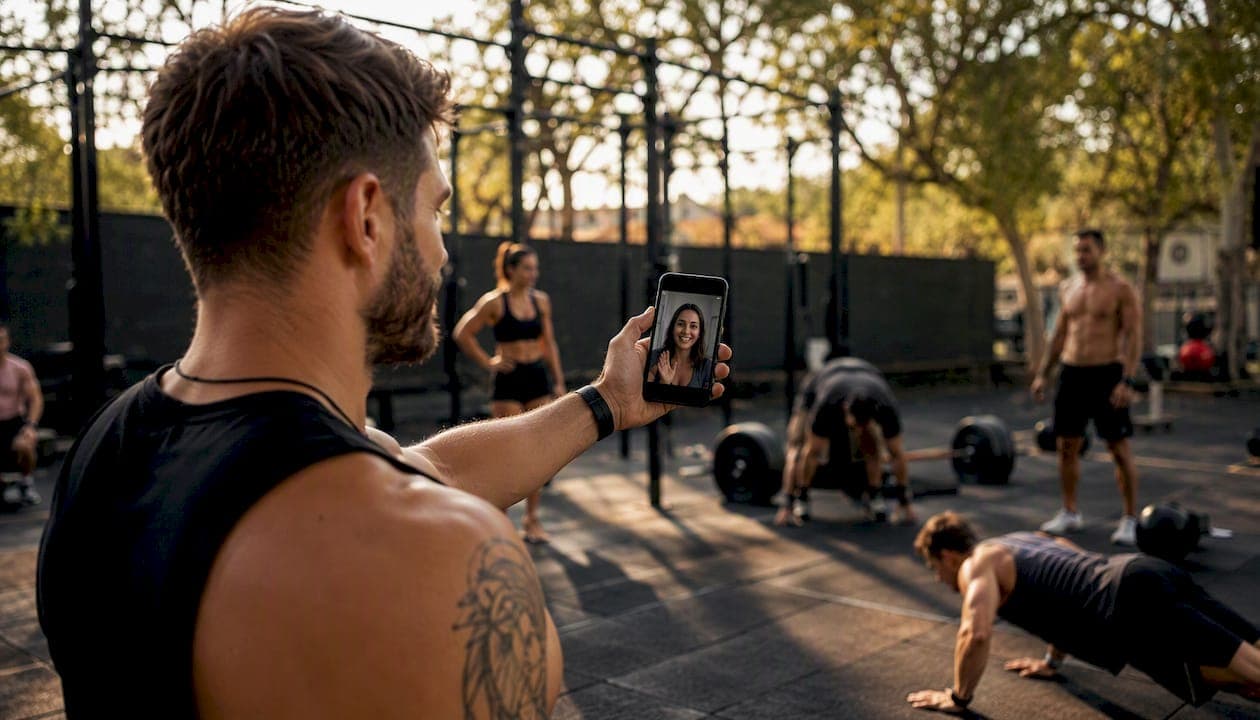
The fastest way to grow membership is to collect real member stories and reviews, then publish them everywhere a prospect makes a decision, not just on a "Testimonials" page nobody visits. Six tactics matter most right now: Google reviews on autopilot, 30 to 60 second video testimonials, before-and-after photo series with consent, reposted user-generated content from class check-ins, visible class attendance or "spots left" signals, and at least one local influencer or partner endorsement per quarter.
Start this week with one task: text your last 10 members who hit a milestone (first pull-up, 90-day mark, weight goal) and ask for a 30-second phone video answering "What changed since you joined?" That single batch usually produces two or three usable clips within 48 hours.
- Automate Google review requests at the moment of a win, not at random intervals
- Collect short vertical video testimonials instead of relying on written quotes alone
- Post real before-and-after photos with explicit written consent
- Repost member check-ins and tagged UGC to your own feed weekly
- Show class capacity or "almost full" signals on your booking page
- Line up one local micro-influencer or community partner endorsement per quarter
The WellnessLiving research on fitness studio social proof found that reviews, testimonials, and success stories consistently show up as top drivers of studio marketing performance. Gyms that treat proof collection as a weekly habit, not a one-time project, see it show up in trial signups within a month.
Key Takeaways
Social proof works best when gyms treat it as a weekly collection habit tied to member milestones, then display it directly on the pages where prospects decide to join.
| Point | Details |
|---|---|
| Automate the ask | Trigger review and video requests at milestone moments, not on a random schedule. |
| Prioritize video and UGC | Short, unscripted video testimonials convert better than polished written quotes alone. |
| Place proof at decision points | Put reviews and videos on pricing and lead pages, not a buried testimonials page. |
| Track conversion first | Measure pricing-page conversion lift before adding secondary KPIs like engagement. |
| Get consent every time | Document name, scope of use, and a revocation option before publishing any story. |
| Consider a managed system | Enoch Marketing runs collection, publishing, and reporting for gyms so the habit doesn't depend on staff memory. |
Table of Contents
- What Social Proof Strategies Work Best for Gyms?
- What Types of Social Proof Should Gyms Collect?
- How Do You Get Members to Give Reviews and Testimonials?
- Where Should Gyms Display Social Proof for Maximum Impact?
- How Do You Measure the ROI of Social Proof?
- What Are the Legal Rules for Using Gym Testimonials?
- What Scripts and Templates Work Best for Requesting Reviews?
- What Actually Moves Membership Numbers Fastest?
- How Enoch Marketing Helps Gyms Turn Proof Into Growth
- Frequently Asked Questions
- Sources
What Social Proof Strategies Work Best for Gyms?
Social proof works because it eliminates the single biggest barrier to joining a gym: fear of wasting money on something that won't work for someone like them. A stranger's five-star review or a video of a real member losing 30 pounds does something your sales copy cannot. It answers the unspoken question "will this work for me?" with evidence instead of a promise.
This is basic crowd psychology applied to fitness marketing. When a prospect sees that dozens of people similar to them joined, stayed, and got results, the decision to sign up feels safer. Trust transfers from the group to the individual considering membership. Authority signals, like a local news feature or a certification badge, do something slightly different. They tell the prospect that someone with credibility already vetted you, so they don't have to.
The data backs this up sharply. Adweek reports that 81% of shoppers research a purchase online before buying, which means most of your prospects have already read your reviews and scanned your photos before they ever call the front desk. If that research turns up thin proof, generic stock photos, or a testimonials page last updated two years ago, you lose them before the sales conversation starts.
Different proof types map to different stages of the buying journey:
- Awareness stage: A prospect scrolling Instagram sees a UGC repost of a real class and stops scrolling. That's the crowd effect working before they've even considered your gym.
- Consideration stage: They land on your pricing page and see a cluster of recent Google reviews mentioning coaching quality. Objections about cost start to soften.
- Decision stage: A video testimonial from someone with a similar starting point (age, goal, fitness level) tips them from "maybe" to "I'll try the trial."
Retention benefits from proof too. Members who see their own gym's wins celebrated publicly, class shoutouts, milestone posts, tend to stick around longer because they feel part of a visible, active community rather than a transaction.
What Types of Social Proof Should Gyms Collect?
Reviews and video testimonials drive the fastest conversions, while press mentions and awards build longer-term credibility that supports premium pricing. Here's how each type breaks down and what it does best.
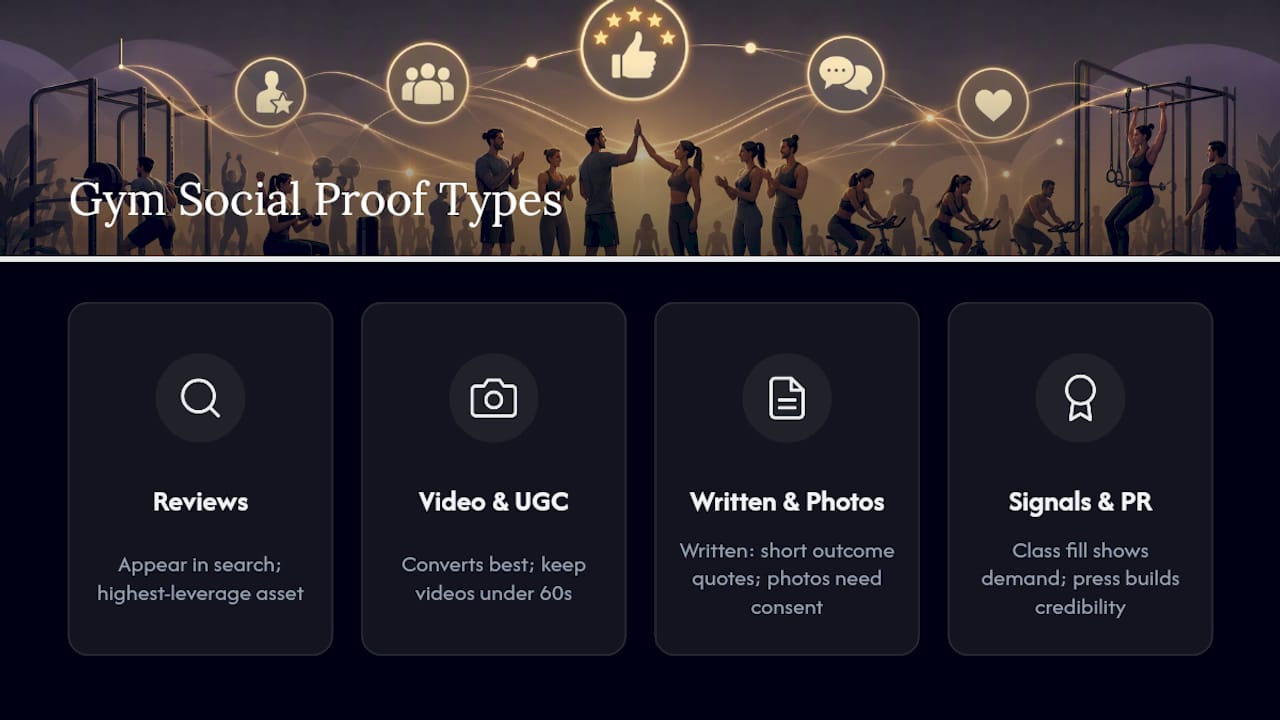
Google and third-party reviews are your highest-leverage asset because they show up in search results before a prospect ever visits your site. BrightLocal's analysis of review impact on click-through rates found that review volume and star rating materially change whether someone clicks through to a local business listing at all. Aim for steady weekly volume over sporadic bursts.
Written testimonials work well on landing pages and email sequences but carry less weight alone than video. Keep them short, specific, and tied to a measurable outcome ("Lost 22 pounds in 4 months" beats "Great gym, love the coaches").
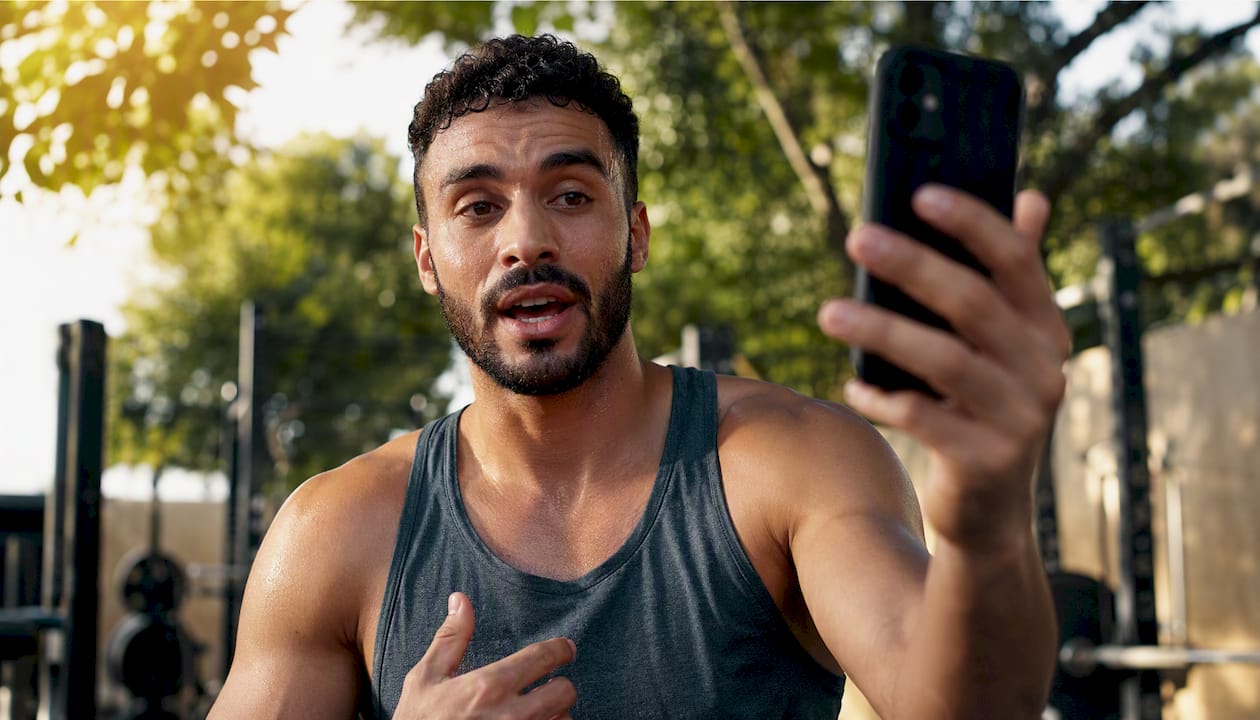
Short video testimonials convert the hardest because viewers can read tone, facial expression, and hesitation, none of which text conveys. Solitude Marketing's research on gym social proof points to video and reposted UGC as the formats that consistently drive the most engagement in fitness social content. Keep them under 60 seconds; longer clips lose viewers fast on mobile.
Before-and-after photos are the most persuasive format for weight loss or body composition goals specifically, but they need airtight consent and should never be edited or staged.
User-generated content (UGC), the check-ins, tagged photos, and Instagram stories members post themselves, carries a kind of unscripted authenticity you can't manufacture. Reposting it costs you nothing but a DM asking permission.
Class attendance and capacity signals ("12 of 15 spots filled") work as a subtler form of proof: they imply demand without asking anyone to say anything.
Influencer and local partner endorsements extend your reach into an audience that already trusts the endorser. Read more on micro-influencer marketing ideas for gyms for specifics on vetting local partners.
Press and awards matter less for day-to-day conversion but carry outsized weight on your homepage and in sales conversations with skeptical prospects who need third-party validation.
A quick way to think about the split: micro social proof (a DM screenshot, a quick voice note, a text saying "best decision I made this year") feels raw and immediate. Macro social proof (a local news feature, a "Best Gym" award) feels institutional and slower to earn. You need both, but micro proof is what you can generate every single week.
How Do You Get Members to Give Reviews and Testimonials?
The fastest way to scale collection is automating a prompt at the exact moment a member hits a win, not waiting for them to think of it themselves. Momentum fades within hours, so the ask has to be immediate.
Here's a workflow that works across most gym models:
- Trigger identification. Flag milestone moments automatically: first class completed, 30/60/90-day mark, a PR, a body composition goal, or a graduation from an intro program.
- Same-day outreach. Send an SMS or app notification within hours of the trigger, not days later. Speed matters more than polish here.
- Low-friction ask. Request one specific thing: a Google review, a 30-second video, or permission to repost their own social content. Don't ask for all three at once.
- Staff follow-up. If no response in 48 hours, a coach mentions it in person during the member's next visit. A verbal ask from a trainer they know converts far better than a second automated text.
- Publish within a week. Get the testimonial live somewhere visible fast, both to reinforce the member's decision to participate and to keep your proof pipeline current.
Sample request templates you can copy today:
- Google review SMS: "Hey [Name], so glad you hit your 90-day mark! Would you mind leaving us a quick Google review? Here's the link: [URL]. Takes about 60 seconds and helps other people find us."
- Video testimonial prompt: "Would you be open to a quick 30-second phone video about your experience? Just answer: what made you start, and what's different now?"
- UGC repost request: "Loved your post from Saturday's class! Mind if we repost it to our page? We'll tag you."
Consent matters at every step. Before you request or use anything, get explicit permission covering: the person's name (or first name only, if preferred), the date of the request, the specific scope of use (website, social, print, ads), and a clear way for them to revoke permission later. Keep a simple signed or digital waiver on file for any photo or video you plan to reuse beyond a single social post.
Pro Tip: Keep a running folder for micro social proof, screenshots of DMs saying "this program changed my life," voice memos, quick texts. These raw fragments often outperform your polished testimonials because they read as unsolicited and real. Just get a quick "okay to share this?" reply before you post any of it.
Where Should Gyms Display Social Proof for Maximum Impact?
Publish proof exactly where prospects are deciding, not where it's convenient to store it. A gorgeous testimonials page buried three clicks deep does almost nothing for conversion if nobody sees it before they bounce.
Placement priority, roughly in order of conversion impact:
| Proof Type | Best Placement |
|---|---|
| Video testimonials | Pricing page, above the fold on homepage |
| Google reviews (live feed) | Homepage, lead-capture landing pages |
| Before-and-after photos | Trial offer pages, retargeting ads |
| UGC reposts | Instagram, Facebook feed, gym app |
| Class capacity signals | Booking/schedule page |
| Press mentions and awards | Homepage footer, sales deck, front desk |
Three A/B tests worth running before you commit to a permanent layout:
- Test a video testimonial placed directly above your pricing table versus below it, and measure conversion rate on the sign-up button over two weeks.
- Test a static Google review widget versus a live, auto-updating review feed on your lead-capture landing page.
- Test before-and-after photos in a retargeting ad sequence versus a text-only testimonial ad, tracking cost per lead.
In-gym displays matter too, especially for word-of-mouth reinforcement among existing members. A "wall of wins" near the entrance, or a tablet at the front desk cycling through recent video testimonials, keeps proof visible to people who already joined and might refer a friend. Tie these into community events that generate fresh UGC so the wall stays current instead of showing the same five photos for two years.
How Do You Measure the ROI of Social Proof?
Track conversion rate on your pricing or landing pages first. Everything else is secondary until you know whether adding proof actually moves people from "browsing" to "signed up."
Once that baseline is in place, add these KPIs in priority order:
- Conversion rate on pages with social proof versus a stripped-down control version
- Click-through rate on social posts featuring UGC versus branded, non-UGC content
- Lead-to-member conversion rate, tracked monthly
- Trial-to-full-membership conversion rate
- Google review volume and average star rating, tracked monthly
- Engagement rate on video testimonials versus static image posts
Attribution doesn't need to be complicated. Use UTM parameters on any link you share in a review request or UGC repost so you can trace traffic back to the source. Tag on-site events (like clicks on a video testimonial widget) so you can see whether people who watch a testimonial convert at a higher rate than people who don't. Micro-conversions, someone clicking "play" on a video, someone expanding a review, matter because they show engagement even before a lead form gets filled out.
A simple monthly reporting dashboard should include: total impressions on proof-driven content, current review count and average rating, UGC engagement totals (likes, shares, saves), and conversion rate on your primary pricing or lead page. Review this alongside how offer structure interacts with proof placement near your CTAs to see whether a stronger offer next to strong proof outperforms either element alone.
What Are the Legal Rules for Using Gym Testimonials?
Always get explicit written or digital consent before using anyone's name, photo, video, or written words in your marketing, and disclose any paid or discounted relationship with an influencer or partner. Skipping this step exposes you to privacy complaints and, in the case of paid endorsements, regulatory risk.
Your consent record should capture:
- Full name and date of the request
- Exact scope of use (website only, social media, paid ads, print materials)
- An expiration or review date if the content will be used long-term
- A clear, simple way for the member to request removal later
For any influencer or partner post where compensation, free membership, or discounted services changed hands, the post needs a plain disclosure like "Paid partnership" or "#ad" visible without the viewer having to click through. This isn't optional decoration. It's the standard that keeps an endorsement honest.
Negative reviews need a process too, not panic. Acknowledge the review quickly and professionally, invite the person to continue the conversation offline (a phone call or email), offer a genuine remedy if one is warranted, and follow up publicly once resolved so other readers see you handled it well. Deleting or hiding criticism usually backfires when someone screenshots it.
Warning: Never fabricate a testimonial, edit someone's words to sound more enthusiastic than they were, or stage a before-and-after photo. Authenticity is the entire value proposition of social proof. The moment a prospect senses polish over substance, the trust you built evaporates, and it rarely comes back.
What Scripts and Templates Work Best for Requesting Reviews?
These are the exact templates gym staff use to get faster responses with less awkwardness. Copy, adjust to your gym's voice, and start using them this week.
Text and email templates:
- Post-class SMS: "Great work today! If you've got 60 seconds, we'd love a quick Google review: [link]. Means a lot to us."
- Milestone email: "Congrats on hitting [milestone]! We'd love to feature your story. Would you be open to a short video or a written testimonial?"
- Trainer verbal script: "Hey, I noticed you've made huge progress since you started. Would you be open to sharing a quick review or a 30-second video about your experience? It really helps other people who are on the fence."
- UGC caption prompt: "Tag us in your workout posts using #[YourGymHashtag] and we might repost your win on our page!"
Video prompt examples:
- 30-second testimonial: "What made you start, and what's different now compared to when you joined?"
- 45-second transformation story: "Walk me through where you started, what the hardest part was, and what result you're proudest of."
- 15-second reel-style win: "In one sentence, what would you tell someone who's thinking about joining but hasn't yet?"
Pro Tip: Ask about the struggle before the result. "What was hard about starting?" produces a far more relatable answer than "What do you love about this gym?" The best testimonials read like a journey, not an advertisement. Frame every prompt this way, and see the storytelling frameworks that make member spotlights land for more interview structure ideas.
What Actually Moves Membership Numbers Fastest?
The tactic gym owners underrate the most isn't the polished testimonial video, it's the unscripted 15-second phone clip a member sends unprompted after a good class. I've watched gyms spend weeks producing a beautifully lit transformation video that gets a fraction of the engagement of a shaky, poorly lit clip a member filmed themselves in the parking lot. Prospects can tell the difference between something made for them and something made by someone like them.
The most common mistake I see is treating social proof as a project instead of a habit. A gym owner builds a testimonials page once, feels good about it, and never touches it again. Six months later the page still shows the same three people, and prospects can tell it's stale. The fix isn't more effort, it's a lighter, weekly cadence: one review ask, one video prompt, one UGC repost, every single week, forever.
The other error worth naming: asking for proof only from your best success stories. That's survivorship bias dressed up as marketing. A member who lost 10 pounds and says "I finally feel comfortable showing up" resonates with more prospects than the outlier who lost 80. Start with whichever single tactic in this guide feels smallest to implement, the automated SMS after class, say, and run it for two weeks before adding a second one. Small, consistent proof collection beats a single ambitious campaign every time.
How Enoch Marketing Helps Gyms Turn Proof Into Growth
Enoch Marketing builds the exact collect, publish, measure system described in this guide, and runs it for you so it happens every week without depending on staff remembering to send a text. We work exclusively with CrossFit gyms and fitness studios, which means the review requests, video prompts, and placement strategy are built around how fitness memberships actually get sold, not generic small-business marketing templates.
Our services map directly to what you just read: reputation and review management to keep your Google profile current, a member storytelling system to source video and photo content on a schedule, landing pages built to place proof where prospects actually decide, and paid media creative on Meta and Google that uses real member results instead of stock photography. Reporting comes standard, so you see review volume, UGC engagement, and pricing-page conversion in one place every month.
If you're ready to stop manually chasing testimonials and want a system that runs in the background, check our service packages or review current pricing to see which package fits your gym's size and goals.
Frequently Asked Questions
What is the fastest social proof strategy for a gym to start this week? Automate a review and video request that triggers the moment a member hits a milestone, like a 30, 60, or 90-day mark, and send it the same day for the best response rate.
How many Google reviews does a gym need before it affects conversions? There's no fixed threshold, but steady weekly growth in review volume and rating matters more than reaching a specific number, since review volume and rating both influence click-through behavior.
Should gyms use written testimonials or video testimonials? Video testimonials generally convert better because viewers can read tone and authenticity, but written testimonials still work well in email and on pages where video isn't practical.
Do gyms need written consent to use member photos in ads? Yes. Always get explicit consent covering the specific use (website, social, paid ads) and give the member a clear way to revoke that permission later.
How do gyms measure whether social proof is actually working? Track conversion rate on pricing and lead pages with proof present versus without it, along with review volume, UGC engagement, and trial-to-membership conversion rate month over month.
Sources
- 37 Convincing Social Proof Statistics to Grow Your Fitness Studio
- The impact of reviews on CTRs (BrightLocal)
- 81% of shoppers conduct online research before making a purchase (Adweek)