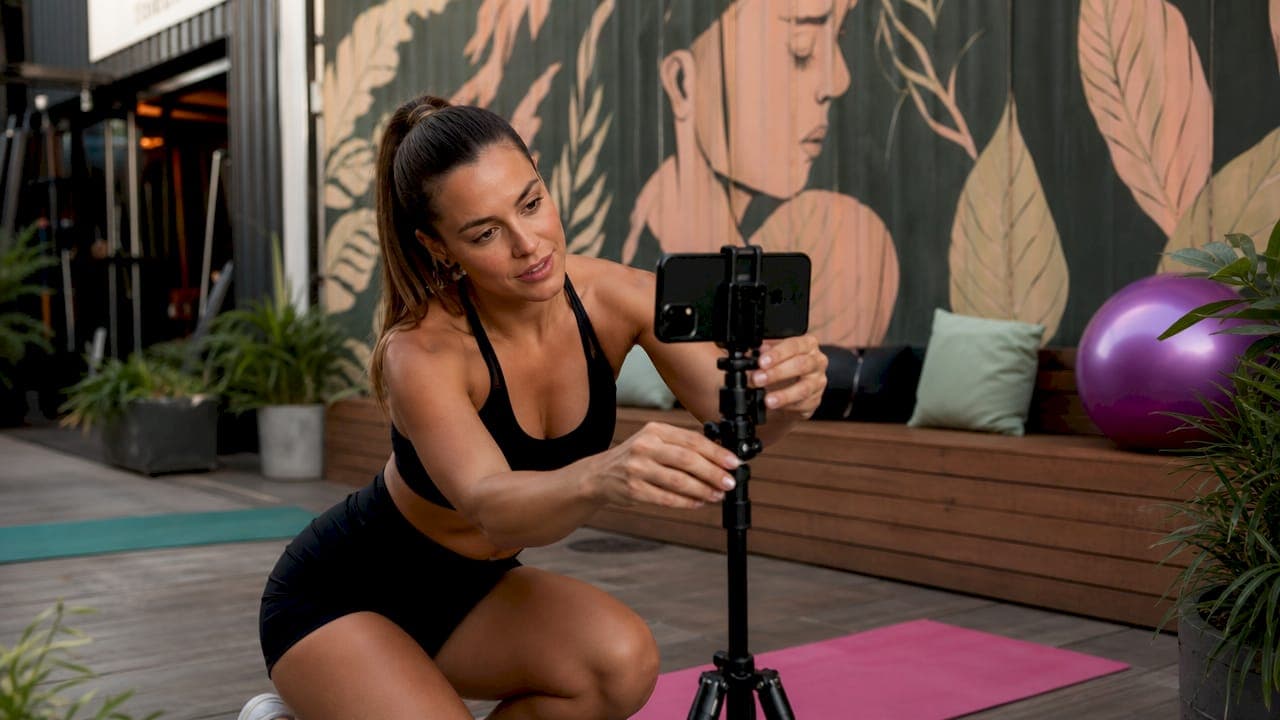
Micro-influencer marketing for gyms is the practice of partnering with local fitness advocates who have 1,000–5,000 highly engaged followers to drive membership growth and community trust. These creators outperform larger influencers with engagement rates of 3–5% compared to 1–2% for bigger accounts. That gap matters because engagement predicts conversions, not follower counts. Collaborations are often trade-based, built around free memberships or class access rather than cash, making them one of the most cost-effective gym marketing strategies available to independent gym owners today.
1. What are the best micro-influencer marketing ideas for gyms?
The most effective fitness influencer collaboration tactics combine authenticity, local relevance, and active participation. Generic sponsored posts no longer move the needle. The ideas below are built around what actually converts followers into paying members.
Host co-created fitness challenges
Partner with a local micro-influencer to design and host a 30-day challenge tied to your gym's brand. The influencer promotes it to their audience, participates publicly, and documents their progress. This format works because the influencer is invested, not just posting. Co-created events and content consistently outperform passive endorsements in both reach and conversion.

Run social media takeovers
Give a trusted local fitness creator full control of your gym's Instagram or TikTok for a day. They film workouts, introduce coaches, and show the real atmosphere inside your facility. Prospects who follow that influencer get an unfiltered look at your gym culture. This format reduces the skepticism that polished ads create.
Launch influencer-led giveaways
Structure a giveaway where the influencer offers a free one-month membership to their audience. Entry requirements should include following your gym's account and tagging a friend. This tactic builds your follower base while the influencer's credibility transfers directly to your brand. Keep the prize simple and the entry steps to two or three actions maximum.
Feature beginner journey content
Authentic beginner journey content outperforms polished endorsements when it comes to reducing prospect hesitation. Ask a micro-influencer who is new to fitness to document their first 60 days at your gym. Real struggles, real progress, and real reactions speak directly to the prospects who are most afraid to walk through your door. This content format consistently drives trial sign-ups from people who would otherwise never respond to a traditional ad.
Pro Tip: Film the influencer's first workout session on day one and their session on day 30 side by side. That before-and-after format generates more shares than almost any other fitness content type.
Activate Instagram Reels and live streams
Visual content formats like workout clips, live Q&A sessions, and challenge recaps are the highest-performing content types for gym influencer campaigns. Ask your influencer to go live from your gym floor during a class or open gym session. Live streams create urgency and social proof simultaneously. Viewers see real people working out in real time, which removes the "I'll check it out someday" barrier.
Distribute exclusive discount codes
Give each micro-influencer a unique promo code for a discounted trial membership or first-month deal. This approach tracks attribution directly, so you know exactly which influencer drove which sign-up. It also gives the influencer something tangible to offer their audience, which increases their motivation to promote consistently. Keep the discount meaningful, at least 20–30% off, so the offer feels worth sharing.
Use influencers to amplify referral programs
Referral programs perform better when a trusted voice promotes them. Have your micro-influencer explain your referral program in a short Reel or Story, framing it as a favor to their followers rather than a sales pitch. Influencer partnerships warm prospects before they ever contact your gym, which means referred leads from influencer channels close at higher rates than cold traffic.
Turn existing members into micro-influencers
Auditing current members who already create fitness content is the single highest-return tactic in this list. These people already love your gym, already post about it, and already have local credibility. Formalizing that relationship with perks like free classes or branded gear costs almost nothing. Member-influencers carry a level of authenticity that no paid partnership can replicate.
How much does a micro-influencer collaboration cost?
Fitness influencer collaboration costs are more flexible than most gym owners expect. Campaigns start at approximately A$250 per engagement, but the majority of micro-influencer deals in the gym space are structured around non-cash compensation. Free memberships, class passes, branded merchandise, and nutrition coaching access are all common trade arrangements. This makes micro-influencer gym tips accessible even for gyms operating on tight marketing budgets.
For gyms that do pay cash, CPM benchmarks for fitness influencers run $15–$25 per 1,000 reach. Integrating brand exposure into paid challenges delivers 30–40% higher ROI than one-off posts. That means a challenge-based campaign is not just more engaging. It is measurably more cost-efficient.
| Compensation type | Typical structure | Best for |
|---|---|---|
| Free membership | 1–3 month access | New influencer relationships |
| Class passes | 10–20 class bundle | Short-term campaign trials |
| Cash per post | $15–$25 CPM | Influencers with proven reach |
| Challenge integration | Paid + perks combo | Long-term brand campaigns |
| Branded merchandise | Gear plus gym access | Member-influencer programs |
Pro Tip: Always start with a trade-based deal before offering cash. If the influencer only wants money upfront, their motivation is the payment, not your gym. The best partnerships start with genuine enthusiasm.
Why micro-influencers outperform celebrities for gym conversions
Micro-influencers drive better membership conversions because they operate as local authority figures, not distant celebrities. Typical Instagram fitness brand engagement averages around 0.55% across the platform. Micro-influencers with niche, local audiences consistently beat that by a wide margin. The math is simple: a smaller, more relevant audience converts at a higher rate than a massive, disengaged one.
"Treat influencer marketing as a trust-first channel, not a reach channel. Local authority validation is what fills classes." — From Followers to Full Classes
The trust-first model works because local followers already recognize the influencer from their community. When that person says your gym changed their routine, it carries the weight of a personal recommendation. This warm familiarity effect means prospects arrive at your gym already predisposed to sign up, which reduces the time your sales team spends overcoming objections.
Key reasons micro-influencers convert better than macro accounts:
- Their followers share the same zip code, commute, and lifestyle as your ideal member
- Comments and direct messages from their audience reflect genuine interest, not passive scrolling
- Beginner journey content from micro-influencers reduces the fear barrier for non-gym-goers
- Local credibility transfers directly to your brand when the influencer endorses you
- Smaller audiences mean the influencer can respond to questions about your gym personally
How to find and evaluate the right micro-influencers for your gym
Finding the right fitness influencer collaboration starts inside your own facility. Start by auditing your current members who already post fitness content. Search your gym's tagged posts on Instagram and TikTok. You will likely find several members with engaged followings who are already doing the work for free. Formalizing those relationships is the fastest path to an authentic micro-influencer program.
When evaluating any influencer, look beyond follower counts. Meaningful comments and active discussion generate more gym visits than passive likes. An account with 2,000 followers and 80 genuine comments per post is more valuable than one with 10,000 followers and 30 emoji reactions. Check the comment quality, not just the quantity.
Use this checklist when evaluating a potential gym micro-influencer:
- Audience location: Are their followers in your city or within a 10-mile radius of your gym?
- Niche alignment: Does their content match your gym's style, whether CrossFit, strength training, or general fitness?
- Engagement quality: Do followers ask real questions and share personal reactions in comments?
- Content consistency: Do they post at least three to four times per week?
- Brand fit: Would their existing audience feel comfortable walking into your gym?
| Evaluation factor | Strong signal | Weak signal |
|---|---|---|
| Comment quality | Personal stories, questions | Emojis only, generic praise |
| Audience location | Local city or region | National or international spread |
| Posting frequency | 3–4 times per week | Sporadic or inconsistent |
| Niche fit | Matches your gym's style | Broad lifestyle, no fitness focus |
| Past brand work | Authentic, low-volume | Heavy sponsorship, every post |
Build long-term relationships rather than one-off campaigns. Gyms that treat influencers as trusted local partners rather than one-time vendors see compounding returns. A micro-influencer who has trained at your gym for six months carries far more credibility than one who visited once for a sponsored post.
Key Takeaways
Micro-influencer marketing works for gyms because local trust converts followers into members faster than any paid ad campaign.
| Point | Details |
|---|---|
| Engagement beats reach | Micro-influencers achieve 3–5% engagement rates, far above the 0.55% platform average. |
| Trade deals reduce cost | Free memberships and class passes are the most common and effective compensation structure. |
| Member-influencers win | Existing members who create content deliver the highest authenticity at near-zero cost. |
| Trust drives conversions | Local authority validation warms prospects and reduces hesitation before they ever visit. |
| Co-creation outperforms ads | Challenge-based and event-driven campaigns deliver 30–40% higher ROI than one-off posts. |
Why I stopped chasing follower counts and started chasing trust
The biggest mistake I see gym owners make is treating influencer marketing like a billboard. They find someone with 50,000 followers, pay for a post, and wonder why no one shows up. The number on the profile is not the product. The trust that person has built with their local audience is the product.
The gyms I have seen grow fastest through social media fitness promotions are the ones that invest in relationships, not transactions. They find a member who is already posting about their fitness progress, give them a free month, and ask them to keep doing what they are already doing. That is it. No script, no polished brief, no brand guidelines document. Just a real person telling their real community about a gym they genuinely love.
The co-creation model is where I have seen the most dramatic results. When a micro-influencer co-hosts a challenge at your gym, they show up invested. Their audience shows up curious. And your gym fills up with warm prospects who already feel like they belong there before they sign the membership agreement. That is not a marketing trick. That is community building with a distribution channel attached.
My honest warning: do not let vanity metrics pull you back toward macro-influencers. A local personal trainer with 1,800 followers who trains at your gym three times a week will outperform a fitness celebrity with 200,000 followers every single time. The data backs this up. More importantly, your front desk staff will confirm it when they ask new members how they heard about you.
— Collin
Enochmarketing helps gyms build influencer programs that actually grow memberships
Running a micro-influencer program takes more than finding the right person and handing them a promo code. It requires a full strategy: identifying the right creators, structuring the right offers, tracking attribution, and scaling what works. Most gym owners do not have time to manage all of that while also running their facility.
Enochmarketing specializes exclusively in CrossFit gyms and fitness brands across the United States. The agency builds custom influencer and local gym marketing campaigns designed to fill classes and grow memberships, not just generate impressions. If you want a system that turns local fitness advocates into a consistent lead source, book a free strategy session and see exactly what a purpose-built gym marketing program looks like.
FAQ
What is a micro-influencer in fitness marketing?
A micro-influencer is a fitness content creator with 1,000–5,000 highly engaged followers. They achieve 3–5% engagement rates, which makes them more effective for local gym marketing than larger accounts.
How do I find micro-influencers for my gym?
Start by searching your gym's tagged posts on Instagram and TikTok. Current members who already create fitness content are your best starting point because they offer the highest authenticity at the lowest cost.
Do I need to pay micro-influencers cash?
No. Most gym micro-influencer deals are structured around free memberships, class passes, or branded merchandise. Cash payments are common only when the influencer has a proven, measurable local reach.
How do micro-influencers help with gym membership conversions?
Micro-influencers build familiarity with your gym before a prospect ever visits. That warm-up effect reduces hesitation and increases the likelihood that a prospect signs up after their first trial class.
What content formats work best for gym influencer campaigns?
Workout clips, beginner journey series, live streams, and 30-day challenge recaps consistently outperform static posts. Visual, authentic content formats drive the most trial traffic for gyms.