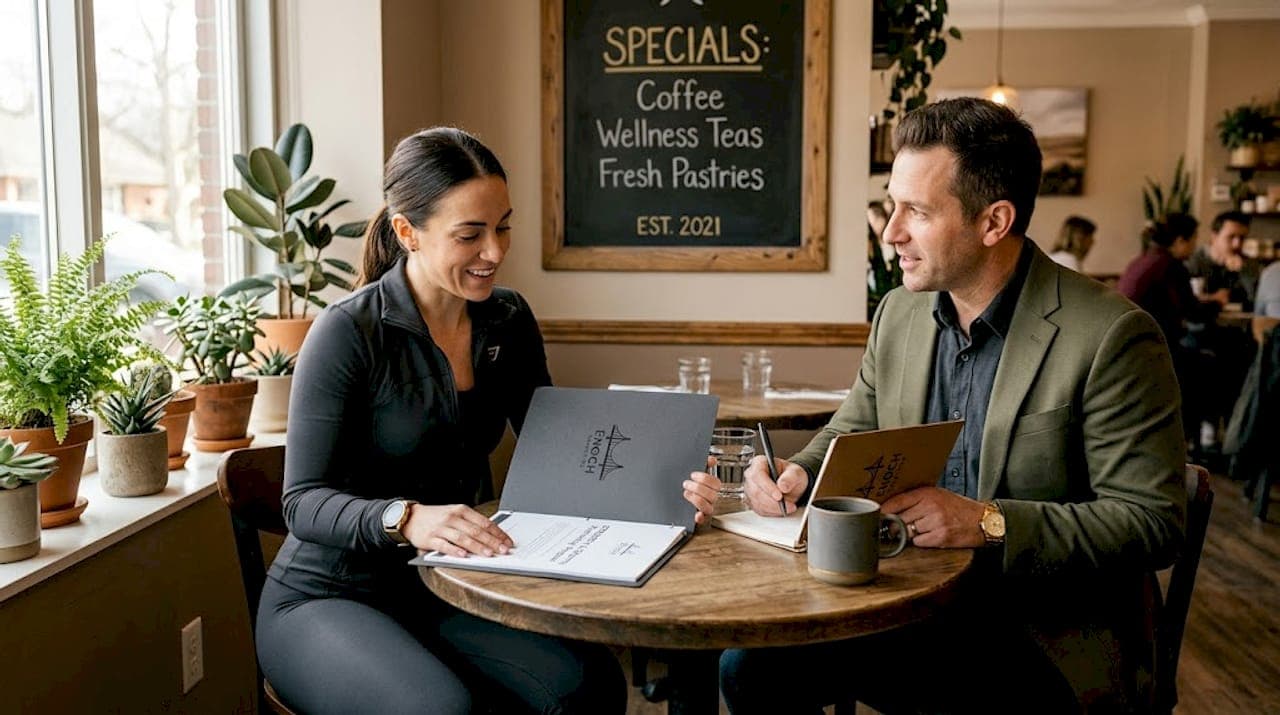
Running a fitness business in 2026 means competing for attention on every street corner and every social feed. Conventional ads are expensive, word of mouth is slow, and most fitness partnership marketing ideas you find online are too vague to act on. That changes here. This article breaks down the frameworks, tactics, and real-world examples that fitness business owners can use to build partnerships that generate members, not just impressions. You will walk away knowing exactly which collaboration models fit your stage, your market, and your goals.
Table of Contents
- Key takeaways
- 1. Build your fitness partnership marketing foundation first
- 2. Micro-influencer collaborations with local fitness creators
- 3. Co-marketing with complementary local businesses
- 4. Branded fitness challenges sponsored by wellness companies
- 5. Cross-category partnerships blending fitness with lifestyle brands
- 6. Corporate wellness partnerships
- 7. Comparing your partnership options
- 8. How to choose the right partnerships for your business
- My honest take on fitness partnership marketing
- Ready to make your partnership marketing actually convert?
- FAQ
Key takeaways
| Point | Details |
|---|---|
| Shared audiences drive results | Partner only with businesses whose customers already match your ideal member profile. |
| Micro-influencers outperform big names | Local creators under 10K followers with 4%+ engagement deliver better ROI per dollar spent. |
| Pilot first, scale second | Treat every new partnership as a short test run before committing deeper resources. |
| Track every referral rigorously | Use unique codes, landing pages, and intake questions so you know what is actually working. |
| Challenges beat single posts | Sponsored time-bound programs convert far better than a one-off branded mention. |
1. Build your fitness partnership marketing foundation first
Before you pitch a single partner, you need a framework that filters bad fits and maximizes the good ones. Most gym owners skip this step and wonder why their partnerships fizzle out after two months.
The core question to answer upfront is simple: do your audiences overlap? A CrossFit gym partnering with a local physical therapist shares the same health-conscious adult demographic. A partnership with a fast food chain does not. Audience alignment is the non-negotiable starting point for any fitness collaboration strategy.
Beyond audience, think about value creation. Partnership proposals built around partner value consistently outperform deals where one party tries to extract maximum benefit. When you approach a nutritionist or a wellness spa, lead with what you bring to them, not what you want from them.
- Start with a pilot phase. Treating partnerships as test programs before committing to deeper integration reduces risk and builds authentic trust over time.
- Set measurable goals. Define what success looks like before you launch. Is it 10 new member leads per month? A 15% increase in trial sign-ups?
- Track attribution religiously. Unique referral codes and tracking URLs are the only way to know which partnerships are worth scaling.
- Avoid vanity metrics. Likes and shares from a co-branded post mean nothing if they do not turn into leads or members.
Pro Tip: When you present your pitch, bring a one-page "partnership menu" that lists exactly what you offer, including social media features, email newsletter spots, in-gym signage, and free trial passes. It removes ambiguity and makes it easy for your potential partner to say yes.
2. Micro-influencer collaborations with local fitness creators
The assumption that bigger is better kills a lot of fitness influencer collaborations before they start. A creator with 200,000 followers in Los Angeles does nothing for your gym in Austin. A local creator with 6,000 highly engaged followers in your zip code is a completely different story.
Micro-influencers under 10,000 followers with engagement above 4% consistently outperform larger accounts for local fitness brand conversions. Their audiences trust them personally. When they recommend your gym, it lands like advice from a friend, not an ad.
The cost structure also works in your favor. Base CPM rates for these creators run between $15 and $25, with modest multipliers added for exclusivity or multi-platform distribution. For a local gym, that is a fraction of what a single paid ad campaign costs, and the earned trust is something no ad can replicate.
The best local gym near you stories get told by people who actually train there. Identify two or three local creators who already work out, run, or do yoga in your area. Offer them a free membership or a structured ambassador program in exchange for authentic content. Keep the brief loose enough to stay genuine.
3. Co-marketing with complementary local businesses
This is one of the most underutilized fitness collaboration strategies in local markets, and it is almost entirely free to execute. The idea is simple: find a local business whose customers would also benefit from your services, then create something together that gives both audiences a reason to engage.

The most effective local co-marketing model involves lead magnets and reciprocal newsletter inclusions. A gym partners with a local nutritionist to create a downloadable "7-Day Reset Challenge" guide. The nutritionist promotes it to their email list with a link to redeem a free gym trial. The gym promotes the nutritionist's services to new members during onboarding. Both parties win.
Strong co-marketing partners for fitness businesses include physical therapists, chiropractors, sports massage therapists, realtors (who often gift wellness perks to new homeowners), and health-focused cafes. The thread connecting all of them is a shared customer who values their physical health.
Pro Tip: When proposing a co-marketing deal, suggest a 30-day trial where each party commits to one joint email or social post. Low stakes, easy yes. If results come in, you both have data to justify scaling it up.
4. Branded fitness challenges sponsored by wellness companies
A sponsored fitness challenge is not just a marketing tactic. It is a product. And challenge integrations that embed a sponsor into a time-bound fitness program generate the highest conversion rates and command premium partner rates compared to standard sponsored posts.
Here is how it works in practice. A CrossFit gym runs a 30-day strength challenge. A local sports nutrition brand sponsors it, providing protein supplements as prizes and branded collateral throughout the challenge. The gym gets funding and product value. The nutrition brand gets direct access to a captive, engaged audience who are actively training and buying supplements.
The reason this model outperforms a single sponsored post is simple. Participants in a challenge are deeply invested over weeks, not seconds. Every workout, every check-in, and every progress photo reinforces the sponsor's brand in a context of personal achievement.
You can run joint marketing fitness campaigns like this with equipment companies, recovery brands, apparel companies, and even local health food stores. The key is that the sponsorship fits naturally inside the challenge experience rather than sitting awkwardly on top of it.
5. Cross-category partnerships blending fitness with lifestyle brands
The most media-worthy wellness brand partnerships happening right now cross category lines. Fitness meets beauty. Fitness meets travel. Fitness meets premium beverages. These are not gimmicks. They reflect a genuine shift in how consumers think about health as a lifestyle rather than a discrete activity.
Cross-category brand collaborations generate stronger press coverage precisely because they address the 24-hour wellness mindset. A local gym partnering with a premium cold-brew coffee brand for a "Morning Ritual" campaign speaks to the whole person, not just their workout routine.
For smaller fitness businesses, this means looking beyond the obvious wellness partners. Connect with a local apparel boutique for a co-branded pop-up workout event. Partner with a day spa to bundle a recovery package with a gym membership. Work with a meal-prep delivery service to create a "Train and Eat Clean" bundle. Each of these taps a new audience that would never have seen your gym otherwise.
The fitness brand marketing workflow for cross-category deals is slightly more complex because the brand language needs to align. Spend time at the start agreeing on tone, visuals, and audience before building any joint campaign assets.
6. Corporate wellness partnerships
Corporate partnerships are one of the highest-value, lowest-competition fitness partnership marketing ideas available to local gyms. Most businesses are actively looking for ways to offer employee wellness benefits without building an internal program. You can be that solution.
Structured accountability and social support dramatically improve retention, and companies know it. When you pitch a corporate partnership, lead with outcome data. Reduced sick days, improved employee energy, and lower healthcare costs are arguments that land with HR directors far more effectively than "it is good for morale."
The model is flexible. You can offer subsidized corporate memberships, a dedicated early morning class for a company's team, an onsite wellness seminar, or a quarterly fitness challenge for their employees. Price it as a B2B package and approach companies within one to two miles of your gym first, since the commute objection evaporates.
7. Comparing your partnership options
Not every idea fits every business. Use this comparison to prioritize where to start based on your resources and goals.
| Partnership type | Cost to execute | Effort level | Audience reach | Conversion potential | Best for |
|---|---|---|---|---|---|
| Micro-influencer collaboration | Low ($150-$500/mo) | Medium | Local/hyper-local | High | New gyms building awareness |
| Local business co-marketing | Very low | Low | Neighborhood | Medium-High | Established gyms with referral gaps |
| Branded fitness challenge | Medium ($500-$2K) | High | Local + social | Very high | Gyms with engaged existing members |
| Cross-category lifestyle brand | Low to Medium | High | New audiences | Medium | Growth-stage gyms expanding reach |
| Corporate wellness program | Low (time investment) | Medium | B2B captive audience | High | Gyms near office districts |
8. How to choose the right partnerships for your business
The right fitness partnership marketing idea for a gym that opened six months ago is different from the right one for a gym that has been in the community for five years. Context shapes everything.
If you are early-stage and building awareness, start with micro-influencer collaborations and local business co-marketing. Both are low cost, fast to launch, and generate the kind of community visibility that paid ads struggle to replicate. Focus on local gym marketing strategies that compound over time rather than expensive one-shot campaigns.
If you have an existing member base and want to grow it, branded challenges and corporate partnerships will give you the highest conversion rates. Your current members become the social proof. Your community becomes the distribution channel.
- Blend offline and online consistently. A co-marketing deal with a nutritionist should have both an in-person component (flyers, referrals) and a digital component (shared emails, social posts).
- Scale what you can measure. If a partnership generates five new member leads in the first 30 days, double down. If it generates zero, exit cleanly and try another.
- Leverage existing relationships. Your current members already shop somewhere, eat somewhere, and recover somewhere. Start by asking them which local businesses they love and approach those first.
- Time your campaigns intentionally. January, spring, and back-to-school are the highest-intent fitness seasons. Launch major joint marketing fitness campaigns two to three weeks before these windows open.
Pro Tip: Build a simple intake question into your new member sign-up form: "How did you hear about us?" with a dropdown that includes your partner names. This is the fastest way to attribute leads correctly without any technical setup.
My honest take on fitness partnership marketing
I have worked with enough fitness businesses to say this plainly: most partnership marketing fails not because the idea was bad, but because the relationship was transactional from day one.
I have seen gym owners pitch a local nutritionist, get a single email mention, generate two leads, and declare partnerships "not worth it." What they missed is that the nutritionist barely knew them, trusted them even less, and had no real reason to promote them enthusiastically. The deal extracted something without building anything.
The partnerships I have watched produce real, sustained growth almost always started small and got deeper over time. A 30-day pilot that went well led to a co-branded challenge. The challenge led to a quarterly event series. The event series created a community platform that neither business could have built alone. That is how this works.
I also believe fitness influencer collaborations are massively underrated at the micro level and wildly overrated at the macro level. A gym owner who invests in three or four local creators who genuinely train and believe in the product will outperform a one-off post from a national fitness account every time.
The future of wellness brand partnerships is experiential. Events, challenges, live collaborations. Not posts, not logos on banners. People remember how something made them feel, and the businesses that create those experiences together are the ones that build lasting market share.
— Collin
Ready to make your partnership marketing actually convert?
Partnership marketing is only as powerful as the strategy behind it. Identifying the right partners, crafting the right offer, and tracking results correctly takes more than good intentions. It takes a system.
Enochmarketing works exclusively with CrossFit gyms and fitness brands across the United States to build exactly that system. From local lead generation campaigns to social media content, paid ads, and brand positioning, Enochmarketing handles the full stack so you can focus on coaching. If you are serious about growing your gym's membership through smart, data-driven partnership and digital marketing, book a free strategy session with the team today.
FAQ
What are the best fitness partnership marketing ideas for local gyms?
The highest-impact options are micro-influencer collaborations with local creators, co-marketing with complementary businesses like nutritionists or chiropractors, and branded fitness challenges sponsored by wellness brands. Each of these builds community credibility while generating trackable leads.
How do you measure ROI from a fitness brand partnership?
Use unique referral codes, dedicated landing pages, and intake questions asking new members how they found you. Without these tracking tools, it is impossible to know which partnerships are worth scaling.
Are micro-influencers worth it for gym marketing?
Yes. Micro-influencers under 10,000 followers with engagement rates above 4% consistently outperform larger accounts for local fitness conversions at a fraction of the cost.
How do I approach a local business for a co-marketing partnership?
Lead with what you bring to them, not what you want. Propose a low-commitment 30-day pilot, offer a concrete deliverable like a co-branded lead magnet or newsletter feature, and define success metrics upfront so both parties can evaluate results fairly.
What makes a fitness challenge partnership more effective than a sponsored post?
Sponsored challenges keep an audience engaged over weeks rather than seconds. Challenge-integrated sponsorships produce higher conversion rates because participants are deeply invested in the program, which makes the brand association far more memorable and persuasive.