
Growing a CrossFit gym in 2026 means competing against a flood of fitness content, big-box chains, and every other local gym posting daily. You have a genuinely transformative product, real results, and a tight-knit community, but if your social media feels like shouting into a void, the problem isn't your gym. It's the strategy. This guide walks you through exactly how to turn your social presence into a consistent membership engine, from knowing your audience to converting followers into people who actually show up and sign on.
Table of Contents
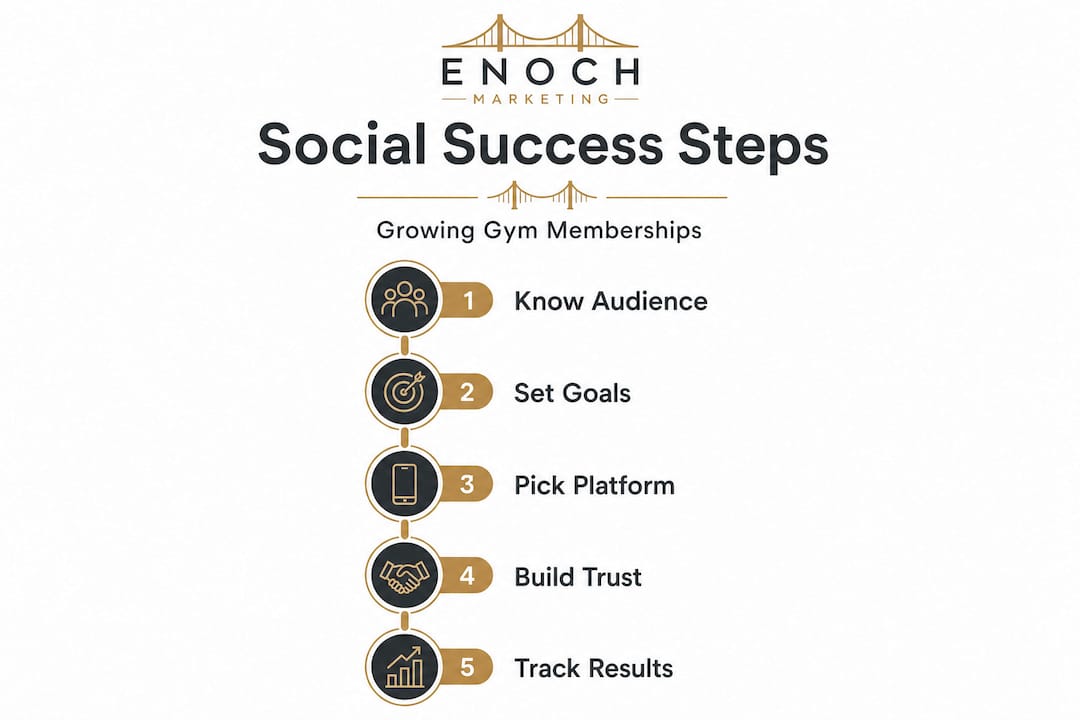
- Understand your audience and set goals
- Choose the right platforms and tools for your gym
- Content that converts: Showcasing members and building trust
- Direct messaging and engagement: Turning followers into members
- Track, analyze, and optimize your social strategy
- A new mindset: Connection over broadcasting wins for gyms
- Ready to amplify your gym's social media impact?
- Frequently asked questions
Key Takeaways
| Point | Details |
|---|---|
| Know your audience | Identify your ideal members and tailor your social presence for real connection. |
| Focus your efforts | Pick one main platform first and double down before expanding. |
| Trust-building content | Showcase real member stories and encourage community sharing to boost credibility. |
| Engage directly | Personalized direct messages reliably convert online conversations into memberships. |
| Measure for growth | Track results and adapt for what drives memberships, not just likes or followers. |
Understand your audience and set goals
Before jumping into creating content, you need clarity on who you're speaking to and what results you actually want from social media.
Most CrossFit gym owners post content they personally like rather than content designed for a specific person. That's the first place things go sideways. Your gym likely serves a mix of audience types: working professionals in their 30s and 40s looking for a structured fitness routine, competitive athletes chasing performance goals, college-aged newcomers trying CrossFit for the first time, and parents who want a community around their fitness. Each of these groups responds to different messages, different platforms, and different calls to action.
Start by asking yourself these questions before writing a single caption or recording a video:
- Who are your three most common member types by age, lifestyle, and fitness goal?
- What problem does your gym solve for each of them?
- What does a new member look like 90 days after joining? What result do they have?
- Which of your current members would you clone if you could?
Once you have those answers, you can set goals that actually mean something. Social media goals for gyms generally fall into three buckets: brand awareness (getting seen by locals who don't know you yet), engagement (building a relationship with people already following you), and lead generation (turning followers into people who message you or book a free class). Each goal requires a different type of content and a different measure of success.
| Audience segment | Primary goal | Best platforms | Content type |
|---|---|---|---|
| Working professionals | Brand awareness, leads | Instagram, Facebook | Transformation stories, schedule content |
| Competitive athletes | Engagement, community | Instagram, TikTok | WOD highlights, PR moments, athlete spotlights |
| Beginners/newcomers | Trust building, leads | Facebook, Instagram | FAQs, beginner tips, welcome posts |
| Parents/families | Awareness, community | Events, member stories, family class content |
UGC and member spotlights build trust faster than any promotional post you write yourself, especially for local audiences who want to see real people from their own community getting results. Encourage members to tag your gym, share their wins, and post from your facility. You can find more content ideas for fitness brands to help map this out practically.
Choose the right platforms and tools for your gym
With goals and audience in mind, the next decision is where and how you show up online.
This is where many gym owners waste enormous amounts of time. They try to post on Instagram, Facebook, TikTok, YouTube Shorts, and X simultaneously, burn out within three weeks, and end up posting sporadically everywhere. The results are predictably weak across the board. Avoid spreading too thin across platforms. Focus dominantly on one first, build real traction, then expand.
Here's a practical breakdown of where each platform actually performs for gyms:
| Platform | Typical audience | Gym strengths | Best use case |
|---|---|---|---|
| 25-45, fitness aware | Reels, Stories, DMs | Member highlights, workout clips, community culture | |
| 30-55, local community | Groups, Events, Ads | Local targeting, community building, event promotion | |
| TikTok | 18-35, discovery focused | Short viral videos | Reach new audiences, show gym culture, trending content |
| YouTube | All ages, search-driven | Long-form tutorials | Education, program breakdowns, gym tours |
For most CrossFit gyms in mid-size American cities, Instagram is the right starting point. Its visual format is built for athletic content, the DM feature makes follow-up easy, and its algorithm rewards consistent Reels posting with local reach. Facebook becomes a strong second channel once you have a rhythm, especially for running local ads and managing community groups. Explore types of fitness advertising to understand how organic social pairs with paid campaigns.
Essential tools that save time and keep you consistent:
- Later or Buffer: Schedule posts in advance so you're not scrambling daily
- Canva: Create on-brand graphics without a designer
- Meta Business Suite: Manage Instagram and Facebook together, track analytics
- CapCut: Edit short-form videos quickly for Reels and TikTok
Pro Tip: Before expanding to a second platform, commit to 90 days on your primary one. Consistency over 90 days builds algorithmic momentum and gives you real data on what works with your specific audience.
Content that converts: Showcasing members and building trust
Once you know your platform and have the tools, success depends on the content you create and share.
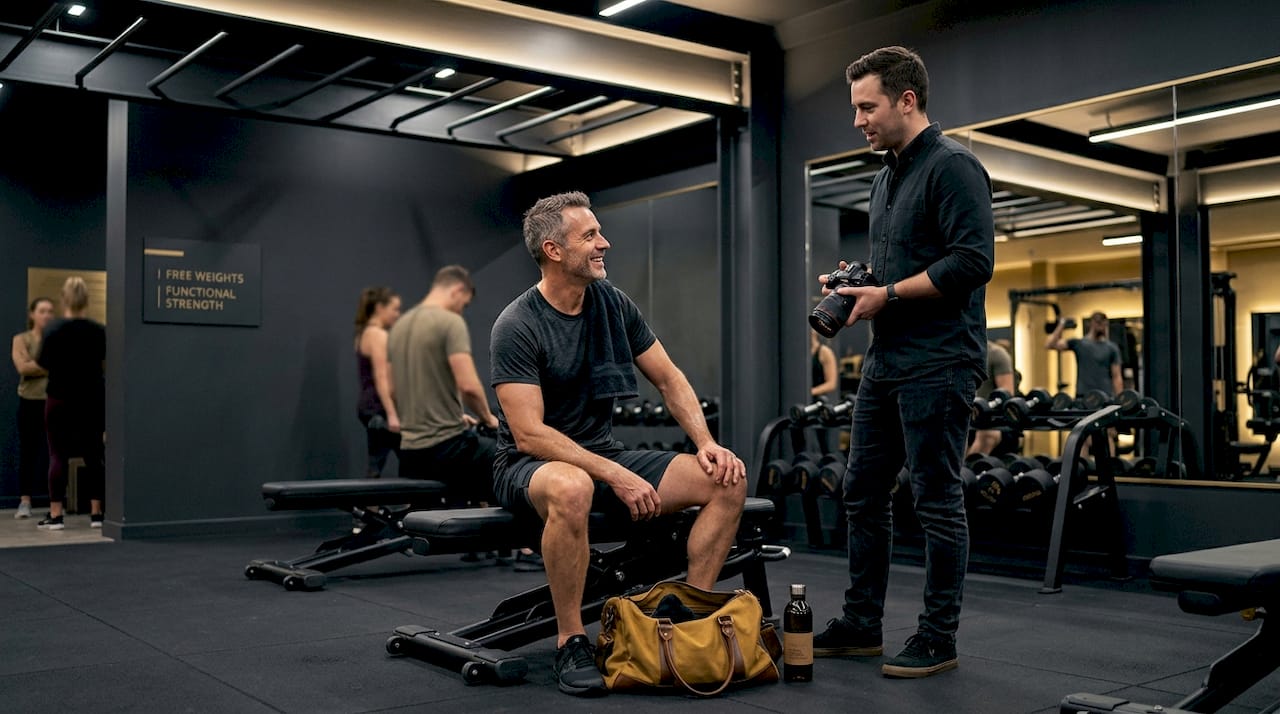
Here's the honest truth most marketing advice skips: your potential members don't trust you yet. They've seen flashy gym ads before. They've signed up somewhere and quit. What earns their trust is seeing people who look like them getting results at your gym. That's the psychology behind why user-generated content (UGC) works so powerfully. When a member posts a video hitting their first muscle-up at your facility and tags your gym, that's worth ten times any promotional graphic you design.
Member transformations and UGC are the highest-trust content formats available to gyms, and the best part is your members create them for free when you make it easy and rewarding to share.
Here's a step-by-step process to build a steady stream of member content:
- Ask directly. Tell members in class, via email, or in your community group that you'd love to feature their progress. Most people are flattered when asked genuinely.
- Create a tag habit. Put a sign near your PR board, barbell rack, or entrance with your handle and a short phrase like "Tag us in your wins."
- Incentivize sharing. Offer a free month, branded gear, or a guest pass to members featured in your "Member of the Month" spotlight.
- Repost and celebrate publicly. When someone tags you, repost it immediately with a genuine, personalized caption. Make them feel like a star.
- Create shareable moments. Run a 6-week challenge and document the results publicly with member permission. Events and milestones drive natural sharing.
"The gyms growing fastest on social media aren't the ones posting the most polished content. They're the ones making their members feel seen and celebrated online."
For milestone-driven content, spotlight stories work incredibly well. A post showing a member's first pull-up after three months of scaling, a personal record in a back squat, or a before-and-after with a member's own words generates far more genuine engagement than any promotional offer post.
Pro Tip: Set up a recurring "Member of the Week" feature on Instagram Stories every Monday. It takes 15 minutes, gives your members recognition, and signals to prospective members that your community actually celebrates people.
You can pair this organic trust-building with paid media campaigns for CrossFit gyms to amplify your best-performing content to local audiences who haven't found you yet. Great organic content and paid reach work together to shorten the sales cycle. Browse additional fitness content ideas to keep your content calendar fresh.
Direct messaging and engagement: Turning followers into members
Creating buzz with your content is just the first step. The real payoff happens when you turn engagement into membership.
Here's a dynamic that surprises most gym owners: people who comment on your posts, react to your Stories, or follow your account after watching a Reel are already warm. They've shown interest. They're far more likely to join than a cold stranger who sees a generic ad. The missing step is the conversation.
Personally DMing engaged followers can generate two to four consultations per month with zero advertising spend. That's not a theory. It's what happens when you treat social media like a room full of people who have already raised their hand.
Here's the process for doing this without being pushy or robotic:
- Identify warm engagers daily. Spend five minutes each morning checking who liked, commented on, or viewed your Story in the past 24 hours. Look for local accounts, new followers, or repeat engagers.
- Lead with genuine acknowledgment. Your first message should not be a sales pitch. Reference something specific: "Saw you've been watching our WOD content. Are you currently training somewhere local?"
- Ask one question. Let them lead the conversation. The goal of the first message is a reply, not a close.
- Transition naturally to an offer. Once they've engaged two or three times, invite them to a free class or a no-pressure intro session.
- Follow up once. If they don't respond to your first message, send one follow-up three to five days later. After that, leave it unless they re-engage organically.
Conversation starters that actually get replies:
- "Hey, noticed you've been engaging with our content. What kind of training are you doing right now?"
- "We're running a free Saturday intro class this week. Figured I'd reach out personally since you've been watching our posts."
- "Quick question: what's your biggest challenge with staying consistent in the gym?"
Pro Tip: Track your DM outreach in a simple spreadsheet. Log who you messaged, what you said, when they replied, and the outcome. After 30 days you'll have real data on what openers and follow-up timings work best for your specific audience.
Pair this outreach with strong offers to support conversion. Learning about personalized gym marketing and strategies for driving more gym memberships can sharpen how you frame your invite. Once someone comes in, your ability to convert CrossFit leads and apply strong membership marketing strategies closes the loop.
Track, analyze, and optimize your social strategy
After execution, the final piece is ensuring your efforts lead to real business growth by tracking and improving your strategy.
Too many gym owners measure social media success by follower counts and likes. Those numbers feel good but they don't pay the bills. The metrics that matter are the ones tied to actual business outcomes: how many DMs did you have this week, how many free class bookings came from social, and how many new memberships can be traced back to a post or a follow-up conversation.
| KPI | How to measure | Benchmark for gyms |
|---|---|---|
| Reach per post | Instagram/Facebook Insights | 200-500 local accounts per post |
| Story views | Native platform analytics | 10-20% of follower count |
| DM conversations started | Manual tracking or CRM | 5-10 per week |
| Free class bookings from social | Ask new prospects at signup | 2-4 per month minimum |
| New members from social | Track during onboarding | 1-3 per month organically |
Common mistakes that stall results:
- Chasing vanity metrics. Focusing on follower growth instead of engagement quality sends you in the wrong direction fast.
- Ignoring DMs and comments. Every unanswered comment is a missed conversation with a warm prospect.
- Inconsistent posting. Posting five times one week and nothing the next trains the algorithm and your audience to ignore you.
- Only posting promotional content. If every post is an offer or an ad, followers disengage quickly.
- Never testing anything new. What worked six months ago may not work today. Test new formats like Reels, carousels, and polls regularly.
When results stall, member spotlights and UGC almost always reignite engagement because they introduce fresh faces and genuine stories. Review your last 30 days of content, identify your top three posts by reach and DMs generated, and make more of that type.
A new mindset: Connection over broadcasting wins for gyms
With measurement and tweaking in place, it's worth reflecting on what actually sets thriving gyms' social media apart.
The conventional advice in fitness marketing is to post more, be everywhere, and always have fresh content. We've seen this play out across dozens of CrossFit campaigns, and the gyms that follow that advice without a strategy underneath it tend to plateau. They get good at producing content but not at converting it into memberships.
The gyms that actually grow their membership rosters through social media have something different in common. They treat their platforms like a community bulletin board rather than a billboard. Every post is designed to spark a conversation, highlight someone real, or answer a question a prospective member is already asking. They are not broadcasting. They are connecting.
The most consistent insight we see from successful CrossFit facilities is this: two-way conversations built on real member results outperform polished, high-volume posting every single time. A gym owner who personally messages 10 warm followers a week and follows up thoughtfully will sign more members than a gym running expensive content production with no human follow-through.
Personal stories drive this point home again and again. The gym that posts a 60-second video of a 52-year-old member doing her first unassisted pull-up with a genuine caption and then personally responds to every comment will see more free class bookings than the gym that drops five perfectly produced Reels a week without engaging with anyone in the comments.
The takeaway is simple but requires a mindset shift. Stop thinking about social media as a content problem. Start thinking about it as a relationship problem. Quality engagement and trust built over time always outperform raw post volume.
Ready to amplify your gym's social media impact?
Equipped with these strategies, gyms can generate real membership growth, but sometimes expert help makes all the difference when you're ready to accelerate.
Implementing a full social media strategy on top of running classes, managing coaches, and handling day-to-day operations is a lot. That's exactly why Enoch Marketing exists. We work exclusively with CrossFit gyms and fitness brands across the United States, building tailored social media strategies, paid campaigns, and lead funnels that actually produce memberships, not just impressions. Explore our CrossFit gym marketing services, view agency pricing to see what fits your growth stage, or contact our CrossFit marketing team to book a free strategy session. Let's build something that wins in your local market.
Frequently asked questions
Which social platform is best for CrossFit gyms?
Instagram tends to deliver the most engagement and member growth for gyms when used consistently, because focusing on one platform before expanding produces deeper results than spreading efforts across many.
How often should a gym post on social media?
Aim for 4-5 posts per week, focusing on quality over quantity, to maintain engagement and visibility without burning out your content creation process.
What type of social media content builds the most trust?
Member spotlights, transformation stories, and authentic user-generated content are most effective for trust because they show real, local people getting real results.
How can gyms convert social followers into paying members?
Personalized direct messages to engaged followers convert best, often generating multiple consultations per month with no advertising spend required.