
Fitness influencer marketing gets misread constantly. Most gym owners and marketing professionals assume it means paying someone with a large following to post about a product. That's not wrong, but it's nowhere near the full picture. At its core, influencer marketing in fitness is a trust-based collaboration between brands and creators who have built genuine authority in specific fitness communities. When done with purpose, it performs. Fitness campaigns generate 11x more ROI than traditional digital marketing, and the reason comes down to one thing: audiences trust their favorite trainers and athletes more than they trust ads.
Table of Contents
- Key Takeaways
- What is fitness influencer marketing and how does it work?
- Building effective fitness influencer campaign strategies
- Measuring ROI beyond vanity metrics
- Compliance and authenticity in influencer partnerships
- How to launch fitness influencer marketing for small brands
- My take on what actually separates winning campaigns from wasted budgets
- Ready to put influencer strategy to work for your gym?
- FAQ
Key Takeaways
| Point | Details |
|---|---|
| Trust drives performance | Audiences treat influencer content as peer advice, which is far more persuasive than conventional ads. |
| Micro-influencers often win | Creators with smaller, niche audiences frequently deliver stronger engagement and better ROI than mega-influencers. |
| Measure behavior, not reach | Focus on purchase intent, saves, shares, and conversions rather than impressions and follower counts. |
| FTC compliance is non-negotiable | Clear disclosures in all content formats protect your brand legally and preserve consumer trust. |
| Long-term relationships outperform one-offs | Consistent creator partnerships build deeper brand recognition and sustained audience loyalty over time. |
What is fitness influencer marketing and how does it work?
The formal industry term is influencer marketing, applied specifically within the fitness vertical. In practice, it describes a brand partnering with fitness creators, such as personal trainers, competitive athletes, or passionate fitness enthusiasts, to promote products or services through authentic content rather than scripted advertisements.
Common content types include workout demonstrations, before-and-after transformation stories, product reviews, and day-in-the-life vlogs across Instagram, TikTok, and YouTube. What separates this from a standard ad buy is the relationship the creator already has with their audience. That trust transfers directly to your brand.
Here is why it works at a structural level:
- Niche audience alignment. A powerlifting creator reaches people who are already searching for strength training gear. A yoga influencer draws an audience built around mindfulness and flexibility. You are not casting wide nets; you are reaching pre-qualified communities.
- Perceived peer advice. Audiences view influencer content as a recommendation from someone they respect, not a sales pitch. This removes the psychological resistance most people have toward traditional advertising.
- Micro and mid-tier creators often outperform mega-influencers. A creator with 30,000 highly engaged followers in the CrossFit space will frequently drive more meaningful action than a fitness celebrity with 2 million passive subscribers.
Pro Tip: Before evaluating any influencer's follower count, pull their average engagement rate. A rate above 3 to 5 percent on Instagram typically signals an audience that genuinely interacts with content rather than just scrolling past it.
Building effective fitness influencer campaign strategies
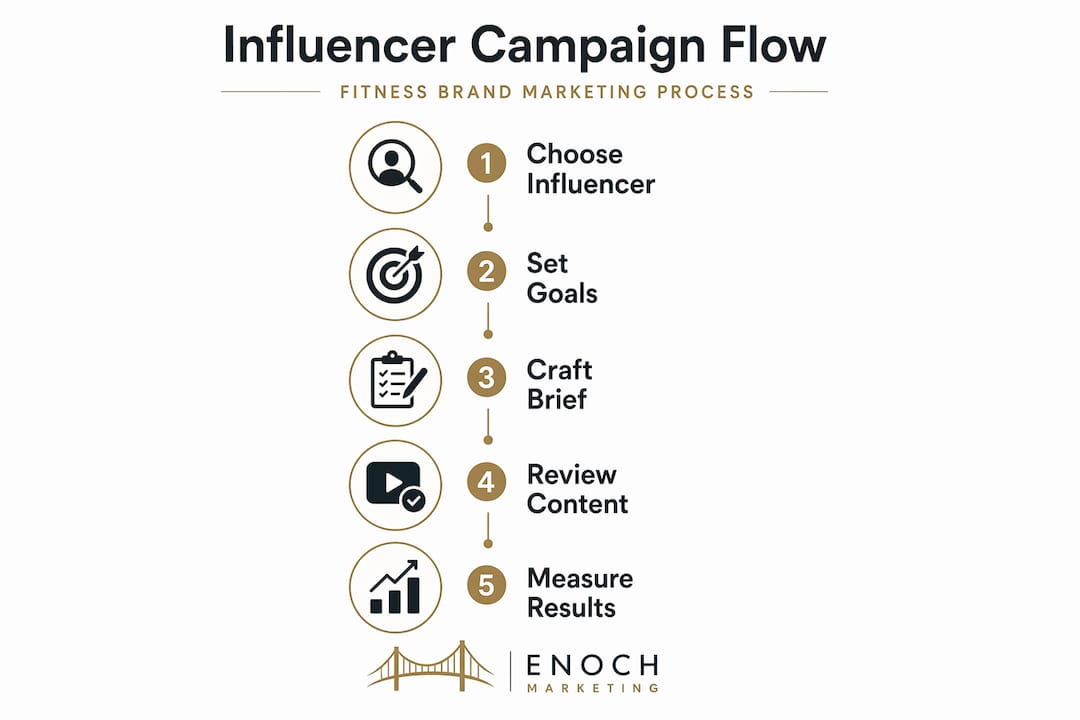
Knowing what influencer marketing is only gets you so far. The real value comes from how you build campaigns that match your business goals. These steps outline a practical approach to structuring fitness social media strategies around creator partnerships.
- Align your campaign goal to influencer type. Brand awareness calls for creators with broad reach in your category. Driving purchases or trial memberships calls for creators whose audiences have demonstrated strong intent signals through high save and share rates.
- Define your selection criteria before outreach. Fitness and wellness brands that consistently outperform competitors choose creators based on audience alignment, content quality, and brand values. Follower count is a secondary consideration.
- Choose the right campaign format. Product launches work well with review-style unboxings or first-use videos. Transformation challenges generate social proof over 30 to 90 days. Educational series build authority and sustained attention. Behind-the-scenes content humanizes your brand.
- Give creators creative freedom. This is where most brands make a costly mistake. Handing an influencer a rigid script kills the authenticity that makes the format work. Provide clear brand guidelines, but let creators speak in their own voice.
- Prioritize long-term relationships over single campaigns. Consistent promotion from aligned creators compounds over time. A creator who has mentioned your gym or product three times across six months carries significantly more credibility than one who posted once for a flat fee.
Pro Tip: When building your first influencer brief, include three things: your brand's origin story, the specific outcome you want the audience to feel, and one clear call-to-action. Keep everything else open for the creator to shape.
Looking for content direction to pair with these campaigns? Explore fitness content ideas that consistently grow gym memberships.
Measuring ROI beyond vanity metrics
This is where most fitness brands leave real money on the table. Impressions and reach numbers look good in decks, but they do not tell you whether anyone actually cared enough to act.

Effective measurement focuses on behavior-driven outcomes, not passive exposure. Here is how to structure a proper measurement framework:
| Metric type | What to track | Why it matters |
|---|---|---|
| Awareness | Reach, impressions, branded search lift | Confirms the campaign is building recognition |
| Intent | Saves, shares, profile visits, website clicks | Shows audiences are moving toward a decision |
| Conversion | Promo code redemptions, tagged URL traffic, signups | Ties influencer activity directly to revenue |
| Amplification | User-generated content, reposts, community mentions | Measures organic spread beyond the original post |
A signal stacking approach, moving from awareness through intent to conversion and then amplification, gives you a far more accurate read on how a campaign is actually performing. Holdout tests and incrementality measurement prevent you from over-crediting last-click conversions that would have happened anyway.
Two operational tools belong in every influencer contract: unique promo codes and tagged URLs. These promotional tracking assets allow you to attribute traffic and sales directly to specific creators, which is the data you need to make smarter investment decisions in future campaigns.
Creative fit matters more than follower count when it comes to generating quality intent signals. A creator who regularly demonstrates workouts with your equipment will produce stronger purchase behavior than a lifestyle influencer who tags your brand once in a photo caption.
Compliance and authenticity in influencer partnerships
Fitness influencer marketing operates under real legal requirements. Treating compliance as a formality is how brands end up facing FTC enforcement actions or, more commonly, quiet reputation damage when audiences feel misled.
The core rule is straightforward. The FTC requires clear and conspicuous disclosure of any material connection between a brand and an influencer. That means paid sponsorships, gifted products, and affiliate commissions all require visible disclosure, not buried in a list of hashtags and not hidden below a "more" prompt on Instagram captions.
Key compliance practices to build into your campaigns:
- Add disclosure language to every influencer contract. Specify exactly how and where the disclosure must appear for each content type, whether that is a story, a Reel, or a YouTube video.
- Monitor posts after publishing. Missing or unclear disclosures can trigger FTC review and signal to audiences that the brand is not operating with transparency.
- Apply disclosure rules across all formats. A disclosure in the video description does not cover the verbal content of the video itself. Standards apply to each format independently.
Beyond the legal dimension, authenticity is a brand asset. Audiences in fitness communities are sophisticated. They notice when a creator has suddenly started pushing five different supplement brands in one month. Oversaturation erodes the credibility that makes influencer marketing work in the first place.
Pro Tip: Build an influencer content calendar and cap the number of active brand partnerships per creator at any one time. This protects both the creator's credibility and your brand's perceived value in their feed.
How to launch fitness influencer marketing for small brands
Small fitness brands and gym owners often believe this channel is reserved for companies with large budgets. It is not. A focused approach with micro-influencers can produce measurable results on a fraction of what you might spend on paid media.
- Identify the right creators. Search locally before going national. A CrossFit coach with 8,000 followers in your city is more valuable for driving memberships than a national fitness personality with no local connection.
- Set specific, realistic campaign goals. "Increase awareness" is not a goal. "Generate 50 free trial signups from creator promo codes over 60 days" is a goal you can measure and optimize.
- Write a brief that protects authenticity. Share your brand positioning, the audience you want to reach, and the outcome you are after. Then step back. The best creator partnerships happen when the influencer feels trusted to communicate genuinely.
- Negotiate content usage rights upfront. Creator content can become paid social ads, website visuals, and email assets. Securing rights in the initial agreement is far cheaper than renegotiating later.
- Budget toward micro and mid-tier creators first. A portfolio of five engaged micro-influencers will typically outperform one mid-range celebrity partnership at the same total cost.
- Review performance data after every campaign cycle. Which creators drove promo code redemptions? Which posts generated the most saves? Use that data to decide who to renew and who to replace.
- Connect influencer campaigns to your broader marketing system. Creator traffic should land on optimized pages with clear conversion paths, not your generic homepage. Review your gym marketing workflow to make sure influencer-driven traffic has somewhere meaningful to go.
My take on what actually separates winning campaigns from wasted budgets
I have seen fitness brands obsess over follower counts the way gym newcomers obsess over the number on the scale. Both are measuring the wrong thing.
In my experience, the campaigns that drive real membership growth and product sales are built on creative fit, not reach. When a creator genuinely uses and believes in what they are promoting, you can feel it in the content. The camera lingers differently. The words sound unrehearsed. That quality is not scriptable. You can only find it by choosing creators who already live in your niche.
What long-term partnerships have taught me is that trust is slow to build and fast to destroy. A brand that rotates through influencers every few months sends an unconscious signal to audiences: nobody sticks around. Meanwhile, a gym that has been working with the same three local trainers consistently for two years has essentially earned three ongoing word-of-mouth referral channels.
The uncomfortable truth about measurement is that most brands are measuring the wrong things at the wrong time. Single-touch attribution models make influencer marketing look weak because they assign credit to the last click before purchase. In reality, the influencer post that made someone save a product and then search for it two weeks later drove the conversion. That signal gets missed entirely.
My advice: treat the first few campaigns as data collection, not expectation. Learn which creators generate genuine intent, then double down on those relationships.
— Collin
Ready to put influencer strategy to work for your gym?
Understanding the mechanics of influencer marketing is the foundation. Turning it into consistent membership growth requires a system, and that is exactly what Enochmarketing builds for CrossFit gyms and fitness brands across the United States.
Enochmarketing specializes in building tailored growth campaigns that combine creator partnerships, paid media, and lead funnel strategy into one connected system. Whether you are launching your first influencer campaign or trying to get better returns from the ones you already run, the team brings fitness-specific expertise to every decision. Book a free strategy session and find out what a properly structured campaign could do for your gym's membership numbers.
FAQ
What is fitness influencer marketing?
Fitness influencer marketing is a creator-based promotion strategy where fitness brands partner with athletes, trainers, or enthusiasts to promote products or services through authentic content on platforms like Instagram, TikTok, and YouTube.
How do I find the right fitness influencers for my brand?
Start by identifying creators who already exist in your specific fitness niche, whether that is CrossFit, yoga, or strength training, and evaluate their engagement rate and audience alignment before considering follower count.
What are the top benefits of fitness influencer marketing?
The primary benefits include access to pre-qualified niche audiences, higher trust and credibility than traditional ads, and measurable ROI through promo codes and tagged URLs. Fitness influencer campaigns generate 11x more ROI than conventional digital marketing on average.
Do fitness influencers need to disclose paid partnerships?
Yes. The FTC requires all influencers to clearly and conspicuously disclose material connections, including paid sponsorships, gifted products, and affiliate commissions, across every content format they publish.
What metrics should I track for fitness influencer campaigns?
Track engagement rate, saves, shares, promo code redemptions, and tagged URL conversions. These behavior-driven KPIs give you a far more accurate picture of campaign performance than reach or impressions alone.