
Storytelling in fitness marketing is defined as the practice of using narrative arcs, relatable characters, and emotional journeys to connect a gym or fitness brand with its audience beyond product features or price points. This approach is the single most effective tool for building lasting member loyalty, and the data backs it up. Storytelling ads produce a 30% lift in effectiveness compared to 15% for non-story ads, according to a WFA and Ipsos analysis of 15,000 ads. That gap is not a rounding error. It means narrative-driven campaigns, like those built around client transformation stories or creator-led journeys, consistently outperform traditional promotional content by a factor of two.
How does storytelling change customer behavior in fitness marketing?
Storytelling reduces resistance to persuasion because audiences process narratives differently than they process ads. When a story has a clear arc, a recognizable character, and a meaningful outcome, the brain stops filtering for sales intent. The WFA analysis confirms that ads with narrative arcs and characters are twice as effective at changing behavior compared to ads without stories. For gym owners, this means a member's six-week transformation story will move a prospect further down the decision path than any discount offer.
The University of Phoenix research on brand storytelling makes this concrete: emotional engagement through storytelling increases the time audiences spend with content and improves memorability. Longer time on content means more exposure to your brand values, your coaching philosophy, and your community. That exposure compounds into loyalty.
The numbers from real fitness brands confirm this pattern. Natal, a postpartum recovery program, built its entire marketing strategy around trust-first storytelling tied to authentic customer problems. The result was a 68% trial conversion rate compared to the 38% industry average. That 30-point gap came directly from narrative credibility, not a bigger ad budget.
"Storytelling replaces transactional persuasion with emotional connection. When a fitness brand tells the truth about a client's struggle and recovery, it earns the kind of trust that no promotional copy can manufacture." — University of Phoenix, Brand Storytelling in Marketing, 2026
The behavioral mechanism is straightforward:
- Narrative reduces skepticism. Prospects stop asking "Is this gym trying to sell me something?" and start asking "Could this be my story?"
- Emotional resonance creates memory. A story about a 45-year-old mom who deadlifted for the first time sticks longer than a feature list.
- Trust lowers perceived risk. When a prospect sees real people with real results, the decision to try your gym feels safer.
What storytelling strategies work best for fitness marketers?
The most effective storytelling strategies for fitness marketers combine client-centered content, behind-the-scenes transparency, and participatory formats that invite the audience into the narrative. These are not abstract concepts. They are specific content decisions you make every week.
Here is a practical framework for building your storytelling strategy:
-
Lead with client transformation stories. Trainerize recommends reposting client content and sharing day-in-the-life formats as the highest-engagement approach for fitness social media. A client's documented journey from their first session to their first competition is more persuasive than any ad copy you can write. Ask members to share their milestones, then amplify those stories across your channels.
-
Use behind-the-scenes content to humanize your brand. Show your coaches preparing a session, debating programming, or celebrating a member's PR. This format builds the kind of relatability that makes your gym feel like a community rather than a service provider. Trainerize specifically notes that behind-the-scenes daily content attracts and sustains engagement better than polished promotional posts.
-
Build a clear story arc for your brand. Every strong fitness brand narrative has a problem (the member's starting point), a process (your coaching method), and a result (the transformation). Align this arc with your gym's core values so every piece of content reinforces the same identity.
-
Incorporate unexpected elements. The WFA and Ipsos data shows that humor, misdirection, and twist endings make storytelling ads 2.7 times more memorable. A video that opens with a coach failing a lift before nailing it tells a more compelling story than a highlight reel of perfect form.
-
Diversify your content formats. Use short-form video for transformation reveals, long-form testimonials for your website, Instagram Stories for daily behind-the-scenes content, and email for deeper member journey narratives.
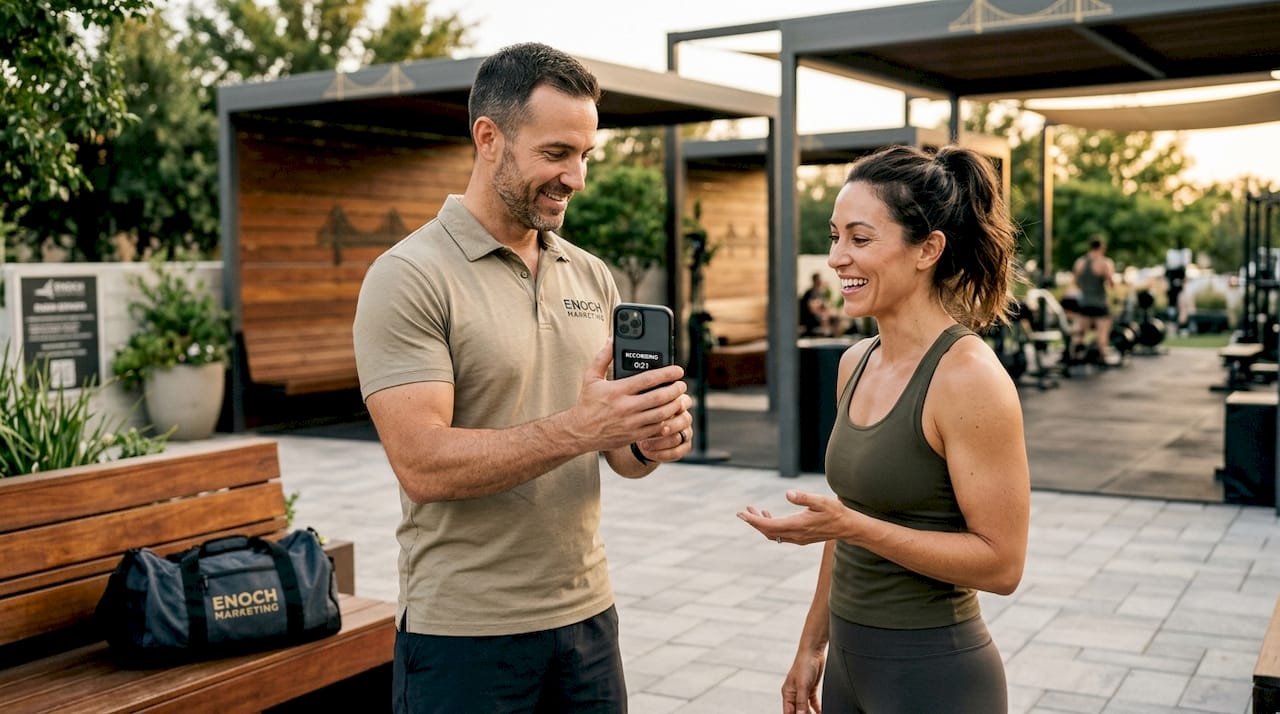
Pro Tip: Record a 60-second video with a current member every two weeks. Ask them one question: "What did you think this gym would be, and what is it actually like?" The gap between expectation and reality is your most powerful story.
How to measure and optimize storytelling effectiveness
Storytelling without measurement is just content creation. Tying your narratives to specific performance indicators turns storytelling into a growth system. The WFA recommends structuring story arcs around measurable outcome gates: problem, behavior, and result. This framework lets you test whether a specific narrative is actually moving prospects through your funnel.
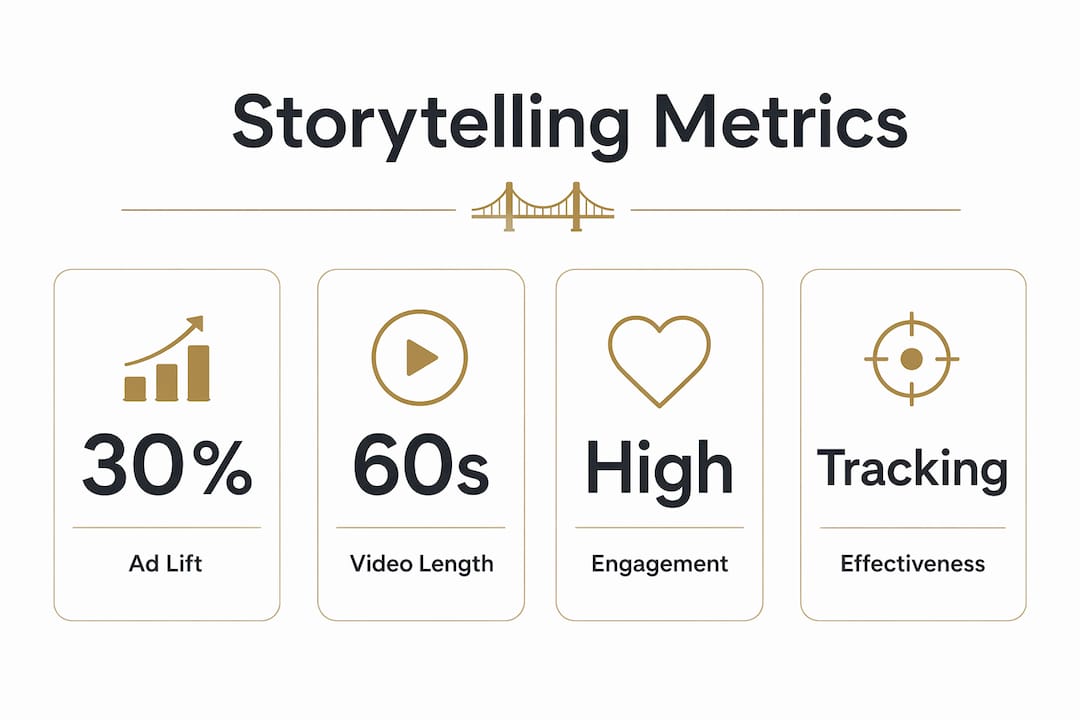
Here are the core metrics to track for each storytelling format:
| Story Format | Primary Metric | Secondary Metric |
|---|---|---|
| Client transformation video | Watch time, shares | Trial sign-ups from post |
| Behind-the-scenes content | Saves, comments | Direct message inquiries |
| Testimonial posts | Profile visits | Website clicks |
| Creator-led journey content | Follower growth | Community participation |
| Email member stories | Open rate, click rate | Membership renewals |
The 247 fitness brand launch offers the clearest case study in measurable participatory storytelling. The brand built its launch around a creator's 3,800-kilometer trans-Australia run, inviting followers to document their own role in the journey. The result was sold-out inventory and community collaboration driven entirely by narrative engagement. The metric that mattered was not impressions. It was participation rate and purchase behavior.
Pro Tip: Set up a simple tracking sheet for each story campaign. Log the story format, the emotional hook used, the call to action, and the conversion outcome. After 90 days, you will have a clear picture of which narrative types drive actual membership inquiries for your specific audience.
User-generated content is your most reliable signal that storytelling is working. When members start sharing their own stories using your branded hashtags or tagging your gym in their milestone posts, your narrative has moved from marketing to culture. That shift is the goal.
How can gyms create ongoing storytelling ecosystems?
A storytelling ecosystem is a continuous, evolving narrative structure where your gym's story is never finished. It grows with every new member, every coaching breakthrough, and every community milestone. This is the difference between a campaign and a culture.
The 247 launch is the clearest model for this approach. By centering the brand's launch on a creator's real-time endurance journey, 247 turned passive followers into active collaborators who felt personally invested in the brand's success. The inventory sold out not because of ads, but because the audience felt they were part of something. That is the outcome a storytelling ecosystem produces.
Here is how gym owners can build one:
- Make coaches the recurring characters. Your head coach's programming philosophy, personal fitness journey, and daily coaching moments are the spine of your brand narrative. Document them consistently.
- Create milestone moments worth sharing. Design your member experience around shareable achievements: first pull-up, first competition, 100th class. These become natural story triggers.
- Use branded hashtags to aggregate community stories. A hashtag like #[YourGymName]Journey collects member content into a living archive of your brand's impact.
- Celebrate process, not just outcomes. The highest-impact fitness stories show repeatable coaching moments and the work behind the result, not just the before-and-after photo. This builds credibility because it shows the method, not just the magic.
The Natal case study reinforces the long-term loyalty benefit of this approach. Trust built through real-time engagement and authentic support before purchase lowers perceived risk and significantly boosts conversion rates. For gyms, this means the stories you tell today are building the trust that converts a prospect six months from now.
Comparing a transactional marketing approach to a storytelling ecosystem makes the difference clear:
| Approach | Member Relationship | Conversion Driver | Loyalty Outcome |
|---|---|---|---|
| Transactional (promotions, discounts) | Customer | Price or convenience | Low, price-sensitive |
| Storytelling ecosystem | Community member | Trust and identity | High, emotionally invested |
The fitness brand positioning that wins local markets is almost always built on narrative identity, not service features. Your story is your competitive advantage.
Key takeaways
Storytelling in fitness marketing works because it replaces persuasion with emotional connection, turning prospects into loyal members through trust, identity, and community participation.
| Point | Details |
|---|---|
| Narrative ads outperform standard ads | Storytelling ads produce a 30% lift in effectiveness vs. 15% for non-story formats, per WFA. |
| Trust-first storytelling drives conversions | Natal achieved 68% trial conversion vs. 38% industry average through authentic narrative. |
| Participation turns audiences into collaborators | 247's creator-led story sold out inventory by making followers active participants. |
| Measure stories against behavior outcomes | Track watch time, participation rate, and trial sign-ups to optimize narrative performance. |
| Ecosystems outperform campaigns | Continuous storytelling builds brand culture and loyalty that single campaigns cannot replicate. |
Why most gym storytelling falls flat (and what actually works)
I have reviewed a lot of fitness marketing content over the years, and the most common mistake I see gym owners make is treating storytelling as a production problem. They think they need better cameras, slicker editing, or a professional photographer before they can tell a compelling story. That belief kills more good narratives than any algorithm change ever has.
The gyms that build real loyalty through storytelling do the opposite. They pull out a phone, point it at a member who just hit a personal record, and ask one honest question. The rawness is the point. Audiences are not looking for a fitness commercial. They are looking for proof that your gym is a place where real people get real results.
The other mistake I see constantly is focusing exclusively on transformation outcomes. Before-and-after content has its place, but the most credible fitness stories are about process. Show the coach adjusting a member's squat on week three. Show the 6 AM class where three people showed up in the rain. Show the programming meeting where your coaches argue about periodization. Those moments build the kind of trust that a polished highlight reel never will.
If you want to understand how personalized fitness content connects to retention, the principle is the same: specificity beats scale. One deeply personal story about one real member will outperform a generic campaign targeting everyone.
Treat your storytelling like a long-running series, not a series of ads. Your audience should feel like they are following a story they care about, not being marketed to. That shift in framing changes everything about how you create content and how your community responds to it.
— Collin
How Enochmarketing helps gyms build stories that grow memberships
Enochmarketing works exclusively with CrossFit gyms and fitness brands across the United States, which means every strategy we build is designed for your specific market and audience. We do not apply generic marketing templates to fitness businesses. We build brand narratives, paid media campaigns, and content systems that reflect what actually makes your gym different.
If your current marketing relies on referrals or one-off promotions, a storytelling-based strategy is the most direct path to consistent lead generation and member retention. Our team handles everything from gym growth campaigns to social media content development and local SEO, all built around the kind of narrative credibility that converts prospects into long-term members. Book a free strategy session and find out exactly where your gym's story should start.
FAQ
What is the role of storytelling in fitness marketing?
Storytelling in fitness marketing creates emotional connections between a gym and its prospects by using narrative arcs, real client journeys, and authentic brand moments. It replaces promotional messaging with trust-building content that drives behavior change and long-term loyalty.
How does storytelling improve gym membership conversions?
Trust-first storytelling tied to authentic customer problems significantly outperforms standard conversion tactics. Natal's postpartum recovery program achieved a 68% trial conversion rate compared to the 38% industry average by leading with narrative credibility rather than promotional offers.
What types of stories work best for fitness brands?
Client transformation stories, behind-the-scenes coaching content, and creator-led journey formats consistently produce the highest engagement for fitness brands. Trainerize identifies day-in-the-life and member-repost content as the top-performing formats for fitness social media in 2026.
How can gym owners measure storytelling effectiveness?
Track watch time, participation rate, direct message inquiries, and trial sign-ups for each story format. The WFA recommends structuring narratives around problem, behavior, and result gates so each story can be tested against specific conversion KPIs.
What makes a fitness brand story authentic?
Authenticity in fitness storytelling comes from specificity and process visibility. Stories that show real coaching moments, member struggles, and the work behind results are more credible than polished transformation content. The CrossFit gym marketing guide from Enochmarketing covers how narrative credibility functions as a core growth driver for fitness businesses.