
Custom strategies for gyms are specialized plans built around a specific gym's members, market, and goals rather than copied from a generic playbook. Generic marketing and programming templates produce average results because they ignore the variables that actually drive member behavior: recovery capacity, income level, fitness history, and local competition. Gym owners who replace broad tactics with tailored approaches see measurable gains in retention, revenue, and member satisfaction. This article breaks down the mechanics of personalized programming, niche targeting, pricing tiers, and scalable coaching models so you can apply each one to your business.
Why custom strategies for gyms outperform generic approaches
Generic gym programs treat every member the same. That assumption fails quickly when your members range from 28-year-old athletes to 55-year-old beginners recovering from knee surgery. Supervised, personalized fitness programs produce 20–35 percentage points higher 90-day retention than generic templates. That gap represents real revenue: members who stay past 90 days are far more likely to renew annually and refer others.

The core problem with one-size-fits-all templates is that they ignore individual response. A program that works for one member may cause overtraining or boredom in another. Custom plans adjust volume based on individual feedback over time, avoiding the overreach and under-stimulation that templates routinely produce. This is not a minor performance tweak. It is the difference between a member who cancels in month two and one who stays for three years.
Personalized fitness strategies also change how members perceive your gym. When a member feels seen and coached rather than processed, they talk about it. Word-of-mouth referrals from engaged members cost nothing and convert at a higher rate than paid ads targeting cold audiences.
How personalized programming improves member retention
Retention is the most undermanaged metric in the fitness industry. Most gym owners focus on lead generation while ignoring the members already paying them. Personalized programming directly addresses this gap.
A genuinely custom training plan accounts for several factors that templates ignore:
- Recovery capacity: Age, sleep quality, and stress load determine how much volume a member can handle each week.
- Injury history: A member with a prior rotator cuff tear needs modified pressing movements, not a standard push/pull split.
- Lifestyle load: A nurse working 12-hour shifts three days a week cannot train the same way as a remote worker with flexible hours.
- Goal specificity: Weight loss, strength, sport performance, and longevity require different programming logic entirely.
Progression rules and deload strategy distinguish genuine custom plans from static templates. A real custom plan defines exactly how load and volume increase based on individual performance data, not a fixed weekly percentage. Without that logic, you are selling a template with a custom label on it.
Pro Tip: Ask any coach or software vendor to show you the progression rules built into their program. If they cannot explain how the plan adjusts when a member stalls or gets injured, it is not truly custom.
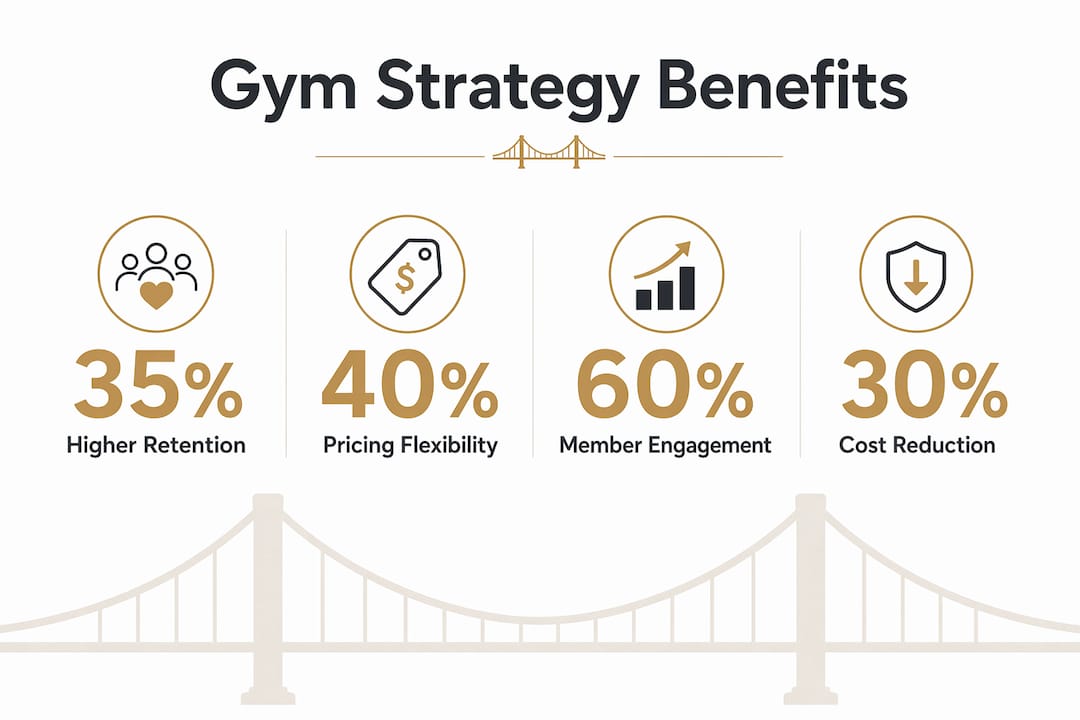
Members on personalized programs also report stronger adherence across demographics. That adherence translates directly into attendance consistency, which is the single best predictor of long-term membership. Gyms that personalize fitness marketing alongside their programming compound this effect by reinforcing individual progress in their communications.
What role does niche targeting play in gym strategy?
Niche targeting, also called Ideal Customer Profile (ICP) focus, is the practice of designing your gym's services, pricing, and marketing around a specific type of member rather than everyone in your zip code. Most gym owners resist this because it feels like leaving money on the table. The data says the opposite.
Specializing in a specific ICP lowers operating costs and improves staff retention. It also increases lifetime client value by over $2,200 at a $200 per month price point, because clients retained for 30 months instead of 19 months generate significantly more revenue per acquisition dollar spent.
| Factor | Niche-focused gym | Broad-market gym |
|---|---|---|
| Equipment needs | Lower, purpose-built | Higher, general-use |
| Staff specialization | Deep expertise in one area | Generalist knowledge |
| Marketing message | Specific, high-converting | Broad, lower conversion |
| Member lifetime value | Higher (longer retention) | Lower (faster churn) |
| Referral quality | High (like-minded members) | Mixed |
A gym focused on masters athletes over 45 does not need a full rig of competition barbells. A gym built for postpartum women does not need a powerlifting platform. Removing equipment and programming that does not serve your ICP cuts costs and sharpens your identity. That identity is what makes your marketing land.
Staff longevity also improves in niche gyms. Coaches who specialize in one population develop genuine expertise faster, feel more confident, and stay longer. High staff turnover is one of the most expensive and underreported costs in the fitness industry.
How should gyms structure pricing for custom offerings?
Pricing is where most gym owners leave the most money behind. The standard mistake is setting one price, keeping it forever, and discounting it when leads slow down. A tiered pricing model aligned with your custom offerings captures different willingness to pay and protects your revenue floor.
Founding-member pricing should be capped and set 30–40% below your eventual list price. This creates urgency without signaling that your service is cheap. It rewards early adopters and builds a community of members who feel invested in your gym's success from day one.
A functional pricing structure for a custom coaching gym looks like this:
| Tier | Service level | Price range | Target member |
|---|---|---|---|
| Entry | Group classes only | $99–$149/month | Budget-conscious beginners |
| Mid | Group + monthly check-in | $179–$229/month | Consistent members seeking guidance |
| Premium | Semi-private or 1:1 coaching | $299–$499/month | Results-driven, high-commitment members |
Pricing tiers targeting premium, mid, and entry members produce 30–50% revenue differences between similarly trafficked gyms. Two gyms with identical foot traffic can have dramatically different revenue simply because one captures premium members with a defined upper tier.
Common pricing mistakes to avoid:
- Raising prices without a value story. Members need to understand what they are getting more of, not just paying more for.
- Breaking founding-member promises. Price increases for existing members require at least 60 days advance notice and a clear explanation tied to concrete value additions.
- Discounting to fill capacity. Broad discounts attract price-sensitive members who churn fastest.
Pro Tip: Rack rates should adjust every 12–18 months for new members. Existing members should see rate changes no more than once every 24 months. Predictability builds trust.
Can gyms scale personalization without losing quality?
Scaling a custom coaching model sounds like a contradiction. More clients mean less individual attention, which means lower quality. The semi-private model solves this problem directly.
A 1:6 coach-to-client ratio preserves the personal attention that drives retention while allowing a gym to grow beyond the ceiling of one-on-one training. Matt Jolly's semi-private model demonstrates this clearly: programming work drops to roughly two hours per month for 100+ clients when the right systems are in place, without sacrificing coaching quality or client experience.
The operational benefits of a semi-private model include:
- Reduced coach burnout. Coaches manage smaller groups with shared programming logic rather than writing individual plans from scratch for every client.
- Higher revenue per hour. Six clients at $300 per month each generate $1,800 per session slot versus $300 for a single one-on-one client.
- Stronger community. Small groups build relationships between members, which increases accountability and reduces cancellation rates.
- Cleaner transitions. When a gym moves from one-on-one to semi-private, clear client communication about the benefits of the new format prevents churn during the shift.
Digital tools that centralize programming, track member progress, and automate check-ins reduce the administrative load that kills personalization at scale. The goal is a system where every member feels individually coached even when the coach is working with a group.
Creative upselling within this model also becomes easier. When you know each member's goals and progress, you can offer relevant add-ons like nutrition coaching or recovery sessions rather than generic promotions that most members ignore.
Key Takeaways
Gyms that build custom strategies around member needs, niche positioning, and tiered pricing consistently outperform those running generic programs and flat-rate memberships.
| Point | Details |
|---|---|
| Personalized programming drives retention | Custom plans produce 20–35 percentage points higher 90-day retention than generic templates. |
| ICP focus increases lifetime value | Niche-focused gyms retain clients longer, adding over $2,200 in lifetime value per member. |
| Tiered pricing captures more revenue | Premium, mid, and entry tiers create 30–50% revenue differences between similarly sized gyms. |
| Semi-private models scale personalization | A 1:6 coach-to-client ratio serves 100+ clients while keeping coaching quality high. |
| Communication protects pricing trust | Price increases require 60+ days notice and a clear value story to prevent churn. |
What I've learned from watching gyms get this wrong
The gym owners I see struggle most are not the ones who lack talent. They are the ones who built their business on a broad promise: "We help everyone get fit." That message attracts no one in particular and retains even fewer.
The gyms that grow consistently have made a choice. They know exactly who they serve, what result they deliver, and what they charge for it. That clarity is not accidental. It comes from deciding to stop competing on price and start competing on specificity.
The retention data reinforces this. When a member joins a gym that was clearly built for someone like them, they stay. They refer people like themselves. They buy add-ons because the add-ons make sense for their goals. The math on lifetime value changes completely when you stop treating acquisition as the only lever.
Pricing is where I see the most avoidable damage. Gym owners who undercharge at launch, then try to raise prices without a value story, lose members and credibility at the same time. Set your founding-member rate deliberately. Communicate your price increases early and honestly. Members respect transparency far more than they resent a fair price increase.
The last thing I will say: systems matter more than hustle. A coach who writes 40 individual programs from scratch every month will burn out. A gym owner who tries to market to everyone will waste their budget. The semi-private model and a clear ICP are not shortcuts. They are the structure that makes personalization sustainable.
— Collin
How Enochmarketing helps gyms build strategies that actually work
Gym owners who want to grow past referrals and word-of-mouth need more than a good product. They need a marketing system built specifically for the fitness industry.
Enochmarketing works exclusively with CrossFit gyms and fitness brands across the United States. The agency builds custom gym marketing plans that cover paid media on Meta and Google, local SEO, lead funnel design, and brand positioning. Every engagement starts with an audit of your current marketing, followed by a strategy built around your specific ICP and market. If your gym is ready to move from guesswork to a system that generates consistent leads and keeps members longer, book a free strategy session with the Enochmarketing team.
FAQ
What are custom strategies for gyms?
Custom gym strategies are marketing and programming plans built around a specific gym's members, market position, and revenue goals rather than generic industry templates. They include personalized workout programming, niche targeting, tiered pricing, and tailored marketing messaging.
How much does personalized programming improve retention?
Personalized programs produce 20–35 percentage points higher 90-day retention than generic templates. That difference compounds over time into significantly higher lifetime member value.
What is a founding-member pricing strategy?
Founding-member pricing sets your initial membership rate 30–40% below your eventual list price to reward early adopters and create urgency. The rate should be capped at a set number of members and phased out as your gym fills.
How does niche targeting reduce gym operating costs?
Focusing on a specific ICP reduces equipment needs, sharpens staff expertise, and produces higher-converting marketing. Niche gyms also retain clients longer, which lowers the cost per retained member over time.
Can a gym scale personalization without hiring more coaches?
A semi-private model with a 1:6 coach-to-client ratio allows gyms to serve 100+ clients with minimal additional programming time. Digital tools that track progress and automate check-ins preserve the personalized experience at scale.