
A fitness business community partnership strategy is a deliberate plan to align your gym with local professionals and organizations to generate warm leads, build trust, and grow your member base without relying solely on paid ads. The industry standard recommends maintaining at least 5 active, diverse local partnerships to sustain a reliable lead pipeline. Done right, this approach positions your gym as a community wellness hub rather than just another business competing for attention. Gyms that treat partnerships as community service rather than marketing consistently attract higher-quality leads at a lower cost per acquisition. This guide gives you a practical framework to build, structure, and maintain those alliances.
What is a fitness business community partnership strategy?
A fitness business community partnership strategy is the practice of forming deliberate, mutually beneficial relationships with local businesses and professionals whose clients overlap with your ideal gym member. The industry term for this model is "referral partnership," and it sits at the intersection of community wellness partnerships and local business development. The core benefit is trust transfer. When a chiropractor or dietitian refers a client to your gym, that person arrives with existing confidence in your brand, skipping the hardest phase of any marketing effort.
Strategic partnerships transfer trust from established local professionals directly to your fitness brand. That trust shortcut is worth more than most paid ad campaigns because the lead is already warm and motivated. Fitness collaboration strategies built on this model consistently outperform cold outreach in both lead quality and conversion rate.

How do you identify and prioritize the right local partners?
The best local partners serve clients who are either about to need fitness support or who just finished another stage of their health journey. Physical therapists, dietitians, sports medicine clinics, corporate wellness programs, and yoga studios all fit this profile. Their clients are already health-conscious and motivated, which makes them far easier to convert than cold prospects from a Facebook ad.
Prioritize partners based on three criteria:
- Complementary service timing. Physical therapists discharge patients who need to rebuild strength. Dietitians work with clients who want body composition changes. Both groups are primed for a gym membership conversation.
- Audience overlap. A corporate wellness program director controls access to dozens or hundreds of employees at once. That single relationship can generate more leads than a month of paid ads.
- Partner willingness. The best partner is one who already talks about fitness with their clients. A sports medicine clinic that never discusses exercise is a weak fit regardless of audience size.
A portfolio of 5 active, diverse local partnerships generates 15–35 leads monthly across channels. Physical therapy clinics alone contribute 6–10 leads per month on average. That number compounds when you add corporate programs (5–8), dietitians (3–5), yoga studios (4–8), and sports medicine clinics (3–6).
Pro Tip: Before reaching out, map your current member base. Identify which professions or life stages your best members came from. Those categories reveal your highest-probability partner types.
For a deeper look at fitness partnership marketing ideas that work at the local level, Enochmarketing has published a practical breakdown worth reading alongside this guide.
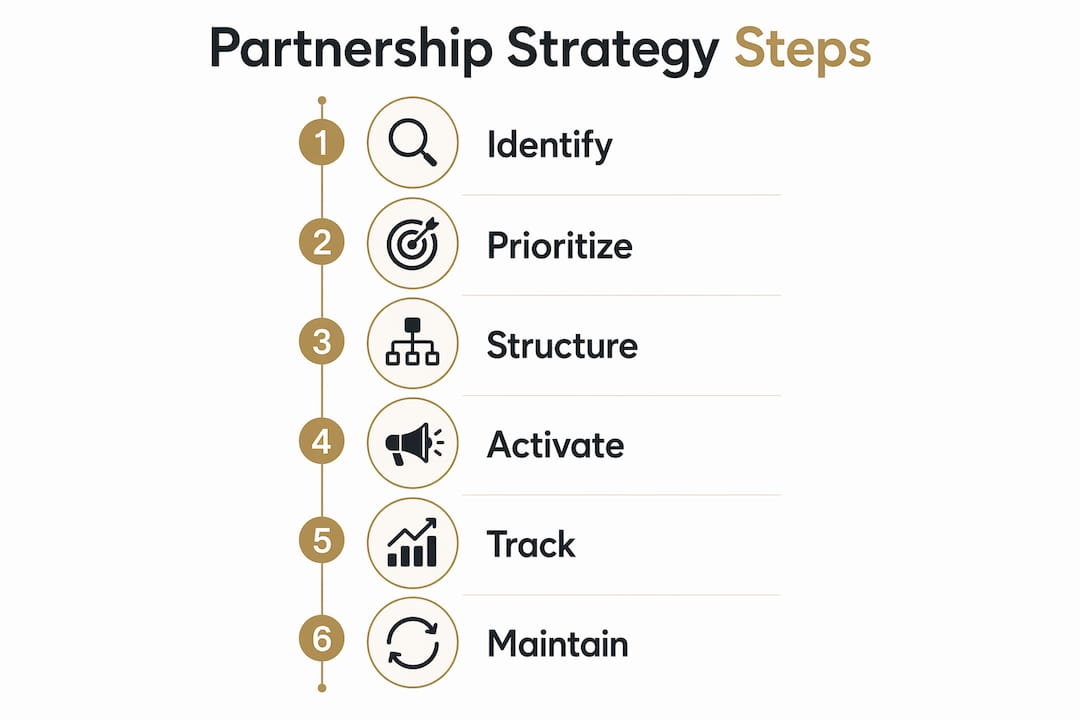
How do you structure a partnership agreement that runs itself?
The most effective partnership structure is the mutual referral agreement. It requires near-zero management overhead and creates clear lead attribution without any financial transaction between parties. The goal is to make participation as easy as possible for your partner. If they have to do significant work, the partnership dies within weeks.
A solid mutual referral agreement includes these elements:
- Intro offer cards. Printed or digital cards with a specific offer (a free class, a discounted first month) that the partner hands to their clients. Keep the offer simple and the card design clean.
- Digital display assets. A co-branded graphic or short video the partner can post on their social media or display in their waiting room. You create it; they share it.
- Unique referral codes. Each partner gets a distinct promo code. When a new member uses it at sign-up, you know exactly which partner sent them. This is your tracking mechanism.
- Non-cash reciprocity. Offer your partner something valuable in return: a discount on gym memberships for their staff, a co-hosted community event, or a guest spot in your newsletter. Cash commissions complicate things legally and administratively.
| Agreement element | Partner effort required | Your effort required |
|---|---|---|
| Intro offer cards | Hand out cards | Design and print cards |
| Digital display assets | Post or display | Create graphics/video |
| Unique referral codes | Mention code verbally | Set up in your system |
| Co-hosted event | Show up and present | Plan and promote event |
Mutual referral agreements are the most common structure because they require minimal administration and eliminate the need for financial transactions between parties. That simplicity is what keeps them alive long-term.
Pro Tip: When you pitch a partner, bring a one-page summary of what you need from them (almost nothing) and what they get in return (clear value). Partners say yes when the ask is tiny and the benefit is obvious.
How do you activate and promote community partnerships effectively?
Activation is where most gym owners stall. They sign an informal agreement, drop off some flyers, and wait. Nothing happens. Effective activation requires you to create visible, recurring touchpoints that remind both the partner and their clients that the relationship exists.
The most effective activation tactics include:
- Community wellness workshops. Host a free workshop at your gym or the partner's location. A physical therapist presenting on injury prevention, or a dietitian discussing performance nutrition, draws an audience that already trusts the presenter. You get a room full of warm prospects who see your facility and your coaching staff in action.
- School sports warm-up programs. Fitness business school partnership outreach is underused. Offer to run a free warm-up or conditioning session for a local school sports team. Parents, coaches, and athletes all become aware of your gym through a single session.
- Employee wellness offers. Pitch a corporate partner on a discounted group membership or a monthly lunch-and-learn at their office. Corporate decision-makers respond to wellness programs because they reduce sick days and improve morale.
- Collaborative social media content. Create short videos or posts with your partner that feel like community education, not advertising. A 60-second video of a dietitian explaining post-workout nutrition, filmed at your gym, serves both audiences and feels like a public service.
- Co-hosted events. A community wellness day where multiple local health businesses participate builds goodwill across all partners simultaneously. Attendance at these events tends to be higher because multiple networks promote the same event.
Local partnerships framed as community service produce warmer leads and stronger trust than those framed as marketing campaigns. The distinction matters because partners are more willing to participate when the activity feels like genuine value for their clients. The local partnerships playbook from GymClass offers a detailed breakdown of how to structure these community-first activations.
Outreach pitches that lead with your gym's goals fail consistently. Pitches focused on partner objectives like foot traffic, staff wellness, or client outcomes succeed at a dramatically higher rate. Lead every conversation with what the partner gains.
How do you track ROI and keep partnerships alive long-term?
Most gym owners skip tracking entirely. That is a critical mistake because without data, you cannot tell which partnerships are worth nurturing and which are wasting your time. Tracking does not require complex software. It requires three simple mechanisms:
- Unique promo codes per partner. Assign a distinct code to each partner at the start of the relationship. Review code usage monthly to see which partners are actively referring.
- Intake questions. Add "How did you hear about us?" to your sign-up process and include each partner's name as a selectable option. This catches referrals who forget to use a code.
- Dedicated landing pages or links. For digital partnerships, create a unique URL for each partner's audience. Traffic and conversion data from that page tells you exactly how much value the relationship generates.
Tracking mechanisms like unique promo codes and intake questions enable precise attribution of new memberships to specific partners. That data is what lets you scale the partnerships that work and exit the ones that do not.
Relationship maintenance is equally important. Successful gyms schedule quarterly reviews with each partner and monthly co-marketing check-ins to keep activity coordinated. Without that cadence, partnerships go quiet within a few months. Treat each partner relationship like a client relationship: communicate regularly, deliver on commitments, and show appreciation for referrals sent your way.
Pro Tip: Send a handwritten thank-you note or a small gift when a partner sends you a member who converts. That gesture costs almost nothing and dramatically increases the likelihood they will refer again.
For more ideas on gym marketing strategies that complement your partnership work, Enochmarketing's local growth resources are worth bookmarking.
Key Takeaways
A fitness business community partnership strategy built on 5 diverse local alliances, low-overhead referral agreements, and consistent relationship maintenance is the most cost-effective path to sustained membership growth.
| Point | Details |
|---|---|
| Partner selection criteria | Choose partners whose clients are already motivated toward fitness, such as physical therapists and dietitians. |
| Lead volume benchmark | Five active, diverse partnerships generate 15–35 qualified leads per month across all channels. |
| Agreement structure | Use intro offer cards, unique promo codes, and non-cash reciprocity to keep agreements simple and trackable. |
| Activation approach | Frame all partnership activities as community service, not advertising, to attract warmer leads. |
| Tracking and maintenance | Use promo codes and intake questions monthly, and schedule quarterly reviews to sustain each partnership. |
Why partnerships are the most underrated growth tool in fitness
Gym owners I work with consistently underestimate how much trust a single referral from a chiropractor or sports dietitian carries. A cold lead from a paid ad arrives skeptical. A referred lead arrives ready to buy. That difference in lead temperature translates directly into faster sales conversations, higher conversion rates, and lower churn in the first 90 days of membership.
The mistake I see most often is treating partnerships as a one-time setup task. Gym owners sign an informal agreement, drop off some flyers, and assume the leads will flow automatically. They do not. Partnerships are relationships, and relationships require ongoing attention. The gyms I have seen build the most durable local presence are the ones that show up for their partners consistently, not just when they need more leads.
The other insight worth sitting with: the best partnerships do not feel like marketing at all. When a physical therapist tells a patient, "You should check out this gym, they really helped one of my other clients rebuild after surgery," that is not a sales pitch. It is a personal recommendation. Your job is to make it easy for partners to give those recommendations naturally and often.
— Collin
How Enochmarketing supports your partnership growth
Building local partnerships is one piece of a larger growth system. Enochmarketing works exclusively with CrossFit gyms and fitness brands across the United States, helping them build the marketing infrastructure that makes partnerships more effective and measurable.
From lead funnel creation and local SEO to paid media campaigns that amplify your community presence, Enochmarketing builds the systems that turn partnership referrals into trackable, scalable revenue. The agency's approach starts with a full audit of your current marketing, then builds a custom plan tailored to your local market and community positioning. If you want your partnership strategy to generate consistent, measurable results rather than occasional referrals, a free strategy session with Enochmarketing is the right next step.
FAQ
What is a fitness business community partnership strategy?
A fitness business community partnership strategy is a deliberate plan to form referral relationships with local professionals and organizations whose clients are likely to need fitness services. The goal is to generate warm, trust-based leads at a lower cost than paid advertising.
How many local partnerships should a gym maintain?
Five active, diverse local partnerships is the industry benchmark for generating a reliable flow of 15–35 leads per month. Fewer than five creates dependency on a single source; more than ten becomes difficult to manage without dedicated staff.
What makes a good fitness business partner?
The best partners serve clients who are already motivated toward health improvement, such as physical therapists, dietitians, sports medicine clinics, and corporate wellness program directors. Audience overlap and partner willingness to refer are the two most important selection factors.
How do you track leads from community partnerships?
Assign each partner a unique promo code and add partner-specific options to your membership intake form. Review code usage and intake data monthly to determine which partnerships generate the most conversions.
How do you keep partnerships active long-term?
Schedule quarterly reviews with each partner and monthly co-marketing check-ins to keep activity coordinated. Acknowledge referrals with personal gestures and deliver consistent value to prevent the relationship from going dormant.