
A CrossFit gym corporate wellness program pitch wins contracts when it leads with business outcomes, not workout details. HR managers and wellness coordinators care about reduced absenteeism, lower healthcare costs, and stronger employee retention. They do not care about your WOD programming or PR boards. Employee wellness programs return an average $3.27 for every $1 spent, and 87% of employees consider wellness offerings important when choosing an employer. Those two numbers belong in your opening slide, not buried in an appendix. This guide shows you exactly how to build, price, and deliver a pitch that closes.
How to build a CrossFit gym corporate wellness program pitch that wins
The foundation of any successful corporate fitness program pitch is targeting the right companies before you write a single word of your proposal. Pitching every business in your city wastes time and dilutes your message. Precision targeting produces better results faster.
Which companies to target first
Companies with 50–500 employees within five miles of your gym produce the highest participation rates. That range is large enough to justify a dedicated program budget, yet small enough that a single HR manager makes the call. Distance matters because employees who commute to your facility need it to be convenient.
Industry selection is equally important. Prioritize sectors with sedentary roles: technology firms, financial services, insurance, legal offices, and healthcare administration. These workforces sit for eight or more hours daily, which means musculoskeletal complaints, stress, and low energy are already costing their employers money. Your program solves a problem they already know they have.
Use LinkedIn Sales Navigator to filter by company size, industry, and geography. Local chamber of commerce directories and regional business journals publish annual lists of top employers. Cross-reference those lists with companies that already advertise wellness benefits in their job postings. Those employers have an active wellness budget and a decision-maker who answers wellness-related outreach.
- Target companies with 50–500 employees within five miles of your gym
- Focus on sedentary industries: tech, finance, legal, insurance, and healthcare administration
- Use LinkedIn, chamber directories, and job posting language to identify wellness-ready employers
- Prioritize companies already advertising wellness benefits in hiring materials
Pro Tip: Search LinkedIn for "wellness coordinator" or "benefits manager" at your target companies and connect before sending any pitch. A warm connection converts at a significantly higher rate than a cold email.
What should a CrossFit corporate wellness package include?
A gym wellness program proposal fails when it offers a single membership discount and nothing else. HR managers need structure, reporting, and clear deliverables. Build tiered packages that give companies options without overwhelming them.
Package tiers that make sense for employers
Three tiers work well for most CrossFit gyms pitching corporate clients. A basic tier covers gym access during off-peak hours, a monthly group class, and a quarterly participation report. A standard tier adds on-site lunch sessions, a 12-week structured fitness challenge with baseline and end assessments, and monthly reporting. A premium tier includes all of the above plus virtual coaching access, a dedicated account manager, and a custom onboarding session for new employees.
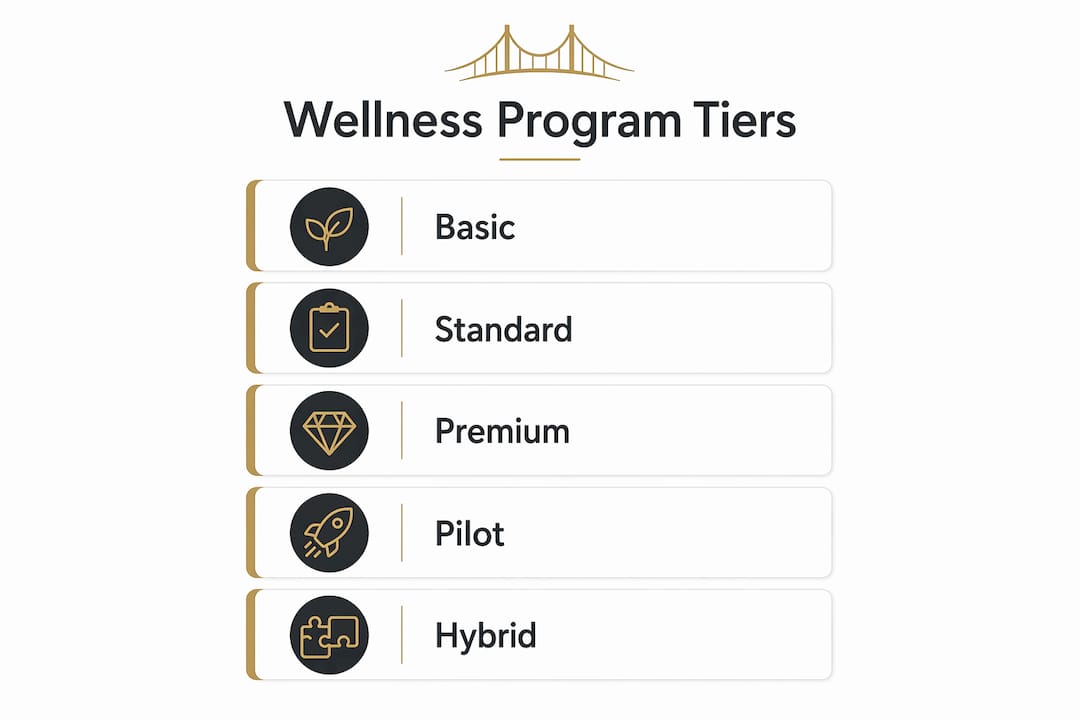
On-site group training typically costs $1,500–$3,000 per month, while hybrid programs that combine in-person and virtual delivery range from $2,500–$5,000 per month. App-based or digital-only subscriptions run $5–$15 per employee per month. Contract lengths commonly span 3–12 months. Shorter contracts reduce the employer's perceived risk, which helps you close faster.
| Package tier | Delivery format | Price range | Contract length |
|---|---|---|---|
| Basic | Gym access + monthly group class | $5–$15 per employee/month | 3 months |
| Standard | On-site sessions + 12-week challenge | $1,500–$3,000/month flat | 6 months |
| Premium | Hybrid on-site and virtual + reporting | $2,500–$5,000/month flat | 12 months |
Pro Tip: Offer a 30-day pilot at the standard tier with no long-term commitment. Pilots remove the biggest objection, which is risk, and give you real participation data to use in your renewal conversation.
What your one-page proposal must contain
Proposals must fit on one page and focus entirely on business metrics: reduced healthcare costs, engagement reporting, and a clear next step. Fitness coordinators who send multi-page decks lose deals to gyms that send concise, outcome-focused documents. Include a 10-day expiration on your offer. That deadline creates urgency without pressure and speeds up the decision cycle.
Your proposal should state the problem the employer faces, the specific program you recommend, the measurable outcomes you will track, the price, and a single call to action. One page. No exceptions.
How do you pitch CrossFit workplace wellness to HR decision-makers?
The pitch itself is a process, not a single event. Effective outreach follows a sequenced approach: a LinkedIn connection request, a brief personalized email under 100 words, a free trial offer, and a follow-up using trial results as proof. Never lead with a pitch deck. Lead with a question.
The outreach sequence that gets responses
- Connect on LinkedIn with a note referencing something specific about their company's wellness culture or a recent hiring push.
- Send a short email under 100 words asking for a 15-minute discovery call. Do not attach anything.
- Offer a free trial session for their team. A single group class costs you little and demonstrates your program's energy and community.
- Follow up with results from the trial: attendance numbers, participant feedback, and one or two testimonials.
- Present your proposal only after you understand their specific pain points from the discovery call.
What to say on the discovery call
Discovery calls should diagnose wellness pain points rather than pitch generic discounts. Ask the HR manager what their current absenteeism rate looks like. Ask whether they have seen an increase in stress-related claims. Ask what their current wellness spend produces in measurable outcomes. Those questions position you as a consultant, not a salesperson.
"When you frame your CrossFit program as a solution to a specific business problem, the conversation shifts from 'how much does this cost' to 'how soon can we start.' HR managers are not buying fitness. They are buying a measurable reduction in a problem that is already costing them money."
Replacing an employee costs 50–200% of that person's annual salary. Present that figure when a prospect pushes back on your monthly fee. A $2,000 per month program that retains two employees per year pays for itself many times over. Frame every pricing conversation in those terms.
How do you keep employees engaged and prove results to renew contracts?
Low participation is the top reason corporate wellness contracts get canceled. Engagement must be built into your program design from day one, not added as an afterthought when renewal season approaches.
Building participation that sustains itself
Positioning your gym as an experience provider rather than a passive benefit is the single most effective engagement strategy. Team-building events, milestone celebrations, and friendly competition generate social energy that a discounted membership never can. Employees talk about experiences. They forget about discounts.
- Launch with a 30-day kickoff challenge that tracks attendance and personal milestones
- Use team leaderboards to create friendly competition across departments
- Celebrate milestones publicly: first workout, 10th session, and 90-day completion
- Host one social event per quarter, such as a Saturday team workout followed by a group breakfast
Reporting is what converts a satisfied client into a renewed contract. Provide quarterly reports that include total sessions attended, average attendance per session, participant satisfaction scores, and any qualitative feedback. Tie those numbers to the metrics the HR manager named during your discovery call. Structured fitness challenges with baseline and end assessments deliver exactly the kind of HR-friendly data that makes renewal conversations easy.
| Reporting metric | Why it matters to HR |
|---|---|
| Total sessions attended | Proves utilization and justifies the spend |
| Average attendance rate | Shows program health and employee interest |
| Participant satisfaction score | Demonstrates employee experience quality |
| Absenteeism comparison | Connects program directly to healthcare cost reduction |
Corporate wellness contracts provide revenue stability that individual memberships cannot match. Build a churn protection strategy by converting active corporate members to individual memberships if their employer ends the program. That retention move protects your revenue and keeps your community intact.
Key Takeaways
A CrossFit gym corporate wellness pitch wins contracts by leading with measurable business outcomes, targeting the right companies, and building engagement into every stage of the program.
| Point | Details |
|---|---|
| Lead with business metrics | Open every pitch with ROI data: $3.27 returned per $1 spent and 87% employee preference for wellness benefits. |
| Target precisely | Focus on companies with 50–500 employees within five miles, especially in sedentary industries. |
| Structure tiered packages | Offer basic, standard, and premium tiers with clear pricing and contract lengths to reduce perceived risk. |
| Sequence your outreach | Use LinkedIn, a short email, a free trial, and a discovery call before presenting any proposal. |
| Report results consistently | Deliver quarterly reports tied to HR metrics to make renewal conversations straightforward. |
Why most CrossFit gyms leave corporate money on the table
CrossFit's community culture is its greatest strength and its biggest liability when pitching corporate clients. Gym owners who lead with "our members are a family" lose deals to less capable programs that speak the CFO's language. I have watched this happen repeatedly.
The real gap is translation. CrossFit has peer-reviewed evidence of long-term fitness improvements for sedentary employees. That evidence exists. The problem is that most gym owners never convert it into a CFO-justifiable report. They hand over a flyer with a discount code and wonder why HR never calls back.
The gyms that win corporate contracts treat the pitch as a custom strategy built around each employer's specific pain points. They run pilot programs instead of asking for 12-month commitments upfront. They show up to renewal meetings with data, not enthusiasm. Enthusiasm is free. Data is what gets a line item in next year's benefits budget.
Hybrid delivery is also underused. A gym that offers both in-person group sessions and a virtual coaching option reaches employees who travel, work remotely, or have irregular schedules. That flexibility removes one of the most common objections HR managers raise. The gym marketing ROI from a single corporate contract, when tracked properly, often exceeds what a gym earns from 15 individual memberships. That math alone should change how you prioritize your sales time.
— Collin
How Enochmarketing helps CrossFit gyms land corporate wellness contracts
Winning corporate wellness clients requires more than a good pitch. It requires a consistent pipeline of qualified leads, a clear digital presence, and marketing that speaks directly to HR decision-makers.
Enochmarketing specializes exclusively in CrossFit gym growth and builds the lead generation systems, sales funnels, and content strategies that put your corporate wellness program in front of the right employers. From Meta and Google Ads targeting local businesses to local SEO that surfaces your gym when HR managers search for employee fitness programs, Enochmarketing handles the marketing so you can focus on delivering results. If your gym is ready to build a predictable corporate revenue stream, Enochmarketing's team is ready to build the system that fills it.
FAQ
What is a CrossFit gym corporate wellness program pitch?
A CrossFit gym corporate wellness program pitch is a structured proposal that connects CrossFit training to measurable business outcomes like reduced absenteeism, lower healthcare costs, and improved employee retention. It targets HR managers and wellness coordinators rather than individual consumers.
How much does a corporate fitness program cost?
On-site group training typically costs $1,500–$3,000 per month, while hybrid programs range from $2,500–$5,000 per month. Per-employee digital subscriptions run $5–$15 per month, with contract lengths spanning 3–12 months.
How do you get HR managers to respond to a wellness pitch?
Send a personalized email under 100 words asking for a 15-minute discovery call, and offer a free trial session before presenting any proposal. Avoid pitch decks in the first contact.
What metrics should a corporate wellness report include?
Reports should cover total sessions attended, average attendance rate, participant satisfaction scores, and any measurable change in absenteeism. Tying these numbers to the metrics the HR manager named during the discovery call makes renewal conversations straightforward.
How do you handle low participation in a corporate wellness program?
Build engagement into the program from launch with kickoff challenges, team leaderboards, and milestone celebrations. Low participation is the top reason contracts get canceled, so social motivators and structured reporting must be part of the program design from day one.