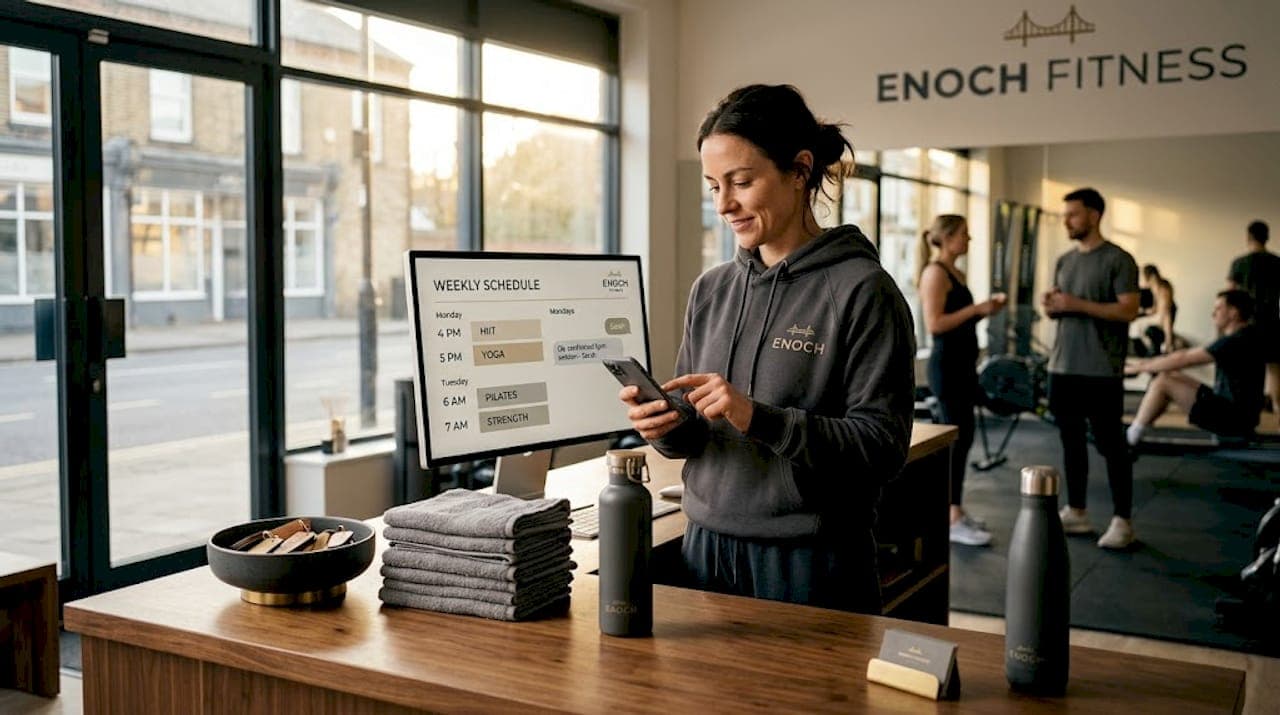
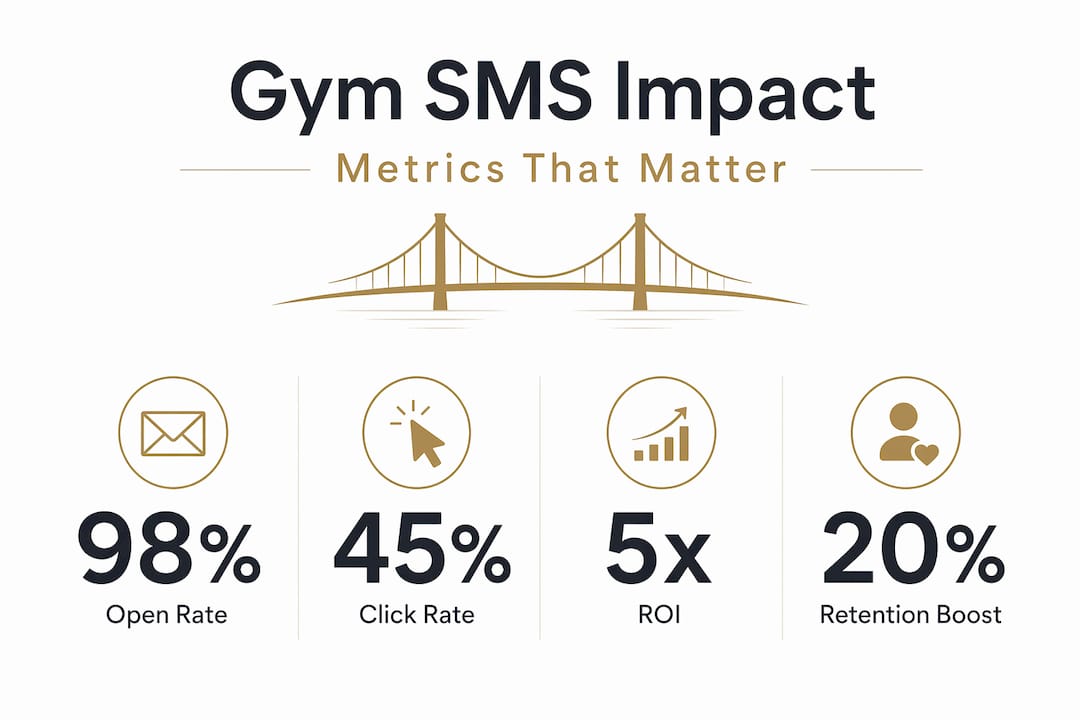
SMS marketing for gyms outperforms almost every other channel you're probably spending money on right now. With 98% open rates and 95% of messages read within 3 minutes, text beats email in speed and attention by a wide margin. Yet most gym owners treat SMS as an afterthought, sending the occasional blast and wondering why members still churn. This guide covers the real reasons why SMS works specifically for fitness businesses, how to set up campaigns that drive attendance and renewals, and what you absolutely cannot ignore on the compliance side.
Table of Contents
- Key takeaways
- Why use SMS marketing for gyms
- Benefits of SMS marketing for gym member retention
- How to set up effective SMS campaigns in your gym
- SMS compliance every gym owner must know
- Measuring and improving your SMS campaigns
- What I've learned from watching gym owners use SMS wrong
- Ready to build SMS campaigns that actually retain members?
- FAQ
Key takeaways
| Point | Details |
|---|---|
| Unmatched open rates | SMS reaches members almost instantly, making it ideal for class reminders and renewal alerts. |
| Retention through habit loops | Booking triggers, reminders, and post-visit check-ins create attendance patterns that keep members coming back. |
| Personalization drives results | Segmented messages tied to milestones, inactivity, or birthdays outperform generic blasts every time. |
| Compliance is non-negotiable | Express written consent and a clear opt-out process are required by law under TCPA rules. |
| Pair SMS with email | Text handles urgency; email handles depth. Using both together produces the strongest member engagement outcomes. |
Why use SMS marketing for gyms
Text marketing for gyms works because of one simple fact: your members carry their phones everywhere, especially to and from the gym. The average person spends 5 to 6 hours daily on their phone and opens roughly 70% of texts within 5 minutes of receiving them. That kind of immediacy is something no other channel can match at scale.
Here is what makes SMS particularly well suited to fitness:
- Urgency fits naturally. A class starting in 45 minutes, a membership expiring this week, or a last-minute spot opening up are all time-sensitive situations. SMS handles these better than email or social posts ever will.
- The message format matches member behavior. Gym members are not looking for a 600-word newsletter when they are warming up. A short, direct text that says "Your Thursday 6am class is confirmed. See you tomorrow!" works perfectly.
- Response rates support two-way conversation. Unlike social media, where your post competes with a feed full of distractions, an SMS arrives directly and prompts action.
- The cost is low relative to the return. When a single renewal reminder can retain a $100/month member who was about to quietly cancel, the math is obvious.
SMS outperforms other channels in immediacy, engagement, and ROI according to TrueDialog's 2025 benchmark report after analyzing over one billion texts sent. That is not a small sample size, and it is not a surprise to anyone who has actually run a text campaign for a fitness business.
Pro Tip: Keep your message under 160 characters whenever possible. That is the standard SMS character limit before a message splits into two, and shorter messages consistently outperform longer ones in click-through and response rates.
Benefits of SMS marketing for gym member retention
The real benefits of SMS marketing show up when you stop thinking about it as a broadcast tool and start using it as a relationship tool. Here is where gym operators see the most concrete gains.
Attendance stays higher
Automated class reminders are the single highest-impact use case for text marketing in gyms. When members receive a confirmation text at booking and a reminder 24 hours before class, no-show rates drop. That matters because attendance is the strongest predictor of long-term retention. A member who shows up four times a week is not canceling their membership.

Renewals happen before members drift away
Most gym churn is not dramatic. Members do not call up angry and cancel. They just stop showing up, forget to renew, and one day realize they have not been in months. A well-timed SMS two weeks before a membership expires, followed by a second text the week of expiration, catches people at the decision point. Pair that with a short-term discount or a loyalty reward and you recover a significant portion of what would have been lost.
Personalized messages build real connection
Reaching out when a member hits 100 visits, wishing them a happy birthday with a small offer, or checking in after a two-week absence are not complex campaigns. But they feel personal, and that feeling is what separates a gym people are loyal to from one they treat as a commodity. Personalized SMS promotions for fitness tie directly to this kind of loyalty-building behavior.
Win-back campaigns work on SMS
Inactive member win-back via SMS is one of the most cost-effective campaigns you can run. Sending a short "We miss you" text with a one-month return offer to members who have not visited in 30 or 60 days consistently brings people back who would otherwise churn silently. The key is timing. Hit them at 30 days, not 90, when the gym still feels relevant to them.
Pro Tip: Segment your win-back list by how long each member has been inactive. A member absent 30 days needs a different message than one absent 90 days. Tone and offer should shift accordingly.
How to set up effective SMS campaigns in your gym
Getting campaigns right comes down to four decisions: who you message, when you message them, what you say, and how it connects to the rest of your marketing.
-
Segment by member lifecycle. New members, active regulars, at-risk members, and lapsed contacts all need different messages. Do not send a win-back offer to someone who came in yesterday. Build separate lists and map your messaging to where each person actually is in their relationship with your gym.
-
Choose send times deliberately. Send timing directly affects unsubscribe rates. Mid-afternoon on weekdays performs best for most fitness audiences. Avoid early morning and late evening sends, which feel intrusive and generate opt-outs fast.
-
Write messages that lead with the action. "Your class is tomorrow at 6am" works better than "Just a reminder that we have your class scheduled." Every word should earn its place. If someone can act on the message without re-reading it, you wrote it correctly.
-
Automate the habit loop. Gyms that use SMS attendance habit loops get better retention outcomes. The sequence is straightforward: a booking confirmation, a reminder 24 hours out, and a post-visit check-in the following day. Automate all three and it runs without ongoing effort from your team.
-
Integrate with email, not instead of it. SMS works best alongside email, each channel doing what it does well. Text handles urgency and short confirmations. Email handles program announcements, detailed offers, and longer content. Using both in a coordinated way produces better results than relying on either one alone. For more on that balance, the Enochmarketing piece on email marketing for gyms covers the approach in detail.
SMS compliance every gym owner must know
This is the part most gym owners skip until they get a complaint or worse. Do not wait for that. The Telephone Consumer Protection Act (TCPA) sets the legal floor for SMS marketing in the United States, and the penalties for non-compliance are not trivial.
Here is what your program must include:
- Express written consent. Before you send a single marketing text, members must opt in explicitly. A checkbox on a membership form that clearly describes what they are consenting to is the minimum. Verbal consent is not enough.
- Clear program disclosure. When someone opts in, they should know the message frequency, that standard carrier charges may apply, and how to opt out. Anytime Fitness publishes clear SMS program terms as a good example of what transparent disclosure looks like in practice.
- An active opt-out mechanism. Every marketing message must include an easy way to unsubscribe, typically replying "STOP." Once someone opts out, you must stop sending within 10 business days. Failing to do so is a TCPA violation.
- Clean CRM integration. Consent documentation failures and slow opt-out handling are the two most common compliance breakdowns. Your CRM or SMS platform should automatically flag opt-outs and prevent future sends to those contacts.
Pro Tip: Audit your opt-in records quarterly. If you cannot produce documented consent for every subscriber on your list, remove the ones you cannot verify. The short-term list shrinkage is worth avoiding a legal problem.
Measuring and improving your SMS campaigns
Running campaigns without tracking them is the fastest way to waste your budget. The metrics that matter for gym SMS marketing are straightforward.
| Metric | What it tells you | What to act on |
|---|---|---|
| Open rate | Whether your messages are getting read | Below 85% suggests timing or list quality issues |
| Click-through rate | Whether links in texts drive action | Low CTR often points to weak call-to-action copy |
| Conversion rate | Whether texts lead to bookings or renewals | Ties SMS directly to revenue outcomes |
| Opt-out rate | Whether frequency or content is off | Above 2% on any send warrants immediate review |
| Response rate | Engagement in two-way conversations | Low rates indicate messaging feels one-sided or irrelevant |
A/B testing is your best tool for continuous improvement. Test one variable at a time: the send time, the opening line, the offer, or whether you include an emoji. Small message changes regularly produce 10 to 20 percent differences in click-through rates. Integrate your SMS data with your gym management software so you can connect attendance patterns and revenue directly to specific campaigns.
What I've learned from watching gym owners use SMS wrong
I have seen dozens of fitness businesses set up SMS programs, and the ones that struggle almost always make the same mistake: they treat it like a loudspeaker instead of a direct conversation. They blast the entire list with the same generic message every week and then wonder why their opt-out rate is climbing.
In my experience, the gyms that get real results from SMS treat it with the same care they give their coaching. Every message has a purpose, a specific audience, and a clear next step for the member. The habit loop approach I described earlier is genuinely one of the most underused tools in fitness retention, and I have seen it work consistently across gyms of different sizes and models.
The compliance piece is something I cannot stress enough. I have watched gym owners lose entire SMS lists because they built them without proper consent documentation. Rebuilding from scratch is expensive and time consuming. Getting it right from day one is always the better call.
Finally, frequency matters more than most owners realize. Sending three to four messages per month to active members tends to hit the engagement sweet spot. Going beyond that, especially with promotional content, accelerates opt-outs faster than almost anything else. Track it, adjust it, and let the data tell you where the line is for your specific community.
— Collin
Ready to build SMS campaigns that actually retain members?
Most gyms have the pieces in place to run effective SMS marketing. What they are missing is a strategy that connects those pieces and ties them to real retention and revenue outcomes.
At Enochmarketing, we specialize exclusively in fitness brand marketing for CrossFit gyms and fitness businesses across the United States. We build compliant, segmented SMS campaigns as part of a full-channel approach that includes paid ads, local SEO, and content. If you want to stop guessing at what works and start running campaigns backed by real data, our gym marketing services are built for exactly this. Book a free strategy session and we will show you what a full-channel retention program looks like for your specific gym.
FAQ
What is SMS marketing for gyms?
SMS marketing for gyms uses text messages to communicate with members about class reminders, renewals, exclusive offers, and re-engagement campaigns. It works because texts are opened almost immediately and require no algorithm or inbox competition to reach members.
How does SMS boost gym member retention?
SMS improves retention by keeping members engaged at critical moments: booking confirmations, attendance reminders, renewal alerts, and post-visit check-ins. Gyms using the attendance habit loop see measurably better retention outcomes than those relying on email or social media alone.
Is SMS marketing legal for gyms?
Yes, but only with proper consent. The TCPA requires express written consent before sending marketing texts, along with clear opt-out options and timely handling of unsubscribe requests. Non-compliance carries significant legal penalties.
How often should gyms send SMS messages to members?
Three to four messages per month is a reasonable starting point for active members. Send timing and frequency directly affect opt-out rates, so monitor your unsubscribe numbers and reduce volume if they climb above 2% on any single send.
Should gyms use SMS instead of email?
No. SMS and email serve different roles and work best together. Text handles urgent, short-form communication like reminders and alerts. Email handles longer content, program announcements, and detailed offers. Using both in coordination delivers stronger engagement than either channel on its own.