
Facebook Groups outperform Pages for personal trainer lead generation because they create conversation instead of broadcasting announcements. A Page tells people you exist. A Group makes them feel like they belong somewhere. That distinction drives every tactic in this guide.
The core mechanic is straightforward: you build a community around a specific fitness problem your ideal client is already living with, deliver consistent value inside that community, and let trust do the selling. Facebook Groups nurture relationships and community engagement in ways Pages simply cannot replicate. For CrossFit gym owners, this means your group becomes a warm pipeline, not a cold ad channel.
The essential elements of effective group lead generation are:
- Community focus first: the group exists to serve members, not to pitch them
- Value-first content: free tips, answered questions, and live coaching moments build credibility
- Targeted ad campaigns: paid traffic feeds qualified prospects into the group funnel
- Lead management: tagging, CRM integration, and fast follow-up close the loop
Pinned posts handling group rules and your core offer keep new members oriented from day one. Tagging every inbound lead as "Facebook Lead" in your CRM lets you measure what actually converts.
How to set up and nurture a Facebook Group for fitness lead generation
The setup decisions you make on day one shape everything that follows. Name the group around your client's goal, not your service. "Fat Loss After 40 for Women in Austin" pulls the right people. "CrossFit [Gym Name] Community" pulls existing members who already know you.
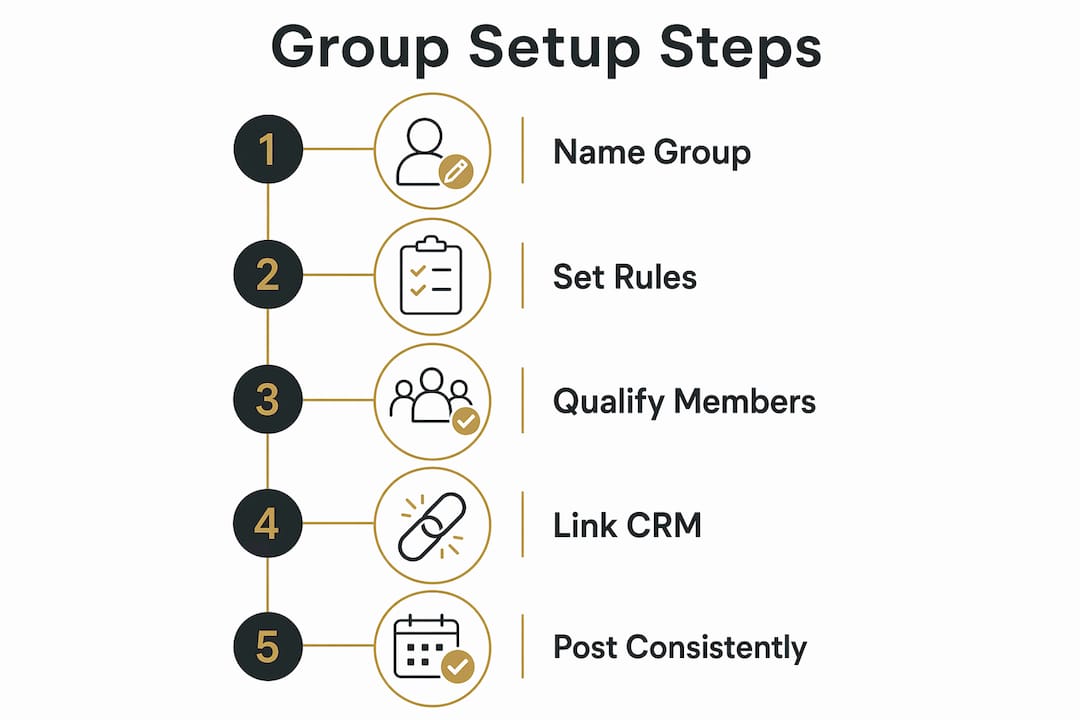
Privacy settings matter more than most gym owners realize. A private group filters out casual browsers and signals exclusivity, which raises perceived value. Set the group to private, require a short membership question (one or two questions max), and approve members manually at first so you control quality.
Treat the group like a small coaching environment, not a sales page. Pin a short welcome video covering your story, the group's purpose, and a link to your free resource or trial offer. That video does the first sales conversation for you, every time someone joins.
- Recurring content anchors such as Mindset Monday and Workout Wednesday build a predictable rhythm members start to expect
- Automated welcome posts greet new members by name and direct them to the pinned resources
- Clear but light rules discourage spam without making the group feel corporate
- Manual member approval keeps lead quality high from the start
Pro Tip: Use Facebook's native Group Questions feature to ask one qualifying question before approving membership. Something like "What's your biggest fitness challenge right now?" gives you a conversation starter and pre-qualifies intent before anyone sees your content.
Connecting your group to a CRM platform closes the loop from community member to paying client. Tag every approved member by source so your follow-up sequences stay targeted.

Content and engagement strategies that turn group members into leads
Value-first content is the engine. Members who get genuine help from your free posts are far more likely to book a call than members who only see promotional announcements.
- Free training tips and form breakdowns position you as the expert without asking for anything
- Live Q&A sessions create real-time trust that no static post can replicate
- Community challenges (a 5-day nutrition reset, a 30-day pull-up program) generate engagement spikes and email captures simultaneously
- Client success highlights provide social proof without sounding like a testimonial ad
- Polls and surveys surface the exact language your prospects use to describe their problems, which sharpens your ad copy later
Posting frequency matters less than consistency. Three well-crafted posts per week beat seven rushed ones. Video outperforms every other format in fitness groups because members can see your coaching style before they ever pay you.
Referral growth happens organically when members feel the group is genuinely useful. Prompt them occasionally: "Tag a friend who's been struggling with their nutrition" or "Share this week's challenge with someone who needs it." Those prompts cost nothing and expand your reach into warm networks.
Lead magnets and free challenges are particularly effective for capturing email addresses inside the group. A downloadable guide titled "The 5 Fat Loss Mistakes CrossFit Athletes Make" speaks directly to your audience's language and trades value for contact information.
How to craft Facebook ads that target client pain points and capture leads
The best coaching ads never mention coaching. They describe a specific problem your ideal client is living with right now, and the algorithm finds people who match. Ads focused on pain points consistently outperform vague messages about transformation or potential.
Before writing a single line of copy, define the exact situation your ideal client is in when they start looking for help. Not demographics. The specific frustration: "I've been working out for six months and the scale hasn't moved" or "I want to do my first Murph but I can't string together five pull-ups."
- Lead with the problem, not the solution: "Struggling to lose weight even though you're training five days a week?" converts better than "Join our coaching program"
- Use Facebook Lead Ads with qualifying questions to filter serious prospects from casual browsers before they reach your calendar
- Add one qualifying question to your Instant Form, such as "When are you looking to start?" or "Are you ready to invest in coaching in the next 30 days?" Multiple questions increase form abandonment
- Retarget group engagers with a custom audience of people who interacted with your posts in the past 90 days — they already know you
- Use selfie-style video ads where you speak directly to camera about a specific problem; authentic video outperforms polished studio content for high-ticket coaching
Integrate your ads with the group funnel. Run traffic directly into the group or to a landing page that leads to the group. Once someone joins, your content sequence takes over and does the nurturing.
How to measure and optimize your Facebook Group lead generation results
Tracking the right metrics separates gyms that scale their Facebook lead gen from those that keep guessing. The average cost per lead in health and fitness is $53, but that number is less useful than your cost per actual client. A $60 lead who signs a $3,000 package beats a $10 lead who never books.
- Lead volume: total new group members and form submissions per week
- Engagement rate: comments, reactions, and shares per post as a proxy for trust-building
- Cost per lead and cost per client: track both; optimize for the latter
- Lead-to-client conversion ratio: how many group members eventually book and pay
Tag every Facebook lead in your CRM as "Facebook Lead" so you can segment future campaigns and measure which posts or ads are generating paying clients, not just followers. Connecting Facebook to your CRM automates this attribution and prevents leads from falling through the cracks.
Run iterative tests on your content and ads. Change one variable at a time: the qualifying question, the video hook, the call to action. Let each test run long enough to collect meaningful data before drawing conclusions.
On the compliance side, never add people to your group without their consent, always honor opt-out requests promptly, and follow Meta's advertising policies on health and fitness claims. Misleading before-and-after imagery violates Meta's policies and can get your ad account flagged.
How to source and invite qualified personal trainers to your Facebook Group
If your group is designed to attract personal trainers rather than end clients, the sourcing strategy shifts. Quality over volume applies even more strictly here.
Search Facebook for fitness professional groups, local CrossFit affiliate communities, and NSCA or NASM member groups. Engage genuinely in those spaces before inviting anyone. A cold group invite from a stranger gets ignored. An invite from someone who just answered your question thoughtfully gets accepted.
Posting value-first content in local fitness groups before promoting your own group builds the credibility that makes invitations land. Use keyword monitoring tools to identify trainers actively asking questions about client acquisition, programming, or business growth. Those are your warmest prospects.
When you invite someone, personalize the message. Reference something specific: a post they wrote, a question they asked, a result they shared. Generic "join my group" messages have a low acceptance rate and can get you flagged as spam by group admins.
Strategies to encourage referrals and word-of-mouth growth within the group
Referrals from inside the group are your highest-quality leads because they arrive pre-sold on your credibility. The member who referred them has already done the trust-building work.
Make referrals easy and rewarding. Create a simple prompt members can share: "Know someone who's been struggling with [specific problem]? Send them here." Pair that with a tangible incentive, a free coaching call, a downloadable resource, or early access to your next challenge, for members whose referrals join and engage.
Celebrate member wins publicly and consistently. When someone hits a PR or drops a clothing size, post about it with their permission. Those celebration posts generate comments, tags, and organic shares that pull new people into the group without any ad spend. Community event ideas tied to group milestones, like a 100-member celebration workout, give members a reason to invite their network at a specific moment.
The social media growth strategies that work for CrossFit gyms on Instagram and TikTok translate directly into group referral mechanics. Consistent branding, a recognizable voice, and content worth sharing are what make members proud to recommend your community.
Key Takeaways
Facebook Group lead generation for personal trainers works when community value comes before the sales pitch, and every lead is tracked from first click to paying client.
| Point | Details |
|---|---|
| Groups beat Pages for lead gen | Groups build conversation and trust; Pages only broadcast, making groups far more effective for nurturing prospects. |
| Qualifying questions filter leads | Adding one qualifying question to your Facebook Lead Ad form removes low-intent submissions before they reach your calendar. |
| Cost per client is the real metric | The average cost per lead in health and fitness is $53, but tracking cost per client reveals true campaign efficiency. |
| CRM tagging closes the loop | Tagging every lead as "Facebook Lead" in your CRM enables accurate attribution and targeted follow-up sequences. |
| Referrals amplify organic growth | Public member wins and simple referral prompts expand group reach into warm networks at zero ad spend. |
Ready to turn your Facebook Group into a consistent client pipeline? Enochmarketing builds and manages full lead generation systems exclusively for CrossFit gyms and fitness brands across the United States.
Explore Enochmarketing's services built specifically for CrossFit gym growth, or review common lead gen mistakes fitness brands make before scaling their Facebook strategy.