
Community event ideas for gym marketing are the single most reliable way to grow your member base without relying entirely on paid ads or word-of-mouth referrals. Members who participate in group fitness are 56% less likely to cancel their memberships compared to those who train alone. That number tells you everything about where your retention budget should go. The best gym owners treat community events not as occasional perks but as a core growth strategy, one that builds loyalty, attracts prospects, and positions your facility as the local wellness hub in your market.
1. Fitness challenge ideas that drive retention and excitement
Fitness challenges are the highest-ROI category of community engagement ideas for gyms because they combine competition, accountability, and social bonding in one format. The Intramural Open model from Two-Brain Business is one of the clearest examples: a 4-week in-house competition with a nominal $50 entry fee that simultaneously generates revenue and deepens member commitment. Members who pay to participate show up consistently, track their progress, and recruit friends to join.
The most effective challenges are structured as a "Hero's Journey," where each participant experiences a personal victory by the end of the program. This is not a metaphor. When your challenge has a clear arc, a start line, visible progress, and a finish line with recognition, members attach their identity to your gym. That identity attachment is what prevents cancellations when life gets busy.
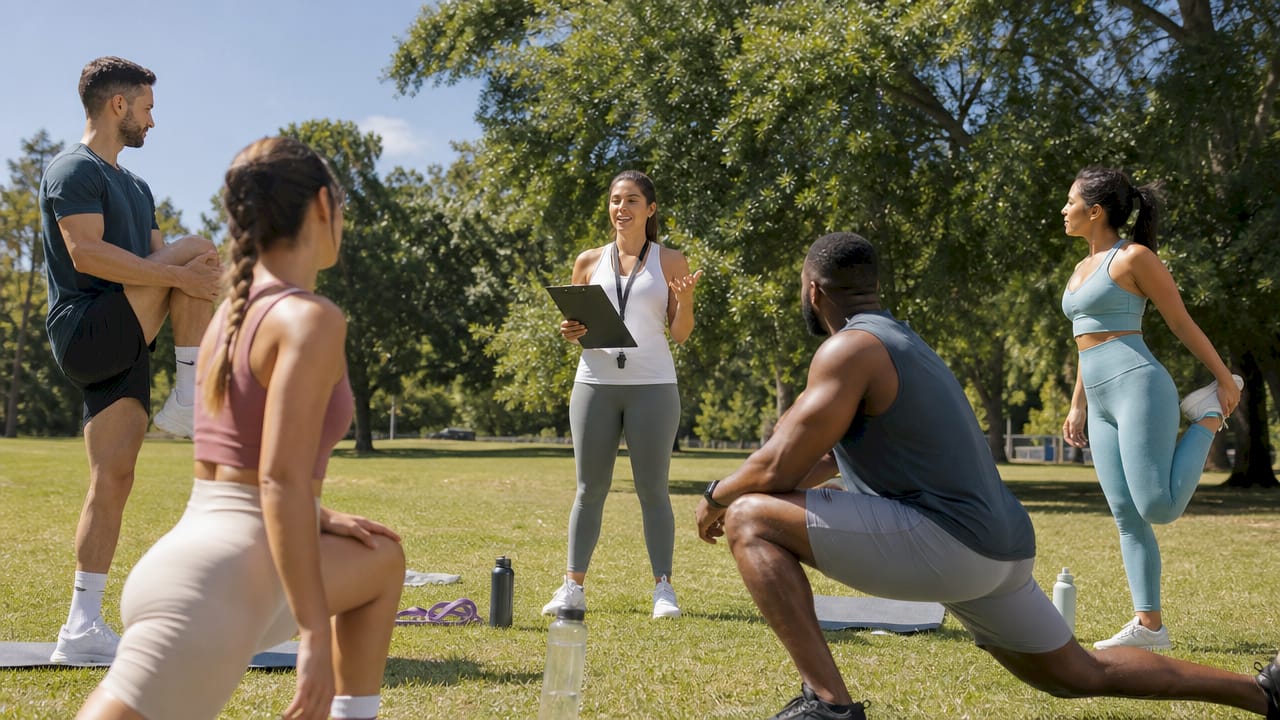
Team-based formats work especially well because they pull in members across fitness levels. Attendance challenges, step-count competitions, and mini-triathlons all create participation opportunities for beginners who would never sign up for a performance-based leaderboard. The goal is maximum inclusion, not maximum intensity.
Pro Tip: Build a simple progress tracker on a whiteboard or gym app so members can see their standing daily. Visible progress is the most underrated driver of challenge completion rates.
2. How charity and social fitness events boost gym visibility
Cause-driven fitness events attract attendance well beyond your existing member base and create emotional loyalty that no discount or promotion can replicate. A charity spin class, a donation-based bootcamp, or a fundraiser workout for a local cause puts your gym in front of people who would never respond to a Facebook ad. This is one of the most underused outreach ideas for gym owners.
The benefits extend beyond foot traffic:
- Media exposure: Local news outlets and community blogs actively cover charity fitness events, giving you earned coverage that paid ads cannot buy.
- Member pride: Your current members become ambassadors when they can say their gym supports causes they care about.
- Inclusivity signal: Donation-based entry removes the financial barrier and the intimidation factor, making your gym feel approachable to deconditioned or first-time exercisers.
- Partner leverage: Collaborating with local nonprofits and businesses expands your promotional reach to their audiences at zero additional cost.
When selecting a cause, choose one that resonates with your existing member demographics. A gym with a strong youth sports following might partner with a local youth athletics program. A CrossFit gym with a military-heavy membership might organize a Veterans Day workout with proceeds going to a veterans' organization.
"Successful community events must balance being fun, accessible, and purposeful to convert attendees into members." — CloudGymManager
3. Member workshops that establish your gym as a wellness authority
Educational events are the most underrated format in the gym marketing toolkit. A free nutrition talk, an injury prevention clinic, or a mobility workshop positions your facility as a resource, not just a place to sweat. This matters because prospects who are intimidated by traditional gym culture will walk through the door for a workshop when they would never sign up for a free trial class.
The strongest community fitness workshops share three characteristics:
- Low barrier to entry: Free or low-cost admission removes the commitment fear that keeps prospects away.
- Expert co-hosts: Partnering with a local registered dietitian, physiotherapist, or sports psychologist adds credibility and cross-promotes to their client base.
- Practical takeaways: Attendees should leave with something they can apply immediately, a meal prep framework, a mobility routine, or a sleep protocol.
Mindset workshops are a particularly high-value addition that most gyms ignore entirely. Topics like goal-setting, habit formation, and managing training around a demanding work schedule speak directly to the real barriers your prospects face. A gym that addresses those barriers earns trust faster than one that only talks about programming and equipment.
Rotating your workshop calendar keeps the format fresh. A quarterly schedule might include a nutrition talk in January, a mobility clinic in April, a mental performance workshop in July, and an injury prevention session in October. Each one serves a different segment of your community and gives you a recurring reason to invite non-members through the door.
4. Social gatherings and themed events that generate referrals
Informal social events create the emotional glue that holds a gym community together between training sessions. Member appreciation nights, holiday-themed workouts, family fitness days, and post-event socials with food and refreshments turn your gym into a community hub rather than a transaction. These are the examples of gym community events that members talk about with their friends and coworkers.
Here is how to structure social events for maximum referral impact:
- Build in a bring-a-friend mechanic. Every social event should have a formal invitation structure so members know guests are expected and welcome.
- Design the experience for non-members. Scaled workouts, clear explanations, and a welcoming atmosphere matter more than programming complexity at these events.
- Assign a staff member to every guest. That person's job is to make the guest feel seen, answer questions, and initiate a conversation about their fitness goals.
- Follow up within 48 hours. Post-event follow-up within one to two days is the single most important conversion step. A congratulations message, a goal discussion, and a consultation booking offer convert free-event guests into paying members at a significantly higher rate than any follow-up made a week later.
Pro Tip: Create a simple guest intake form at the event, just name, email, and one fitness goal. This gives your follow-up message a personal hook and removes the awkwardness of asking for contact information mid-conversation.
5. Local partnerships that amplify your community event reach
Local partnerships with complementary businesses reduce event costs, expand your promotional reach, and create cross-referral pipelines that generate leads consistently. The key distinction is that effective local outreach involves exchanging value with partners rather than simply advertising to their audience. A gym that co-hosts a nutrition workshop with a local health food store gives that store a reason to promote the event to their entire customer base.
The most productive partnership categories for gym owners include:
| Partner Type | Event Opportunity | Primary Benefit |
|---|---|---|
| Health food stores | Nutrition workshops, product sampling | Shared audience, co-promotion |
| Physical therapy clinics | Injury prevention clinics, mobility days | Credibility, referral pipeline |
| Local employers | Lunch-and-learn wellness sessions | Corporate membership leads |
| Schools and youth programs | Family fitness days, after-school events | Community goodwill, parent membership leads |
| Coffee shops and cafes | Post-workout social meetups | Casual brand exposure, social proof |
Building a structured outreach calendar aligned with local rhythms makes this sustainable. The back-to-school season in August and September is ideal for family-focused events. January is perfect for nutrition and goal-setting workshops. Summer months work well for outdoor community workouts that attract foot traffic from parks and recreational areas. For more on building these alliances, the local partnership tactics covered by Enochmarketing go deeper on structuring deals that benefit both parties.
6. Promoting your events so people actually show up
Consistent, personal event promotion starting inside your gym is more effective than any external advertising campaign. Your existing members are your most credible promotional channel. When a coach announces an upcoming event at the end of class and explains why it matters, that carries more weight than a Facebook post.
The promotion sequence that works: announce in class two to three weeks out, post on social media with member testimonials or event previews, send a direct email to your list one week before, and follow up with a personal text or app message two days before. Each touchpoint serves a different segment of your audience. Community engagement tracked via gym apps shows a strong correlation between active participation and lower churn rates, which means the members most likely to attend your events are also the ones most likely to stay long-term.
Promotion is not a one-time announcement. It is a sequence. Gyms that treat event marketing as a single social media post consistently see low turnout. Gyms that build a multi-channel, multi-week promotion schedule fill their events and convert guests into members at a measurable rate. For a broader view of local gym marketing strategies that support event promotion, Enochmarketing's resource library covers the full picture.
Key takeaways
The most effective community event strategy for gyms combines fitness challenges, charity events, educational workshops, social gatherings, and local partnerships into a rotating calendar that serves both retention and new member acquisition.
| Point | Details |
|---|---|
| Group events cut cancellations | Members in group-based events are 56% less likely to cancel than solo trainers. |
| Charge for challenges | A $50 entry fee for multi-week competitions increases commitment and generates direct revenue. |
| Follow up fast after social events | Contact guests within 48 hours to maximize conversion from free-event attendees to paying members. |
| Partner for reach, not just ads | Local business partnerships reduce costs and expand your promotional audience through co-promotion. |
| Promote in layers | Multi-channel, multi-week promotion sequences consistently outperform single-post announcements. |
What I've learned from watching gyms get community events wrong
Most gym owners I work with treat community events as a nice-to-have rather than a growth mechanism. They run one big event in January, get a decent turnout, and then go quiet for six months. That pattern produces a spike in engagement followed by a slow drift back to baseline. It does not build a community.
The gyms that actually grow through events treat them like a product line. They have a quarterly calendar, assigned staff roles for each event type, and a post-event review process. They track attendance, guest conversion rates, and member feedback. They iterate. The ones that rely entirely on the owner's energy and charisma to pull events together burn out within a year. Sustainable community-building requires embedding engagement behaviors into staff workflows, not just owner enthusiasm.
The other mistake I see constantly is designing events for current members only. A charity bootcamp that uses insider gym terminology, assumes participants know the movements, and has no scaled options is not a community event. It is a member workout with a donation jar. Real community outreach ideas for gyms require intentional design for people who have never set foot in your facility.
The gyms winning locally in 2026 are the ones that have figured out how to attract gym members through experiences rather than promotions. Events are experiences. Promotions are forgettable. Build the calendar, staff it properly, and measure what happens.
— Collin
How Enochmarketing helps gyms turn events into memberships
Running great community events is only half the equation. The other half is making sure the right people know about them before they happen and that your gym captures every lead they generate.
Enochmarketing builds the full marketing infrastructure that CrossFit gyms and fitness brands need to make their events work: Meta and Google Ads campaigns that drive event registrations, email sequences that nurture guests into members, and local SEO that puts your gym in front of people searching for fitness options in your area. If your events are generating interest but not converting, the gap is usually in the follow-up system, not the event itself. Explore the full range of gym growth services Enochmarketing offers, or see how your gym's website may be losing you members before they ever walk through the door.
FAQ
What are the best community event ideas for gym marketing?
Fitness challenges, charity workouts, educational workshops, social gatherings, and local partnership events are the most effective formats. The best events balance fun, accessibility, and a clear purpose that converts attendees into members.
How often should a gym run community events?
A monthly event cadence with at least one major quarterly event is the standard that produces consistent engagement without burning out staff. Rotating formats across challenges, workshops, and social events keeps programming fresh.
How do you convert event guests into paying members?
Follow up within 48 hours with a personal message that references the guest's fitness goals and offers a consultation or trial. Guests who receive a same-day or next-day follow-up convert at a significantly higher rate than those contacted a week later.
Do charity fitness events actually bring in new members?
Yes. Cause-driven events attract people who would never respond to a standard gym promotion, and they generate earned media coverage that paid ads cannot replicate. The key is designing the event to be welcoming to non-members, not just current ones.
How can small gyms afford to run community events?
Local business partnerships reduce costs substantially. Co-hosting a nutrition workshop with a health food store or a mobility clinic with a physical therapy practice splits the promotional work and often eliminates venue or speaker costs entirely.