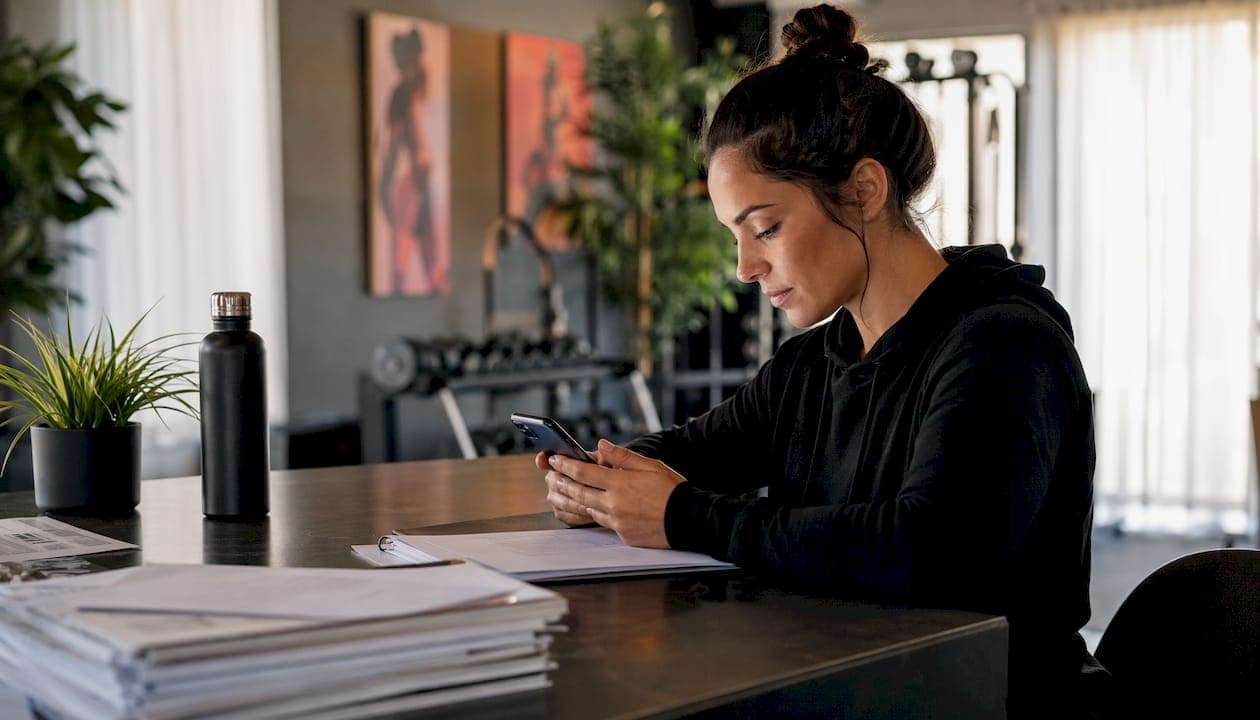
The five plays that move the needle fastest for U.S. fitness studios are to respond to every new lead within 60 seconds via SMS or WhatsApp, use an AI agent to qualify and book trials automatically, trigger behavior-based flows when a lead books or no-shows, lead with a risk-reversed intro offer, and activate a two-sided member referral. Studios running AI-agent lead nurture with sub-60-second responses convert 30–45% of leads to tour attendance, compared to 5–15% for manual follow-up.
TL;DR: Fix your speed-to-lead first. Everything else in your nurture stack compounds on top of that single change.
This week's immediate actions:
- Set up an automated first reply (SMS or WhatsApp) that fires within 60 seconds of any new lead form submission
- Replace your generic "thanks for your interest" message with a direct booking link
- Pull every lead from the past 30 days who never booked and send a warm re-engagement message today
- Identify your top 10 current members and personally ask each one to refer a friend with a two-sided incentive
- Check your average first-response time in your CRM; if it's over 30 minutes, that's your biggest conversion leak
Table of Contents
- What should you send at each stage of the buyer's journey?
- Which channels work best, and what should your messages actually say?
- How do you build an automated nurture flow that actually runs itself?
- Why does response speed matter so much, and how do you get under 60 seconds?
- Which intro offers and CTAs actually convert leads into tours?
- What should you measure, and how do you run A/B tests that actually improve results?
- What does a practical tech stack look like for a U.S. fitness studio?
- Key Takeaways
- The part most studios get wrong about nurture
- Enochmarketing builds the nurture system for you
- Useful sources
What should you send at each stage of the buyer's journey?
Most studios blast the same message to every lead regardless of where that person is in their decision. That's the core problem. A lead who just saw your Meta ad needs something completely different from someone who already booked a trial and didn't show up.
| Stage | Goal | Ideal CTA | Timing |
|---|---|---|---|
| Awareness | Capture opt-in, spark curiosity | "Grab your free 7-day pass" | Within 60 seconds of ad click or form submit |
| Interest | Book a trial class or intro session | "Pick your first class time" | Within 24 hours of first contact |
| Consideration | Confirm booking, reduce friction | "Here's what to bring on Day 1" | 24 hours before trial |
| Purchase/Tour | Attend, then close membership | "Ready to make it official?" | Same day as trial, in person |
The gym sales funnel breaks down at Consideration more than anywhere else. Leads book, then ghost. The fix is a pre-trial sequence that reduces friction: tell them where to park, who to ask for, and what to wear. That alone cuts no-show rates.
Segment by source and intent from the start. A Google Search lead already knows they want a gym; skip the education and go straight to the booking prompt. A Meta discovery lead needs one value message before the ask. A referral lead trusts you before they've said a word, so the CTA can be more direct.
Behavior-triggered workflows consistently outperform static date-based drips for trial-to-member conversion. Build your sequences around what the lead does, not just when they arrived.
Which channels work best, and what should your messages actually say?
Channel choice is a speed and warmth decision. WhatsApp and SMS own first contact because they get read within minutes. Phone is for complex closes when a lead has questions your automation can't handle. Social DMs work well for engaged followers who've commented or shared your content. Email handles onboarding, receipts, and longer content after the relationship is established.

WhatsApp and SMS outperform batch email for initial outreach on warm audiences. Email is the wrong primary channel for first-contact speed stages.
| Channel | Best use case | Open/reply expectation | Sender identity |
|---|---|---|---|
| WhatsApp/SMS | First contact, booking prompt, reminders | Read within minutes; high reply rate | Human first name ("Hey, I'm Alex from [Studio]") |
| Phone | Pricing questions, objection handling, close | Varies; high trust when answered | Staff member by name |
| Social DM | Engaged followers, event invites | Moderate; depends on platform | Brand account |
| Onboarding, class schedules, receipts | Lower open rate; slower response | Brand name + personal sign-off |
First contact (WhatsApp/SMS): Booking prompt (Day 1 follow-up if no booking): Pre-trial reminder (Day before): No-show follow-up (within 24 hours): Pro Tip: Automate the timing, but write every template in a human voice. The moment a message sounds like a broadcast, reply rates drop. Use a first name, a specific class time, and one clear ask per message. When a lead asks about pricing, route immediately to a human. That's the handoff point where automation should step aside.
How do you build an automated nurture flow that actually runs itself?
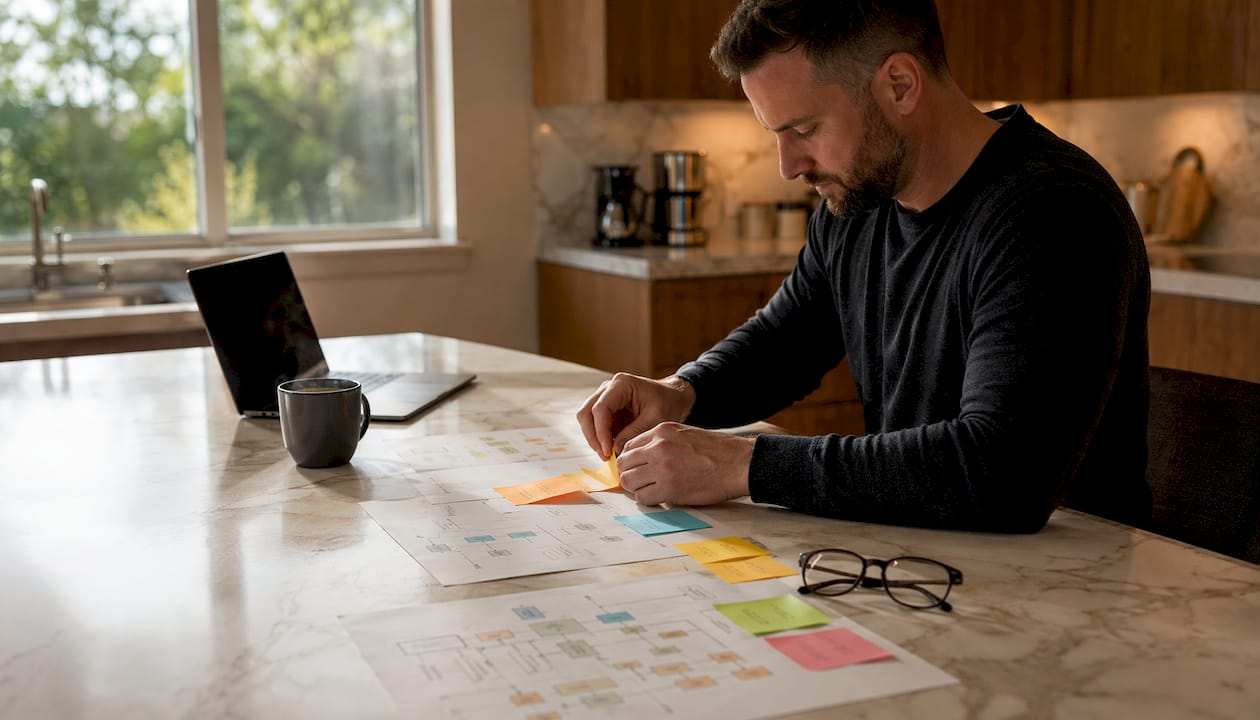
The architecture is straightforward: lead form webhook fires to your conversational API (WhatsApp or SMS), which logs the conversation to your CRM, which routes to a human when a pricing question or objection appears. No manual copy-paste, no leads falling through the cracks at 10pm on a Saturday.
Essential trigger events and responses:
- Lead form submitted → Instant automated first message within 60 seconds
- Trial booked → Booking confirmation + pre-trial reminder sequence
- No-show → Warm re-engagement message within 24 hours, rebook prompt
- Trial attended, no purchase → Post-trial follow-up sequence (3 messages over 5 days)
- Attendance drops below threshold → At-risk member check-in (retention flow)
The order of operations matters: ship speed-to-lead the same week, then build the trial-to-member automation second since it directly affects revenue. Don't spend three weeks perfecting an onboarding sequence before you've fixed the first-response problem.
Recommended first-week cadence (WhatsApp/SMS):
| Day | Message | Trigger to pause/branch |
|---|---|---|
| Day 0 (immediate) | Welcome + booking link | Lead replies → human handoff |
| Day 1 | Check-in if no booking | Booking confirmed → shift to pre-trial flow |
| Day 3 | Second prompt, social proof | Pricing question → route to staff |
| Day before trial | Reminder with logistics | No reply → continue sequence |
| Morning of trial | "Looking forward to seeing you" | No-show → rebook flow |
| Day 1 post-no-show | Warm re-engagement | Rebooks → restart pre-trial flow |
| Day 7 | Final check-in, move to low-frequency list | No response → long-term nurture |
Integration checklist:
- Webhook from lead form → messaging provider (Skipio, SimpleTexting, or WhatsApp Business API)
- Two-way conversation sync → CRM (log every message, tag lead stage)
- Booking link token in every prompt → one-tap scheduling
- Human handoff rule: any pricing mention or explicit objection routes to staff within 5 minutes
Deployment steps for week one:
- Map every lead source to a single intake webhook
- Write and load the Day 0 through Day 7 message templates
- Set branching rules: reply received → pause sequence; pricing keyword → alert staff
- Test the full flow with a dummy lead before going live
- Confirm CRM logs every message and updates lead stage automatically
- Run a live test during off-hours to verify the automation fires without manual intervention
Why does response speed matter so much, and how do you get under 60 seconds?
Manual response times over two hours are the primary conversion leak for most studios. The math is stark: no follow-up or a two-hour delay produces 5–15% lead-to-tour conversion; an AI agent responding in under 60 seconds produces 30–45%.
The five-minute window is only consistently achievable with automation. No human team responds to every inquiry within five minutes at 10pm on a Saturday.
The first hour after a lead arrives is the highest-leverage window in the entire funnel. Speed matters more than who sends the message.
Three implementation steps to get under 60 seconds this week:
- Connect your lead forms to a messaging API. Use a webhook to push every new submission directly to Skipio, SimpleTexting, or the WhatsApp Business API. This eliminates the manual check-and-reply loop entirely.
- Write one short, human-toned first message. Keep it under 40 words. Include the lead's name, one clear next step, and a booking link. No paragraphs, no bullet points.
- Set an AI agent or automation rule to fire on submission. Tools like Skipio handle SMS automation natively; for WhatsApp, a webhook-to-API setup routes the message before any staff member even sees the notification.
The lead-to-tour conversion bottleneck is almost never the ad. It's the gap between the click and the first human-feeling response.
Which intro offers and CTAs actually convert leads into tours?
The offers that convert best share one trait: they remove the commitment anxiety before asking for anything. A 7-day free pass, a 6-week challenge with a money-back structure, or a time-limited trial slot all work because the prospect feels like they're trying before buying, not signing up.
Highest-converting offer types:
- 7-day free pass: Low friction, high trial volume. Works best for Meta discovery leads who need to experience the gym before committing.
- 6-week intro challenge: Higher perceived value, better for leads who want a structured result. Pair with a clear outcome promise ("lose 10 lbs or your money back").
- Time-limited trial slot: "We have 3 spots left this week" creates urgency without being pushy. Works well in SMS/WhatsApp where the message is personal.
- Two-sided referral: Current member gets a month free; their friend gets a free week. Member referral programs consistently show the highest lead-to-tour conversion of any channel.
Sample offer message (SMS/WhatsApp): For cost context: Meta lead-form CPLs run $8–$25 with 15–25% lead-to-tour conversion; Google Search CPLs run $30–$80 in most local markets but convert at higher rates. Google Business Profile organic leads often convert at 40–55%, making GBP optimization one of the highest-ROI free activities a studio can run. Track cost-per-tour, not just cost-per-lead.
To cut no-shows: send a logistics reminder the day before, a short "see you soon" the morning of, and a warm re-engagement within 24 hours of a missed trial. Most no-shows aren't gone permanently; they're waiting for a nudge.
What should you measure, and how do you run A/B tests that actually improve results?
Three numbers tell you where the funnel is leaking: average first-response time, lead-to-tour rate, and tour-to-member rate. Everything else is context.
| KPI | What it tells you | Target benchmark |
|---|---|---|
| First response time | Speed-to-lead health | Under 60 seconds |
| Lead-to-tour rate | Nurture effectiveness | 30–45% |
| Tour-to-member rate | In-studio conversion | 60–80% |
| Reply rate by channel | Message quality | SMS/WhatsApp: 30–50%+ |
| No-show rate | Pre-trial nurture quality | — |
| Cost per lead (CPL) | Channel efficiency | Varies by channel |
| Cost per acquisition (CPA) | Full-funnel economics | Track against member LTV |
Three A/B tests to run first:
- First-message variation: Test a direct booking link vs. a question ("What's your main fitness goal?"). Run for two weeks, minimum 50 leads per variant. A question often increases reply rate; a link often increases same-day bookings.
- CTA phrasing: "Grab your free pass" vs. "Pick your first class time." The second is more specific and tends to convert higher-intent leads faster.
- Pre-trial reminder timing: 24 hours before vs. 2 hours before. For morning classes, a 2-hour reminder often outperforms; for evening classes, the night-before message wins.
For your weekly dashboard, front-desk staff need three columns visible at a glance: new leads this week, trials booked, trials attended. GMs need the full funnel: CPL by channel, lead-to-tour, tour-to-member, and CPA. If lead-to-tour improves but tour-to-member stays flat, the in-studio experience needs attention, not the automation.
What does a practical tech stack look like for a U.S. fitness studio?
Every component has one job. Don't pick tools that overlap or create manual sync work between systems.
Stack components and their roles:
- CRM (lead ingestion + segmentation): Logs every lead, tags by source and stage, stores conversation history. Must support two-way sync with your messaging provider. Common choices for studios include Mindbody, Kilo, or a lightweight CRM with webhook support.
- Conversational layer (SMS/WhatsApp + human handoff): Skipio and SimpleTexting handle SMS automation natively for U.S. studios, with keyword triggers and two-way conversation management. For WhatsApp, the Business API requires a verified account but delivers faster reads and higher reply rates.
- Email platform (long-form onboarding): Klaviyo and Mailchimp both support behavior-triggered sequences, dynamic content, and booking integrations. Klaviyo's segmentation is more granular; Mailchimp is faster to set up for smaller studios. Email remains essential for onboarding sequences and receipts, but it's the wrong primary channel for first-contact speed.
- Booking system (one-tap scheduling): Must generate a unique booking link token that can be dropped into any SMS or WhatsApp message. Mindbody, Pike13, and Kilo all support this.
- Analytics layer: Google Analytics 4 for web funnel tracking; your CRM's built-in reporting for lead-stage metrics; a simple spreadsheet dashboard for weekly GM review.
Integration requirements: webhook from lead form to messaging provider, two-way message sync to CRM, booking confirmation back to CRM to trigger the pre-trial flow. The webhook-first architecture avoids manual copy-paste and preserves response speed.
Common pitfalls: buying a tool that requires a developer to configure webhooks, choosing an email-only platform for first-contact nurture, or running two CRMs simultaneously with no sync. Pick one system of record and build everything else around it.
For studios thinking about group fitness programming as a trial offer, your booking system needs to handle class-level capacity limits so the "3 spots left" message is always accurate.
Quick selection criteria:
- Under 200 members: Kilo or a lightweight CRM + Skipio for SMS + Mailchimp for email
- 200–500 members: Mindbody or Pike13 + SimpleTexting or WhatsApp API + Klaviyo
- 500+ members: Full CRM with native automation (HubSpot or a fitness-specific platform) + dedicated conversational layer
Key Takeaways
Speed-to-lead automation is the single highest-ROI fix for most U.S. fitness studios: studios using AI-agent responses under 60 seconds convert 30–45% of leads to tour attendance versus 5–15% for manual follow-up.
| Point | Details |
|---|---|
| Fix speed-to-lead first | Automate a sub-60-second first reply via SMS or WhatsApp before building any other sequence. |
| Map CTAs to buyer stage | Awareness gets a free pass offer; Consideration gets logistics and friction removal, not another pitch. |
| Behavior triggers beat date drips | Trigger sequences from what a lead does (books, no-shows, attends) rather than days since opt-in. |
| Track cost-per-tour, not just CPL | Meta CPLs run $8–$25 but lead-to-tour conversion varies widely; the economics only make sense at the tour level. |
| Enochmarketing builds this for you | Enochmarketing audits response time, builds speed-to-lead automation, and runs trial-conversion sequences for CrossFit gyms and fitness studios across the U.S. |
The part most studios get wrong about nurture
The conventional wisdom says nurture is about the sequence. Build the right seven-step flow, pick the right subject lines, and the leads will convert. That framing puts the emphasis in the wrong place.
The actual constraint, for the vast majority of independent studios, is the gap between when a lead arrives and when they feel like a real person responded. Not a form confirmation. Not a branded email. A message that sounds like it came from someone who actually works there and actually wants to help them start.
The research is clear on this: marketing spend only works when the follow-up converts captured demand. A $3,000 monthly ad budget producing 100 leads at 5% lead-to-tour conversion is a $600 cost per member. The same budget at 35% conversion is an $86 cost per member. The ad didn't change. The follow-up did.
What I'd push studios to do differently: stop treating automation as a shortcut and start treating it as a floor. Automation guarantees that no lead waits more than 60 seconds for a response at any hour. Your team then handles everything that requires judgment: pricing conversations, objection handling, the close. That division of labor is what makes the economics work. Studios that automate everything feel robotic. Studios that automate nothing break under staffing pressure. The ones that get it right draw a clear line between the two.
Enochmarketing builds the nurture system for you
Most studio owners know what they need to build. The problem is finding the time to build it while running classes, managing staff, and keeping current members happy.
Enochmarketing is a done-for-you marketing agency built exclusively for CrossFit gyms and fitness studios in the U.S. The work starts with a response-time audit to find where leads are going cold, then moves into building the speed-to-lead automation, conversational-layer setup, and trial-to-member sequences described in this article. Paid media on Meta and Google feeds the top of the funnel; the automation converts it.
What you get:
- Full audit of current lead response time and funnel drop-off points
- Speed-to-lead automation setup (SMS/WhatsApp + CRM integration)
- Trial-to-member message sequences and no-show re-engagement flows
- Paid-media campaign management (Meta + Google) with offer-matched creative
- Weekly reporting on lead-to-tour, tour-to-member, and cost-per-acquisition
No lock-in contracts. Packages are built around your studio's size and growth stage. See the full service menu or review pricing options to find the right fit. Book a free strategy session and get a response-time audit included at no cost.
Useful sources
- Gym Lead Generation 2026: Channels, Costs, AI-Native Conversion — Source for lead-to-tour conversion benchmarks by nurture approach, CPL ranges by channel, and speed-to-lead impact data.
- Gym Marketing Plan 2026: 12-Month Operator Template — Covers order-of-operations for automation deployment and the argument for fixing follow-up before scaling ad spend.
- Fitness Studio Marketing Automation: Order of Operations — Practical playbook for webhook-first architecture, channel roles (WhatsApp vs. email), and behavior-triggered workflow design.
- WhatsApp Lead Nurturing for Fitness Studios — Detailed sequence structure: message roles, timing, and branching rules for a 5–7 message first-week flow.
- Gym Lead Follow-Up Automation: A Practical Playbook — Day-by-day sequence guidance, automation vs. human handoff rules, and the case for the first-hour response window.
- Best Advertising for Gyms and Fitness Centers 2026 — Channel allocation benchmarks, Meta lookalike audience guidance, and micro-influencer trial sign-up data.
- Lead Generation Strategies to Grow Your Gym Consistently — Overview of digital and offline lead generation, entry offer design, and performance measurement for gym operators.