
The most effective CrossFit gym New Year campaign planning combines three things most gym owners get wrong: a structured intro offer that builds habits rather than just fills classes for two weeks, a conversion sequence that follows up after the offer ends, and a reactivation system that brings lapsed members back before January even starts. Get all three right and January becomes your highest acquisition month of the year. Miss any one of them and you'll spend February wondering where everyone went.
Here's what a complete campaign actually requires:
- Timed intro offers priced to eliminate hesitation while filtering out zero-intent leads (the $49 for three classes model works precisely because it does both)
- Capacity management starting in November, not December 31, so classes don't crash when 40 people try to book five slots
- A post-offer conversion sequence with staged emails and personal outreach that moves intro completers into paying memberships
- Segmented reactivation outreach to lapsed members, personalized by the reason they left, not a generic "we miss you" blast
- Community events tied to the New Year window that generate referrals and deepen member identity before the January rush even peaks
Why January is your most important month for gym marketing
New Year fitness search intent peaks in the final four days of december through the first five days of january, according to Google Trends data. That window is narrow. Studios that launch on january 2 have already missed the moment when many decisions are made.
New Year resolutions create a genuine surge in membership interest, but the opportunity is fragile. Without a plan for expanded class capacity, interested members hit a full booking page and disappear. Without a conversion system, intro offer completers drift rather than sign up for memberships. And without a schedule sunset plan, the extra classes you added in january get cut in early february, right when new members were building their routines.
The gym marketing calendar for January is essentially a three to four week sprint. Every day of preparation you skip in november costs you a lead in january. The gyms that win this month start planning in early november, not mid-december.
Key marketing dates and holidays to target in january
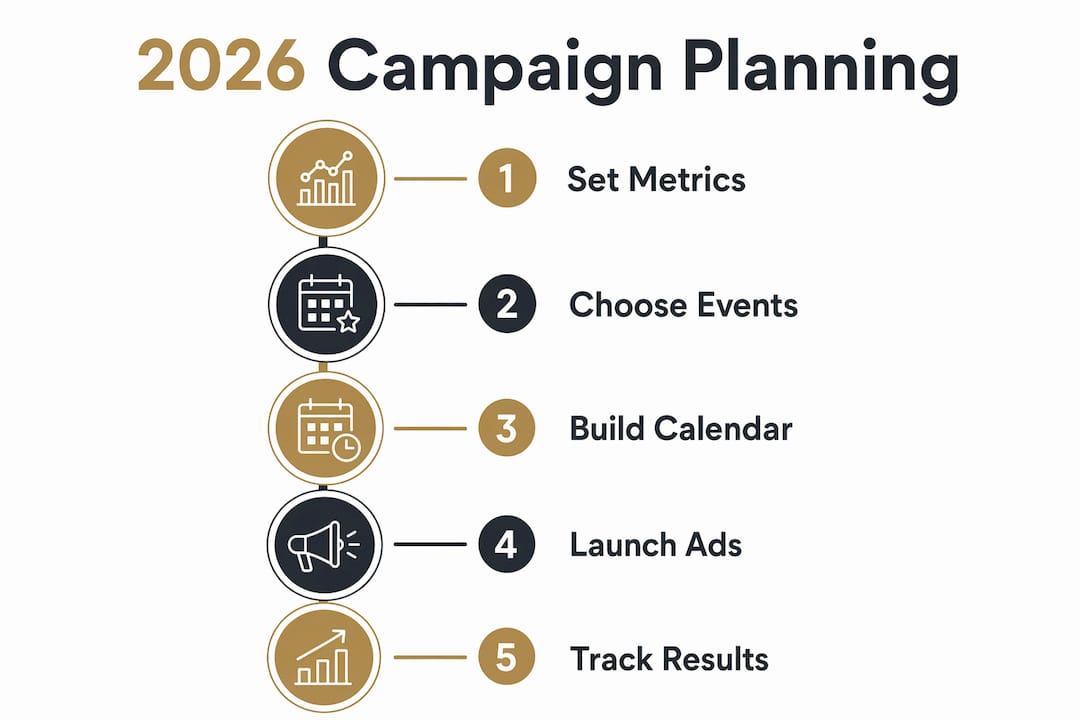
Aligning your campaign to specific dates creates natural urgency and gives your messaging a hook beyond "it's a new year." The dates below are the ones that actually move the needle for CrossFit gyms.

| Date | Opportunity | Campaign Angle |
|---|---|---|
| December 26 | Campaign launch day | "Your spot is waiting" intro offer email to full list |
| January 1 | New Year's Day | Social proof push, member story video, class preview |
| January 6 | First full week back | Urgency email: spots filling fast, specific class availability |
| January 14 | National Vision Board Day | Habit formation content, goal-setting challenge launch |
| January 14 | Last chance framing | "One week left at the intro rate" email |
| January 19 | February bridge offer | Email to unconverted intro completers: first February class free |
| January 31 | Intro offer expiry | Final conversion push, SMS follow-up to non-converters |
A few additional dates worth building around:
- Martin Luther King Jr. Day (January 19): A natural community event anchor. A fundraiser WOD or charity challenge fits the spirit of the day and pulls in non-members.
- National Fitness Day (first Saturday of the year): A bring-a-friend workout session with no pressure to sign up converts warm leads better than any ad.
- Local school calendar: Check when winter break ends in your area. Parents returning to routine are a high-intent segment that most gyms ignore entirely.
Pro Tip: Build your campaign calendar in october, not december. By the time you're decorating for the holidays, your ads should already be in the learning phase and your email sequences should be drafted.
Creative campaign ideas that actually fit CrossFit culture
Generic "new year, new you" creative is noise. Every supplement brand and wellness app runs it. Your gym wins with specificity and community.
- The three-class intro offer: Price it at $49, valid through january 31. This structure is low enough to remove the "I'll think about it" objection, high enough to establish a payment relationship, and long enough (three classes) to start habit formation. One class is a sample; three is a start.
- A january challenge campaign: Model it on the CrossFit Open format. Create teams, assign captains, post a weekly leaderboard on the whiteboard and in your app. Community-driven contests like intramural competitions promote higher member retention by building team identity. New members who join mid-challenge have a built-in social group from day one.
- Bring-a-friend night: CrossFit Swift River runs this format and consistently sees 40–60 attendees with 3–10 conversions per event. The key is making the expectation part of your culture before the event, not just a flyer the week before.
- Referral incentives with real stakes: A $75 give / $75 get referral offer, paid out at the whiteboard in cash, creates visible FOMO. Members who see a coach hand someone cash for a referral tell their friends about it.
- Member story videos: A 15-second phone video of a real member saying "I've been coming here 14 months, here's what changed" outperforms designed graphics. No music bed, no special effects. Authentic beats polished every time in this window.
- A fundraiser WOD: Nick Johnson at CrossFit Liminal turned a one-day event into a 30-day challenge where members competed to raise the most money. The leaderboard lived on social, members did the marketing themselves, and the event raised roughly $9,000 with a 50/50 split between members and the surrounding community.
- Limited-time schedule additions: Announce two new class times for january only, with a defined sunset date of february 15. Scarcity of specific slots ("Tuesday 7pm has four spots left") triggers FOMO in a way that "sign up now" never does.
Advertising strategies that convert the January fitness surge
The channel mix matters as much as the creative. Email is your highest-conversion channel and costs nothing. A lapsed member who hasn't visited in four months is more likely to respond to a New Year campaign than a cold prospect who's never heard of you.
- Launch on december 26, not january 1. The decision window opens the day after Christmas, when people have unscheduled time and screens in their hands. Gyms that wait until january 2 have already missed a meaningful slice of the intent peak.
- Run a five-email sequence from december 26 through january 14: campaign launch, social proof, urgency, last-chance framing, and a retention pivot for unconverted leads. Each email has one job and one CTA.
- Instructor-to-camera video on Meta. Your lead instructor looks into the camera and says: "Our 6am Tuesday class has three spots left for january. If you've been thinking about starting, that's the class for you." This format converts 2–3 times better than designed graphics in january.
- Schedule specificity in every ad. "We have four spots in our Wednesday 7am class starting january 8" triggers FOMO and communicates real demand. "Sign up for classes" does not.
- Prioritize re-engagement before cold acquisition. Your lapsed member list is warmer than any cold audience you can buy. Hit them first, then spend ad budget on cold traffic.
- Set paid campaigns live in november so they exit the learning phase before december 26. A campaign that launches january 1 is still learning when the intent window closes.
Pro Tip: Track cost per intro offer claimed, not just cost per click. A $12 CPC that produces a $49 intro offer claim is a better deal than a $3 CPC that produces nothing. Optimize for the conversion event that actually matters.
Marketing angles that resonate with CrossFit audiences in January
The message matters as much as the channel. CrossFit audiences respond to specificity, community, and honesty. They don't respond to generic motivation.
- Shift from "new year, new you" to habit formation. The frame that works is: "Three classes is all it takes to start a real habit. We've made it easy to get those three in." This speaks to the practical barrier, not the emotional aspiration.
- Use local instructor voices. A video from your head coach saying "I'll be there at 6am Tuesday, and I want to see you there" carries more weight than any branded graphic. Local, specific, and personal beats polished every time.
- Highlight team competition. CrossFit athletes are motivated by shared suffering and leaderboards. Messaging that emphasizes "your team needs you" outperforms individual motivation messaging for this audience.
- Be transparent about capacity. Telling prospects "we have six spots left in the january intro offer" is not a gimmick. It's honest, and it works because it's true. Manufactured scarcity eventually backfires; real scarcity builds trust.
- Use social proof with specifics. "I've been coming here for 14 months" is more convincing than "I love this gym." Specific duration, specific change, specific person. Generic testimonials read as marketing copy; specific ones read as evidence.
- Address the practical barriers directly. The most common reason CrossFit athletes lapse is schedule conflict, not dissatisfaction. Messaging that says "we added a 7pm class" addresses the real barrier. "We miss you" addresses your feelings, not theirs.
What successful New Year fitness campaigns actually look like
Three CrossFit gym owners shared the events that fill their gyms year after year, and the patterns are consistent across all of them.

Traie Miles at Rushmore CrossFit runs an annual member party that draws 90% of active members. She books the date six months in advance, checks the local school calendar for conflicts, lines up member-owned businesses as sponsors, and hires a DJ so her only job on the day is greeting people at the door. The event costs less than a month of paid ads and generates more referrals than any campaign she runs.
Aimee Moller at Swift River CrossFit runs a bring-a-friend night called Wine & WOD with a four-week promotional runway: weekly Facebook messages, daily whiteboard briefings, posters with QR codes in every room (including the bathrooms), and coach conversations on the floor every class. The event consistently draws 40–60 attendees with 3–10 membership conversions. After the event, every attendee gets a handwritten thank-you card with a $75 friend referral offer. The follow-up is where most of the conversions actually happen.
The shared framework across all three owners: pick the metric before you pick the event, set the date six months out, build a four-week promotional runway instead of a single push, and spend the first 24 hours after the event posting recap content while the energy is still hot. The gyms that convert event attendees are the ones that send individual follow-up texts to every guest who didn't book a next step, not a mass blast.
For the New Year window specifically, the bring-a-friend format works best because it gives prospects a low-pressure first experience of your culture. A warm referral who's already had a good time at your gym is more likely to sign up than someone who clicked an ad.
Expert operational insights for executing your New Year campaign
The 60-day preparation timeline starting in early november is the single most important operational decision you'll make. Here's how it breaks down:
- Weeks 1–2 (early november): Finalize your intro offer price and structure, confirm instructor availability, audit your booking software class caps, and build or update your new-member onboarding sequence.
- Weeks 3–6 (mid-november through Thanksgiving): Launch a "founding january member" campaign to your existing email list, begin teasing january themes on organic social, and set up paid campaigns for review.
- Weeks 7–9 (first two weeks of december): Launch the intro offer publicly, activate paid acquisition, and announce january schedule additions to current members.
- Weeks 10–11 (third and fourth week of december): Remind your email list of the intro offer deadline, confirm substitute instructor coverage, and brief front desk staff on the january new-member protocol.
Conversion sequences are where most gyms leave money on the table. The post-intro offer email sequence converts 22–28% of completers on the first email alone. A second email at day eight adds another 8–12%. A personal SMS or phone call at day fourteen, for anyone who attended all three intro classes but hasn't converted, adds 18–24% of those reached. That's a compounding system, not a single touchpoint.
For lapsed member reactivation, segmented win-back campaigns that address the actual reason for lapse (schedule conflict, cost, injury) generate reply rates of 14–18%, compared to 6–8% for generic messages. The message that works for a schedule-conflict lapse is: "We added a 7pm class on Tuesdays. Is that better for you?" Not "we miss you."
AI-driven reactivation workflows take this further by routing members to different message branches based on what they do with each email. If a lapsed member opens but doesn't click, the workflow sends a different follow-up than if they clicked but didn't book. This conditional logic moves reactivation rates from the 14–18% range for well-structured automated workflows, far above the 2–4% industry average for generic campaigns.
On staffing: add temporary instructor hours for january, not permanent positions. Structure it as a five-week january commitment with the option to continue. Tell your team and your members explicitly that expanded classes run through february 15, then adjust based on attendance. Transparency prevents disappointment and helps instructors plan. A january bonus or per-class premium for additional shifts rewards the seasonal commitment without creating resentment.
Pro Tip: Add a one-question exit survey to your cancellation flow: "What was the main reason for leaving?" with four options. It takes five minutes to set up and permanently improves your win-back segmentation for every future campaign.
Budgeting and cost considerations for your campaign
New Year campaigns don't require a large budget to work. They require the right allocation across channels.
Your email list costs nothing to mail and consistently outperforms paid channels for warm audiences. Start there. Allocate paid budget to Meta ads for cold acquisition, with instructor-to-camera video as your primary creative format. Google Search ads work well for high-intent queries like "CrossFit gym near me" in early january, but the window is short, so set a daily cap that keeps you in the auction for the full three weeks rather than burning out in the first five days.
For a single-location gym, a realistic january paid media budget runs $500–$1,500 depending on your market size and competition. The intro offer itself is your cost-per-acquisition tool. An intro offer that converts a notable portion of completers into full memberships pays back quickly after conversion. The math works even at modest conversion rates.
Community events like bring-a-friend nights and fundraiser WODs have low direct costs (venue is your gym, promotion is organic) and high referral value. Budget for handwritten thank-you cards, a referral incentive, and any prizes for your challenge leaderboard. These line items are small and the return on community goodwill compounds over time.
One cost most gym owners underestimate: staff time for follow-up. The personal phone calls and individual texts that convert event attendees and intro completers take real hours. Build that into your january staffing plan, or the conversion sequences you designed on paper won't happen in practice.
Metrics and KPIs to track campaign effectiveness
Tracking the right numbers tells you what to double down on before the window closes, not after.
Acquisition metrics:
- Cost per intro offer claimed: The primary efficiency metric for paid campaigns. Track this by channel (Meta vs. Google vs. organic) to know where to shift budget mid-campaign.
- Intro offer completion rate: What percentage of people who claimed the offer actually completed all three classes? Low completion means your onboarding or scheduling experience needs work, not your ads.
- Intro-to-membership conversion rate: Industry benchmarks put this at 22–28% from the first post-offer email. If you're below that, look at your conversion sequence timing and offer structure.
Retention metrics:
- 30-day attendance rate for new members: Members who attend at least eight times in their first 30 days have dramatically higher 90-day retention. Track this by cohort, not just overall.
- February membership retention rate: The real test of your january campaign is how many january joiners are still members on march 1.
Campaign health metrics:
- Email open rates: A well-segmented reactivation email with a personalized subject line should hit 28–38% open rates for members lapsed 30–60 days. Below that, the problem is usually subject line relevance, not the offer.
- Event attendance vs. goal: Set a specific number before every event. Traie Miles tracks percentage of active membership; Aimee Moller tracks total headcount plus percentage who brought a friend. "Fun" is not a metric.
- Reactivation response rate: Segmented win-back campaigns targeting lapsed members by exit reason should hit 14–18% reply rates. Generic campaigns average 6–8%.
Review these numbers weekly during the campaign window, not monthly. January moves fast, and a creative that isn't converting in week one won't fix itself by week three.
Ready to build a campaign that actually fills your gym in January?
Enochmarketing works exclusively with CrossFit gyms and fitness studios across the United States. From paid media campaigns on Meta and Google to lead funnel creation and local SEO, every service is built specifically for the fitness industry. No generic agency playbooks. No learning curve on what CrossFit culture actually is.
If you want a campaign that converts the january fitness surge into members who are still showing up in april, book a free strategy session and we'll audit your current marketing and show you exactly where the gaps are.
Key Takeaways
CrossFit gym New Year campaign planning works when you combine a structured intro offer, a post-offer conversion sequence, and segmented reactivation outreach launched before december 26.
| Point | Details |
|---|---|
| Launch before january 1 | Fitness search intent peaks december 28 through january 5; campaigns starting january 2 miss the decision window. |
| Price the intro offer at a low price for a limited number of classes | This structure filters zero-intent leads, starts habit formation, and avoids the pricing anchor problem of unlimited january deals. |
| Build the conversion sequence | The first post-offer email converts 22–28% of intro completers; a day-14 personal call adds 18–24% of those reached. |
| Segment your win-back outreach | Campaigns addressing the actual lapse reason (schedule, cost, injury) hit 14–18% reply rates versus 6–8% for generic messages. |
| Track February retention, not just January signups | The real measure of a New Year campaign is how many january joiners are still members on march 1. |